![Rogue Trooper Review: Duncan Jones' Cyberpunk War Cartoon Is Appealingly Irreverent [TIFF 2026]](https://internewscast.com/wp-content/uploads/2026/09/Rogue-Trooper-Review-Duncan-Jones-Cyberpunk-War-Cartoon-Is-Appealingly.jpg)

Courtesy of TIFF
RATING : 7 / 10
The British comics magazine 2000 AD remains a conspicuous gap in my reading history, and one I should probably address. Alan Moore, Grant Morrison, Garth Ennis and many of the writers who later shaped Vertigo and the darker adult wing of American comics in the 1980s and ’90s began their careers there. The magazine’s best-known character is Judge Dredd, whose popularity has already produced two very different film adaptations. Now another 2000 AD creation, Rogue Trooper, is making his big-screen debut under the direction of Duncan Jones.
After seeing Rogue Trooper at the 2026 Toronto International Film Festival, I began to wonder whether the original comics influenced Jones’ debut feature, the science-fiction cult favorite Moon. Both films follow cloned or genetically engineered soldiers created for perilous space missions and treated as disposable assets. In each story, the manufactured humans gradually recognize the injustice of their situation and, aided by comic mechanical companions, rebel against the authorities exploiting them.
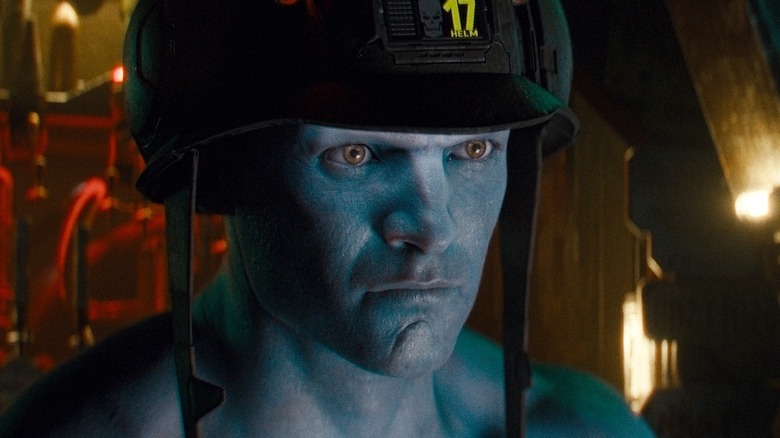
Moon is a restrained, literary sci-fi drama; Rogue Trooper aims for something far larger and more explosive. It is still an independent production made outside the studio system, however. The practical answer to staging an expansive comic-book war epic on an indie budget was animation, with Unreal Engine’s video game graphics technology playing a central role. The result is visually unusual, but the approach also gives the film’s anti-authoritarian attitude and distinctly British sense of humor room to breathe without being polished into conventional Hollywood sameness.
Did these comics inspire everything?
Courtesy of TIFF
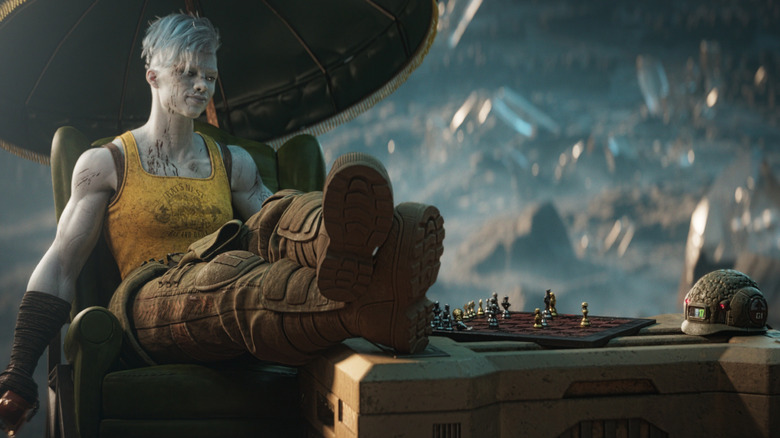
Rogue Trooper has a substantial amount of world-building to get through. Following an opening-credit sequence built around artwork from the original comics, the film launches into a Star Wars-style crawl explaining the conflict between the Norts and Southers on Nu-Earth. It also introduces the Genetic Infantrymen, soldiers engineered to withstand the planet’s poisonous atmosphere, with their brains preserved in biochips should their bodies be destroyed. Just as the exposition starts to feel overwhelming, the film punctures it with a dry aside about the soldiers’ situation, essentially amounting to: “seems a bit unfair, innit.” That line captures the movie’s entire personality. Whenever the lore threatens to become too dense, a joke pulls the audience back in.
The story begins with four Genetic Infantrymen, though a brutal battle quickly leaves only one survivor: Infantryman 19, voiced by Aneurin Barnard. He carries the brain chips of his fallen comrades in his gun, voiced by Jack Lowden — the Slow Horses star rumored to be in the running for the next James Bond — his helmet, voiced by Daryl McCormack, and his backpack, voiced by Reece Shearsmith. Yes, this is an intensely violent cyberpunk war movie in which one of the central characters is a talking backpack. TIFF’s description points to the comics’ influence on Warhammer 40K, Star Wars: The Clone Wars and James Cameron’s Avatar. Dora the Explorer may also come to mind, although that is probably a case of parallel invention. For newcomers, Rogue Trooper becomes an entertaining exercise in identifying its possible influences. The film recalls Moon, while its political satire occasionally brought Fallout to mind.
The movie also doubles as an enjoyable game of “name that voice,” with recognizable comedians and character actors appearing throughout its war-torn world. Matt Berry and Jemaine Clement play particularly slimy war profiteers, while Peter Serafinowicz adopts an amusing French accent for the Nort sniper Vichy. Sean Bean and Diane Morgan voice 19’s commanders, and Hayley Atwell plays Venus Bluegenes, a towering, mech-battling rogue superwoman who seems destined to inspire intense enthusiasm in certain corners of Bluesky. The cast is terrific, and Rogue Trooper becomes increasingly entertaining as more of those voices enter the story.
The movie improves as it continues
Courtesy of TIFF
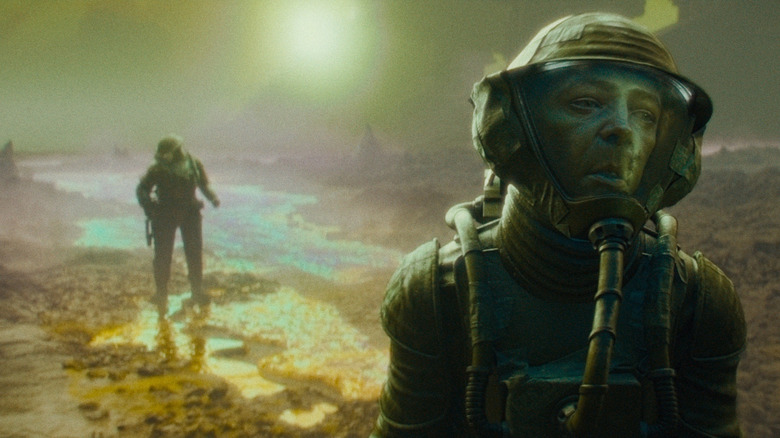
The plot grows more engaging as it veers into increasingly strange territory, and the animation also seemed to improve over the film’s runtime. Whether that reflects my growing familiarity with the style or the fact that later sequences were completed further along in the movie’s lengthy production, the difference is especially noticeable during the action. Early fights feel oddly weightless, which blunts their impact. Later, during 19’s brawl with enormous mutant babies, every blow lands with far greater force.
The producers have said they did not want Rogue Trooper to feel too much like a video game, but its animation undeniably carries that look. Realistic yet stylized, enhanced by motion capture and rendered in a cost-conscious manner, the visuals naturally bring game graphics to mind. The human characters are caricatured rather than strictly realistic, connecting them to the comic-book source, while their detailed textures leave the film hovering just inside the uncanny valley.
Rogue Trooper is aimed at a particular audience: viewers who would happily watch a strong comedy episode of Love, Death + Robots. It does not reach the astonishing heights of that anthology’s best installments, nor does it sink to the level of its weakest. Instead, it offers a dependable dose of digitally animated cyberpunk action, eccentric jokes, genuine heart and enough gruesome deaths to delight a Midnight Madness crowd. Stay through the end credits for Duncan Jones’ dedication to the people of Ukraine. Rogue Trooper is not a transformative science-fiction experience, but it delivers exactly the kind of irreverent animated war story it sets out to be. I enjoy that kind of movie — and I may now have to explore the comics that started it all.
“Rogue Trooper” premiered at the 2026 Annecy International Animation Film Festival. Looper screened it at the 2026 Toronto International Film Festival. Release plans have yet to be announced.