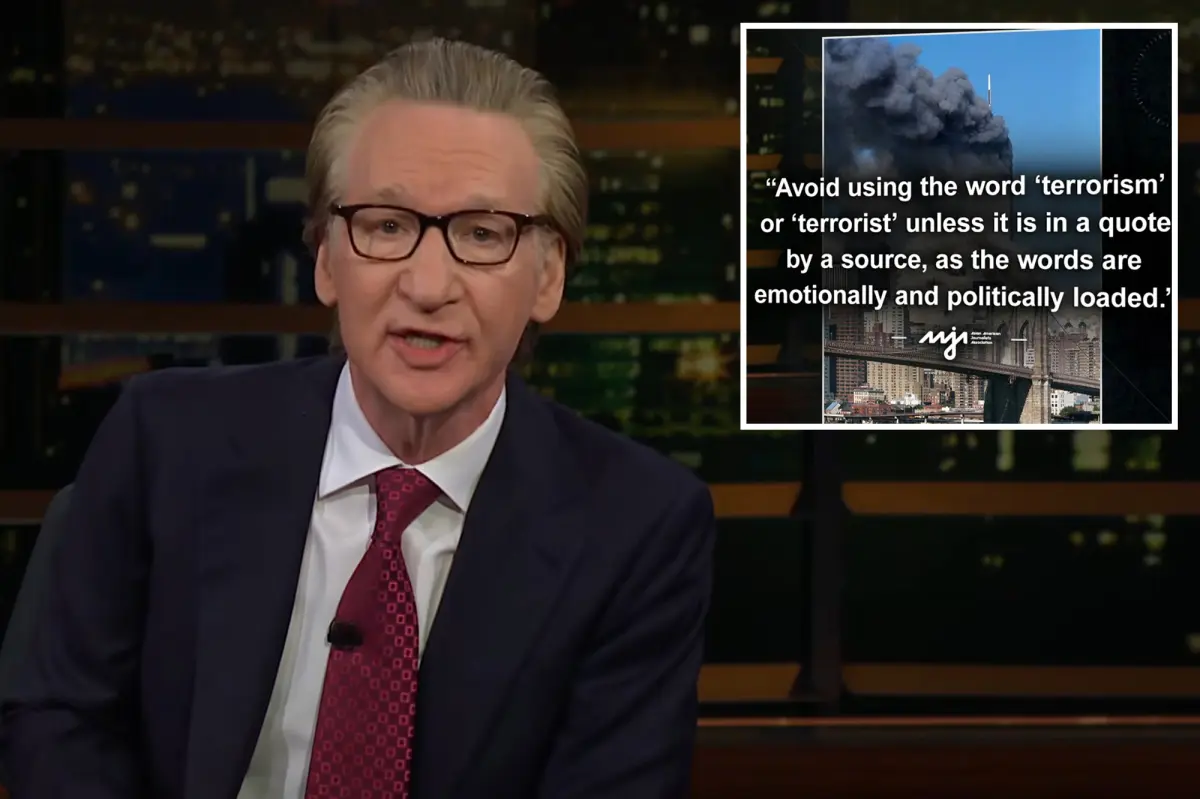
Comedian and talk-show host Bill Maher sharply criticized media organizations Friday night over efforts to limit use of the word “terrorism,” including in descriptions of deliberate attacks intended to kill and maim.
“There was a war on terror, and we won. And yet, so much has changed since 9/11. For example, back then, we were against the terrorists,” Maher said during his HBO program, “Real Time With Bill Maher,” which aired Sept. 11.
His remarks launched a series of jokes aimed at the media’s approach to language as the 25th anniversary of the Sept. 11 terror attacks approached. The attacks claimed the lives of 2,977 people.
“Now a lot of media outlets don’t even want you to say the ‘T-word’ on the 25th anniversary,” Maher said. He referred to journalism organizations that, he claimed, urged writers to place the word terrorism in quotation marks because it was considered “emotionally and politically loaded.”
“Yes, so is the World Cup, but we don’t put soccer in quotes,” he quipped.
Maher then displayed an image of the 19 hijackers involved in the attacks.
“They shared something. Oh, let’s call it a worldview — and it wasn’t astrology,” he said.
During a monologue that at times struck an awkward tone while discussing the tragedy, Maher cited guidance from the Canadian Broadcasting Corporation that has since been withdrawn. The guidance advised against describing the attacks as terrorism.

“What should we call it then — unruly passengers,” he joked.
“A wrong turn, taken at the Chrysler Building,” he added, drawing applause from the studio audience.
Maher also criticized the BBC for saying that the word terrorist could become “a barrier rather than an aide to understanding.”
“You know, it’s really a barrier to understanding lying,” Maher replied.
It wasn’t clear from his monologue which US news associations he was referring to.
Nonprofit media outlet The Poynter Institute, after the FBI called a New Orleans attack that killed 10 an “act of terrorism,” has summed up several different approaches to using the term.
The Associated Press Stylebook states that “AP generally avoids labeling someone a ‘terrorist’ on its own, preferring to cite competent law enforcement officials or other credible authorities. Instead, we describe the specific actions we are reporting on and what we know about the perpetrators’ motives.”