

Static Media
The 1986 domestic box office generated $3.065 billion, powered by blockbuster hits such as “Top Gun,” “Crocodile Dundee,” “Aliens,” and “Down and Out in Beverly Hills.” Yet revisiting that year’s biggest movies reveals how uneven their staying power has been compared with the genre-heavy lineup of 1982. In the 2020s, you are far more likely to see GIFs and memorable quotes from “Aliens” than from “Down and Out in Beverly Hills.”
Although not every major release from 1986 has endured as a beloved classic, the year produced plenty of commercial successes, including films such as “Aliens” that remain widely celebrated. It also delivered its share of box office disasters. Several ambitious productions became lasting examples of what happens when strong artistic ambitions and studio confidence fail to translate into ticket sales. These five notable 1986 box office bombs stand among the year’s most striking financial disappointments, despite competing in a market filled with lucrative hits.
There was no single explanation for the commercial collapse of these films, although many faced stiff competition from 1986’s biggest releases. Nearly 40 years after their theatrical debuts, however, each remains fascinating for the unusual path it took at the box office.
Big Trouble in Little China
20th Century Fox
John Carpenter will always be closely linked to his influential horror films, but his career has moved comfortably across a wide range of genres. One of his most entertaining departures was 1986’s “Big Trouble in Little China,” a lively adventure powered by Kurt Russell’s wonderfully overconfident performance, dazzling practical effects, and nonstop thrills. The movie has all the ingredients of an instant crowd-pleaser. Audiences at the time, however, were far less enthusiastic.
“Big Trouble in Little China” is now regarded as one of the most enjoyable ’80s box office bombs. Despite opening over the lucrative Fourth of July weekend, the film earned just $11.1 million domestically. It was overwhelmed by major summer releases including “Top Gun” and “Ferris Bueller’s Day Off.” Its more elaborate premise also worked against it, blending and reworking familiar adventure-movie conventions in ways that may have been difficult for audiences to embrace immediately.
Several other Carpenter movies, including his earlier collaboration with Russell, “The Thing,” had also struggled when they first reached theaters. The director’s work often needed time to find its audience. Considering the cult status “Big Trouble in Little China” enjoys today, it is clear that the film eventually connected with viewers—just not during its original theatrical run.
The Transformers: The Movie
De Laurentiis Entertainment Group
With the exception of recent setbacks such as “Transformers One,” the Transformers franchise has generally been a dependable source of blockbuster revenue in the 21st century. Even entries featuring some of the series’ most controversial choices, including the infamous Romeo and Juliet scene in “Transformers: Age of Extinction,” earned more than $1 billion worldwide. Since the release of 2007’s “Transformers,” the eight theatrical films in the franchise have collected more than $5.4 billion combined. That makes it especially startling to recall that the first big-screen battle between the Autobots and Decepticons became a financial struggle.
1986’s “The Transformers: The Movie” earned only $5.84 million worldwide, ranking as the 99th highest-grossing movie of the year domestically. Its North American total even trailed the grosses of “My Little Pony: The Movie” and “Care Bears Movie II: A New Generation.” Although the Transformers television series was hugely popular, the film came from an independent distributor and arrived during a crowded year for toy-based movies. Those circumstances made it difficult to gain a foothold with moviegoers. The backlash surrounding the death of Optimus Prime, voiced by Peter Cullen, further damaged the film’s word-of-mouth.
Fortunately for the people financing the live-action Transformers franchise, later cinematic adaptations proved far more profitable—and, in many respects, far more controversial—than “The Transformers: The Movie.”
King Kong Lives
De Laurentiis Entertainment Group
King Kong’s film history extends well beyond the original 1933 classic and the character’s 21st-century reimaginings. A 1976 remake starring Jessica Lange and Jeff Bridges transported the giant ape’s story into the modern world, even replacing the Empire State Building with the then-new World Trade Center as Kong’s final perch. The expensive production still turned a profit, naturally prompting interest in expanding the property.
Unlike the modern MonsterVerse, in which “Kong: Skull Island” was followed by “Godzilla vs. Kong” just four years later—a release that might have arrived sooner without COVID-19 delays—the 1976 “King Kong” waited a decade for its sequel. Released by the De Laurentiis Entertainment Group, 1986’s “King Kong Lives” revived the famous ape and introduced a romantic storyline involving a female member of his species. The film earned only $4.7 million domestically against a $10 million budget, making it a major box office flop. The lengthy gap between films did little to preserve audience interest.
Some movies, including “Zootopia” and “The Terminator,” have survived long waits between installments. The 1976 “King Kong” was not one of them. By the time “King Kong Lives” arrived, audience enthusiasm had faded, and its decidedly cheesy premise made the film’s box office failure almost inevitable.
Labyrinth
TriStar Pictures
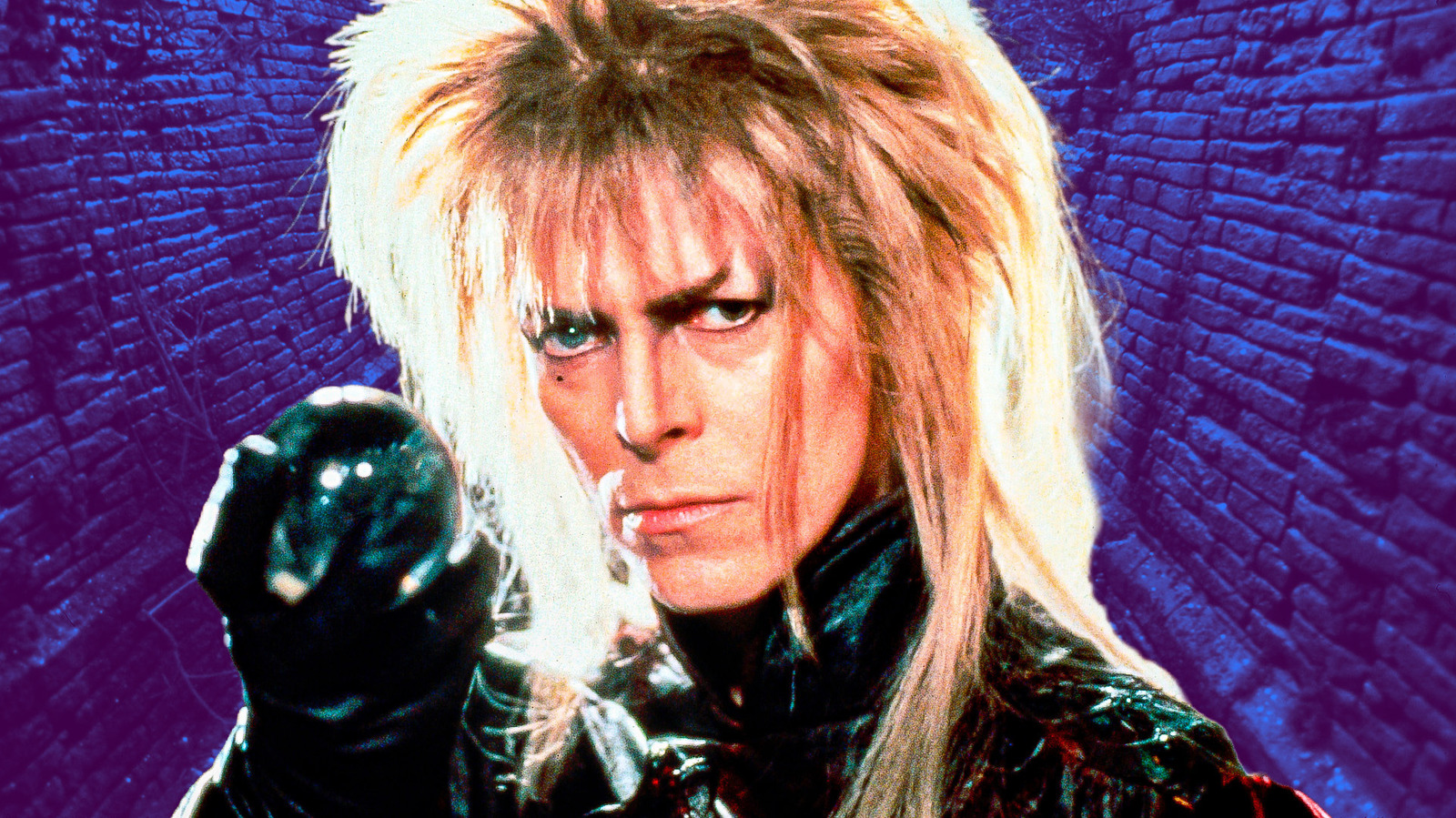
Today, Jim Henson’s “Labyrinth” is unquestionably popular and beloved. Comic conventions all over the world are crammed full of cosplayers dressed as David Bowie’s Jareth. Prolific museum exhibits offer a chance to witness the beautiful handmade artistry that went into it. The lyrics to the original “Labyrinth” tune “Magic Dance” are second-nature to countless theater kids. However, when it first came out, “Labyrinth” didn’t just miss the mark at the box office. It was a colossal failure that stood in sharp contrast to the many instant hits Henson had been associated with throughout his career.
“Labyrinth” got a cushy launch before 1986 4th of July weekend and with marketing materials promising tangible spectacle. However, over its opening weekend, it debuted to a disastrous $3.54 million, coming in behind the third weekend gross of “Ferris Bueller’s Day Off.” The eventual 4th of July holiday and summer weekdays only got “Labyrinth” to $13.15 million worldwide, an anemic gross given its $25 million budget. That summer, audiences were more invested in stories firmly rooted in reality like “Ferris Bueller” and “Top Gun” as opposed to titles promising to sweep people off to fantasy worlds.
Its initially mixed reviews also didn’t help “Labyrinth” convince 1986 audiences to take a chance on something so original and tonally complex. That initial grim financial outcome for “Labyrinth” would be incomprehensible to modern audiences who know the movie as a beloved cult classic.
Howard the Duck
Universal Pictures
“To this duck, we say a toast/So get to bumpin’ off of his case/No, he got too good to roast/’Cause he saved the human race.” So goes the lyrics in the shockingly catchy “Howard the Duck” song from the movie of the same name crooned by the fictional in-universe band Dolby’s Cube. Alas, having “saved the human race” wasn’t enough to get general audiences invested in seeing “Howard the Duck” in theaters. This infamous misfire wasn’t just a financial disappointment, but became one of those ’80s bombs that changed Hollywood forever.
Costing $37 million to make, “Howard the Duck” only made $37.96 million worldwide, including a dismal $16.29 million domestically. Despite wielding such a major price tag and hailing from producer George Lucas, “Howard the Duck” didn’t come close to winning over audiences who were clamoring to see summer holdovers like “Aliens” and “Top Gun.” To boot, “Howard the Duck” received absolutely awful reviews, with many critics instantly claiming it as one of the worst movies of all time. Everywhere “Howard the Duck” looked, further bad news emerged.
While several summer 1986 films bit the dust financially, few were as embarrassing as “Howard the Duck.” After all, what other summer 1986 box office dud got a Universal Studios executive fired while casting a toxic reputation over live-action Marvel movies for over a decade?