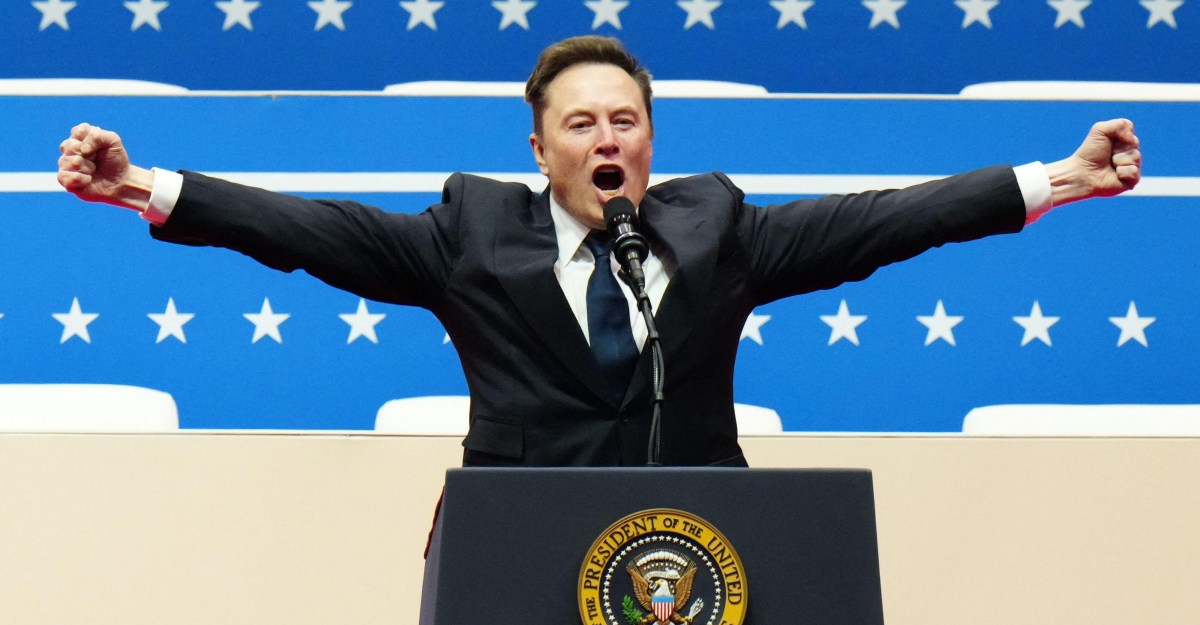

Given the scale of its subject, the nearly four-hour length of Musk feels almost inevitable. Alex Gibney, whose previous documentaries have examined Theranos and Steve Jobs, delivers a sweeping account of Elon Musk’s journey from dot-com millionaire to one of the most influential—and controversial—figures in global politics and technology, including his role in “taking a wood chipper” to key US government departments. Understanding Musk’s rise requires tracing the entire arc, and the film does so with clarity and conviction. Yet viewers already familiar with the damage associated with Musk’s power may find few fresh revelations, while newcomers could struggle with a runtime just short of four hours.
The documentary begins among images of space, accompanied by Musk discussing his science-fiction ambitions. It then moves through his story in broadly chronological order. Early on, Gibney examines the mythology surrounding Musk while quietly challenging the popular image of him as a real-life Tony Stark. The film revisits his removal as PayPal’s CEO and explains how he came to be widely viewed as the founder of Tesla, despite joining the company after it already existed. His confident promises about self-driving cars are placed beside disturbing footage of a fatal crash involving a Tesla operating on autopilot. Among the film’s most striking moments is an interview with former MAGA influencer Ashley St Clair, who has a child with Musk and says fearfully: “Elon is a nuke.”
Gibney frames Musk around two connected questions: how did Musk become so powerful, and why did so many institutions allow that power to accumulate? The documentary traces how Tesla, X, SpaceX and Starlink helped him build relationships with governments around the world, especially the United States. Once his influence became deeply embedded, Musk was able to convert that access into further political and personal leverage. The result is a straightforward, carefully assembled explanation of a complicated ascent.
Musk did not take part in the project. Instead, he responded with a legal threat, prompting Gibney’s team to create a digital stand-in that appears to speak using recordings of Musk’s own words. Built from a database of existing video and audio clips, the avatar is deliberately unsettling, its exaggerated expressions and heavy breathing pushing it into uncanny-valley territory. Still, the device gives Musk a face to accompany his statements—and seems particularly fitting for a man associated with simulation theory. Video-game and virtual-world imagery runs throughout the film, including a fictional first-person shooter in which Musk attacks Twitter and the US government with a laser-firing chainsaw. The imagery is deliberately ridiculous, though the reality behind it is difficult to dismiss as pure fantasy, especially in an era shaped by a young bureaucrat nicknamed Big Balls.
As a piece of explanatory filmmaking, Musk largely succeeds. It shows how Musk accumulated extraordinary authority and why no one stopped him sooner: by the time his broader impact became impossible to ignore, he was already enormously wealthy and woven into the systems he was challenging. However, for anyone who has closely followed his career, the film offers limited new understanding of the person behind the headlines.
That raises the central question of who will get the most from this documentary. Many viewers have already moved beyond the idea that Musk is simply a visionary inventor, but others still connect him mainly with reusable rockets or the early electric vehicles associated with Tesla, before the Cybertruck era. The film speaks to that audience through an interview with a supporter who admits to deliberately ignoring the parts of Musk he dislikes. Those viewers may be precisely the ones who need Musk most: the documentary gathers the scattered details into one sustained, difficult-to-dismiss narrative.
The problem is that reaching those viewers may be difficult. In an age of shrinking attention spans, asking audiences to spend nearly four hours in a cinema—even with a 10-minute intermission—is a significant commitment. The film’s exhaustive approach could ultimately keep it away from the people most likely to benefit from seeing it.
Musk is in theaters on October 16th. This review is based on a screening at the Toronto International Film Festival.