
A new report on the nation’s election-law pipeline says conservative voices are heavily outnumbered in American law schools, a disparity the authors argue is influencing both election litigation and outcomes in court.
The Public Interest Legal Foundation, a conservative legal organization, reviewed election-law faculty and course offerings at all 198 law schools accredited by the American Bar Association. Its analysis found that liberal professors outnumber conservative professors by nearly seven to one.
Of the schools offering election-law courses, the report identified 76 professors described as left-leaning or liberal, compared with 12 considered right of center or conservative. It also found that many election-law centers are concentrated at universities in blue states, including New York and California.
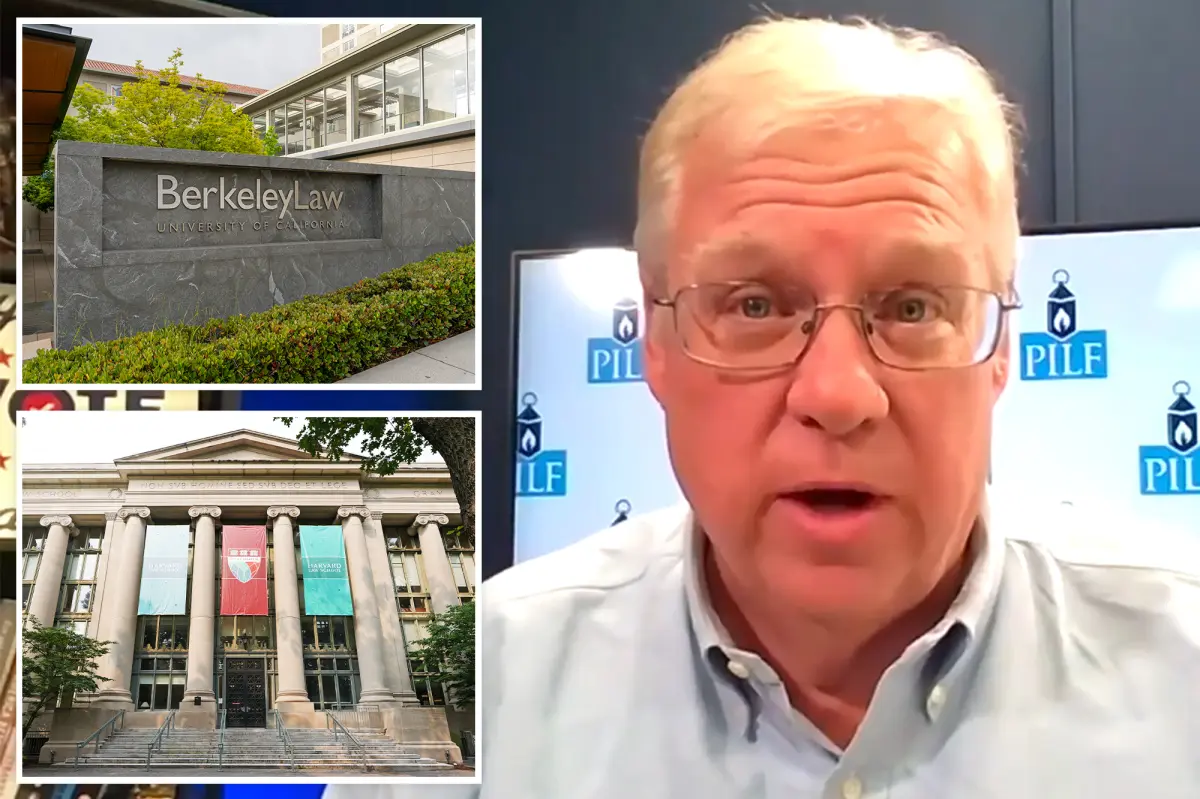
J. Christian Adams, president of PILF, told Fox News Digital that the large ideological gap among election lawyers can influence public policy, changes to election law and court decisions involving election-integrity statutes.
“Nobody had ever really studied what was happening in law schools,” Adams said. He said PILF’s review was the first effort to quantify the political orientation of election-law professors nationwide, describing the resulting imbalance as “absolute” and “dangerous.”
PILF’s review of course offerings at leading law schools likewise concluded that professors with a left-leaning outlook teach roughly 70% of election-law classes.
According to the report, those courses prepare students to litigate issues such as voter-identification requirements, citizenship verification, congressional redistricting, voter-roll maintenance and other election-integrity policies.
Many of those graduates later join voting-rights organizations, liberal advocacy groups and major law firms that take election-related cases to court.
Among the topics cited in course descriptions were “voter suppression,” racial and partisan gerrymandering, felony disenfranchisement, the Electoral College and what some classes call “election subversion.”
The report also singled out courses it viewed as reflecting a particular ideological perspective. One example was Harvard’s “Bonobo Sisterhood,” a class examining what bonobos might teach people about building a society without male sexual coercion.
PILF also cited election-law courses at Harvard, the University of Michigan, UC Berkeley and other institutions that explore social justice, racial inequality, alleged voter suppression, election subversion and proposals to overhaul the Electoral College.
The organization argues that this academic imbalance extends beyond campus and contributes to a broader divide in election litigation nationwide.
Adams, who represented a party in a Galveston County redistricting case, told Fox News Digital that liberal legal groups sometimes bring several times as many attorneys to hearings as conservative organizations—occasionally outnumbering them five-, six- or seven-to-one.
He recalled one trial in which roughly 25 attorneys appeared on the opposing side compared with five on his own. Adams said liberal groups can mobilize “an army” whenever voter-ID laws are at issue, while conservative lawyers defending election-integrity measures often lack comparable personnel and resources.
Adams said the political climate at many universities deepens the divide. He suggested that law schools in Republican-leaning states establish dedicated election-law centers as one way to build a stronger conservative legal network.
“There’s definitely a culture on campuses that makes it hard,” Adams said, pointing to his appearances at about 75 law schools. He said conservative speakers and participants are often treated as unusual presences, though he emphasized that the pattern is not universal.
Adams also noted that some schools without a strong ideological identity offer no election-law program at all. He questioned why so few Texas law schools teach the subject and suggested that state lawmakers could help by funding an election-law professorship at a public university.
The report does not claim that every professor it categorizes as left-leaning supports a specific legal result, nor does it suggest that political ideology by itself determines how an election case will be decided.
Instead, PILF argues that the imbalance affects the broader pipeline of students and attorneys entering election litigation. In its view, conservative lawyers have access to fewer specialized peers, academic programs and institutional resources when defending election-integrity laws.
PILF describes the process as self-reinforcing: left-leaning professors shape students’ first exposure to election law, many of those students move into voting-rights nonprofits or major law firms, and they ultimately become the attorneys challenging election-integrity measures in court.
According to the report, that translates into more than just an ideological disparity on campus but a nationwide advantage in the lawyers, research and resources available to each side of election litigation.
“We can solve this problem of this dangerous imbalance in election litigation, but we have to start to solve it,” Adams told Fox News Digital.
Fox News Digital reached out to Harvard, UC Berkeley, and University of Michigan law schools for comment.