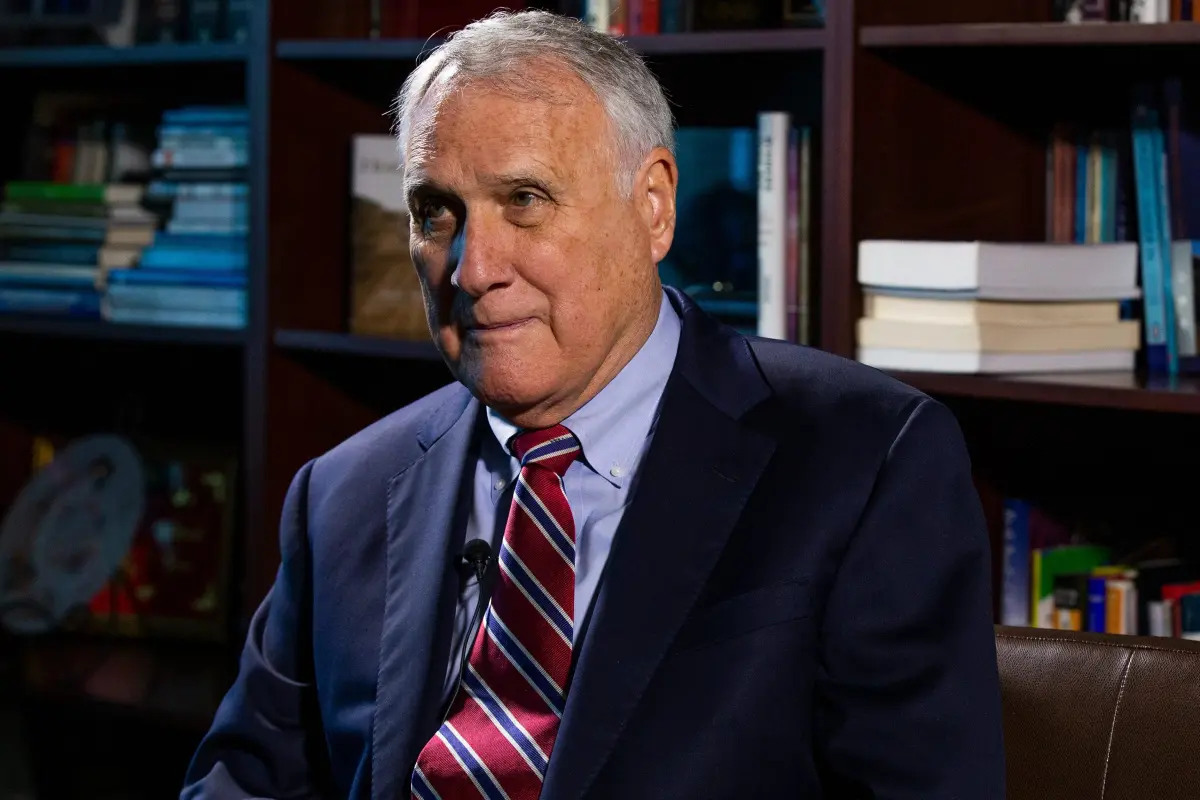

PHOENIX — Jon Kyl, the former Arizona Republican senator whose nearly 30-year congressional career influenced Western water policy and helped steer Brett Kavanaugh’s nomination to the U.S. Supreme Court, has died at 84.
Kyl died Wednesday night after suffering from a neurological disorder, according to Gordon James, a communications professional and longtime friend of the Kyl family. He stepped away from public life in December 2025 after revealing that he had been diagnosed with dementia.
Over almost three decades on Capitol Hill, Kyl served in both the U.S. House and Senate while the Republican Party shifted dramatically. His tenure stretched from the presidency of Ronald Reagan through the first administration of President Donald Trump.
Former Arizona Gov. Doug Ducey, who regarded Kyl as a mentor, called him a genuine statesman during a February 2025 interview with The Associated Press. Ducey contrasted Kyl’s steady, behind-the-scenes approach with Washington’s more theatrical political figures, describing him as a “workhorse” among the capital’s “showhorses.”
Ducey recalled that Kyl would often be found in the coach section of an airplane, seated in the aisle and absorbed in documents. “He was reading potential bills or Senate business,” Ducey said.
During his final full Senate term, Kyl’s Republican colleagues elevated him to minority whip. He left elected office in 2013 and became a lobbyist, but returned to the Senate for a short time in 2018 after Ducey appointed him to fill the seat vacated by the death of Sen. John McCain.
President Donald Trump welcomed the appointment, saying he looked forward to working with “the extraordinary senator.” Kyl served for fewer than four months before returning to the lobbying firm Covington & Burling.
Kyl offered a modest assessment of his Washington record during a 2012 discussion with former Supreme Court Justice Sandra Day O’Connor. He said many of his most meaningful accomplishments came not from pushing new initiatives, but from stopping harmful proposals from moving forward.
Born April 25, 1942, in Oakland, Nebraska, Kyl grew up in a farming community in Iowa represented in Congress by his father. He moved southwest at 18 to attend the University of Arizona, where he met his wife, Caryll, and later earned a law degree.
Before winning the first of four House terms in 1987, Kyl helped develop Arizona’s 1980 groundwater code while working as an attorney for a major water utility. The pioneering law established rules for managing groundwater in a drought-prone state, with particular emphasis on fast-growing population centers such as Phoenix and Tucson.
Kyl later played a central role in a landmark tribal water-rights settlement. Legislation he authored in 2004 helped resolve a dispute that had lasted for decades and secured the Gila River Indian Community enough water to fill nearly 313,500 Olympic-size swimming pools each year.
Sen. Mitch McConnell of Kentucky, who later became majority leader, praised Kyl’s legendary work ethic in a 2012 Senate speech. McConnell said Kyl had spent roughly 15 years working largely out of public view to bring the settlement to fruition.
Kyl described the effort as one of the most difficult projects of his career in a 2006 interview with the Phoenix New Times. He said he had been in a position to bring the parties together and believed the agreement was essential.
Arizona State University’s Kyl Center for Water Policy was named in his honor. Sarah Porter, the center’s director, said Kyl consistently made time for others and served Arizona effectively in Congress, particularly through his practical approach to water issues.
Porter said Kyl was focused on the public interest and routinely considered the consequences of policy decisions for future generations. She remembered him as “quite a dynamo” until his later years, when his wife was dealing with health challenges.
Ducey described Kyl as a Senate “giant” who was serious, candid, thoughtful and personable. In Ducey’s view, Kyl’s most significant political influence included helping hold Senate Republicans together in opposition to the Affordable Care Act and maintaining strong support for Israel.
Kyl supported legislation calling for hundreds of miles of fencing along the U.S.-Mexico border. He also joined Democrats in backing an immigration proposal that would have created a path to citizenship and temporary guest-worker protections for people living in the United States without authorization. The measure did not pass.
After leaving the Senate, Kyl helped guide Kavanaugh through the confirmation process as a lobbyist. When Kyl returned to Capitol Hill in 2018, he was widely regarded as Kavanaugh’s chief “Sherpa,” an informal term for the person who helps a Supreme Court nominee navigate the Senate’s demanding political terrain.
When announcing his dementia diagnosis, Kyl drew on Ronald Reagan’s earlier message after the former president disclosed his Alzheimer’s disease. Reagan had described the diagnosis as the beginning of a journey that would ultimately lead to the end of his life.
Kyl said he shared Reagan’s optimism about the future of Arizona and the country. Even while facing the diagnosis, he wrote that he considered himself “a very fortunate man.”