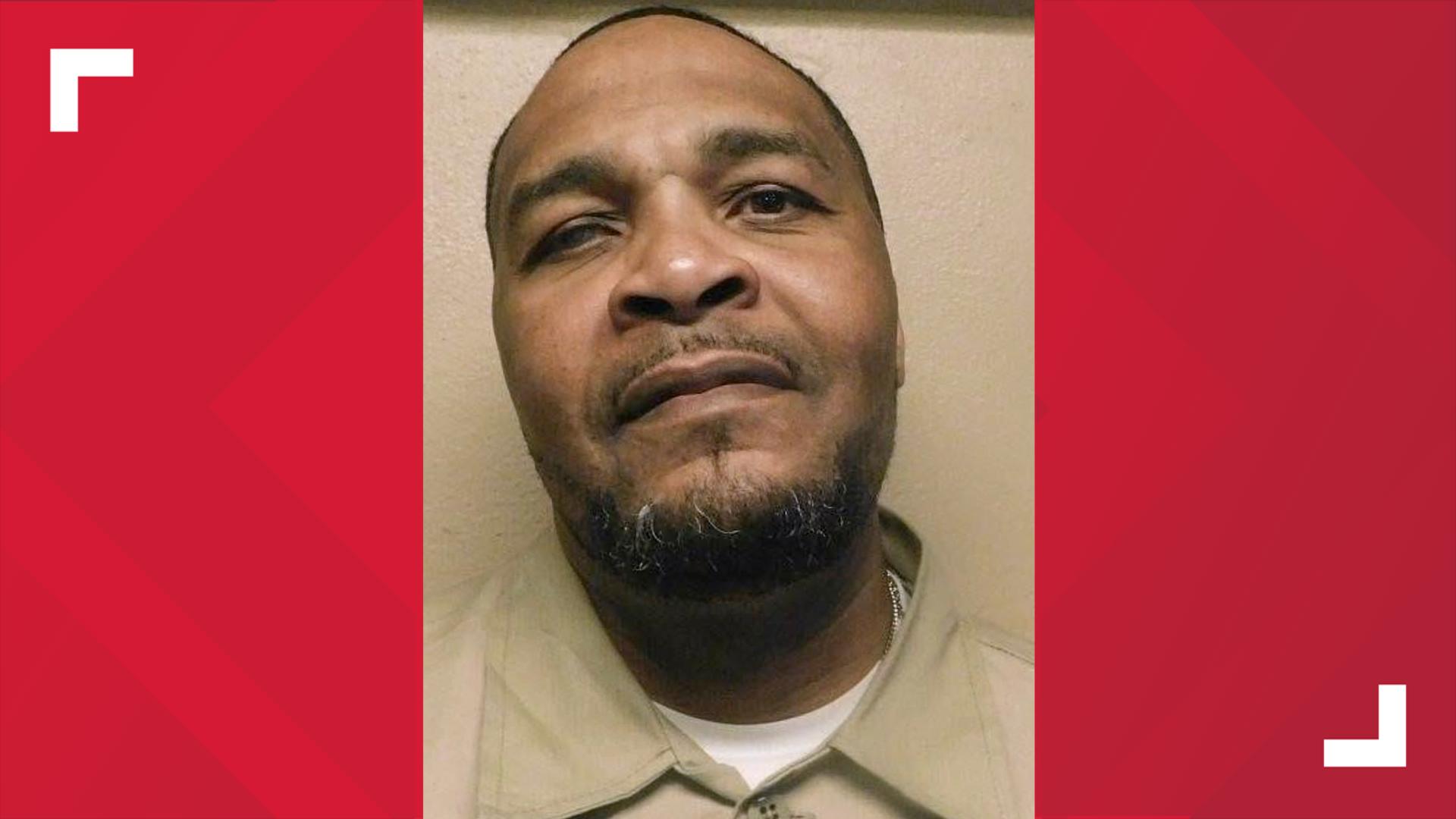

Lee’s attorneys and supporters made a final appeal to spare his life, pointing out that the jury had recommended life imprisonment—a decision the judge later overruled.
MONTGOMERY, Ala. — Alabama executed a man by lethal injection Thursday for a 1998 double murder, three months after a judge blocked the state from putting him to death using nitrogen gas.
Jeffery Lee, 49, was pronounced dead at 6:22 p.m. at William C. Holman Correctional Facility in Atmore, authorities said. His was the second execution in Alabama this year and the 27th carried out in the United States.
Lee was convicted of killing two people during a Dec. 12, 1998, robbery at Jimmy’s Pawn Shop in Orrville, a small town about 65 miles west of Montgomery. Store owner Jimmy Ellis and employee Elaine Thompson were shot and killed. Another employee survived after pretending to be dead.
The execution began shortly after 6 p.m.
“All is well. I just want to say to my family, I love them. To my brothers on life row. I love them,” Lee said in his final statement.
As the lethal injection started, Lee clenched his fists while lying on the prison gurney. His spiritual adviser held his feet and appeared to pray. Lee closed his eyes and did not appear to open them again.
Ruling blocked Alabama from using nitrogen gas method
Lee was executed 98 days after receiving a rare reprieve, when a judge ruled that Alabama’s nitrogen gas method violated the constitutional prohibition against cruel and unusual punishment.
Lee had been scheduled for execution by nitrogen gas in June, but the proceeding was stopped following the judge’s ruling. The decision was a setback for Alabama, which began using nitrogen as an execution method in 2024.
The Alabama attorney general’s office quickly filed paperwork seeking a new execution date for Lee, this time requesting lethal injection.
Lee’s lawyers and supporters unsuccessfully sought clemency, emphasizing that the jury had recommended life imprisonment before the judge imposed a death sentence. His attorneys also argued that Alabama should not legally have been permitted to change the execution method.
The jury voted 7-5 for a sentence of life imprisonment, but the judge overrode that recommendation and sentenced Lee to death.
Alabama abolished judicial override in 2017, ending the practice of allowing judges to alter juries’ sentencing decisions in capital cases. The change was not retroactive. On Tuesday, Lee’s supporters rallied outside the Alabama Capitol under the banner “HONOR THE JURY.”
Lee’s attorneys argued that Alabama should not have been able to move quickly to lethal injection. In 2018, Lee dropped a lawsuit challenging the state’s lethal injection process after Alabama agreed to execute him using nitrogen.
Two killed in 1998 pawnshop robbery
The surviving employee testified that Lee entered the shop, asked to see wedding rings and said he would return after getting money from his grandmother. He came back a short time later carrying a sawed-off shotgun and shot Ellis, Thompson and the other employee. The surviving witness fell to the floor, pretended to be dead and called 911 after Lee left.
Ellis was a singer whose voice closely resembled Elvis Presley’s. He gained a national following as an Elvis impersonator, performed as the masked singer “Orion” and was featured in a 2015 documentary.
Lee was convicted in 2000 of capital murder and attempted murder.
Supreme Court turns back stay request
The U.S. Supreme Court on Thursday rejected Lee’s request to halt the execution while it considered whether Alabama could switch to lethal injection. The justices denied the request without comment about six hours before the scheduled execution.
Lee filed a lawsuit in 2016 challenging Alabama’s lethal injection protocol. After the state authorized nitrogen as an execution method, Lee chose it as his preferred option. He agreed to dismiss the lethal injection case in 2018 after Alabama agreed that “if he is to be executed, defendants will carry out that execution by nitrogen hypoxia.”
Lee’s attorneys maintained that the agreement barred Alabama from using lethal injection. They argued that the state could instead revise its nitrogen protocol to comply with the Constitution or execute Lee by firing squad.
“I feel like they owe me their word because they came into agreement in 2018 that wouldn’t do what they are trying to do now,” Lee said in audio clips released by his team.
The state attorney general’s office asked the high court to let the execution proceed, arguing that nothing precludes the switch to lethal injection.
“An unpunished murder is an intrinsic and ongoing harm to those interests and to the rule of law. Nearly twenty-eight years is decades too long,” lawyers with the attorney general’s office wrote.
For decades, lethal injection was the generally preferred U.S. execution method until problems procuring and administering the drugs led states including Alabama to consider alternatives.
Lethal injection remains Alabama’s primary execution method. But in 2024, the state began carrying out some executions using nitrogen gas, which involves replacing breathable air with gas through a respirator mask, causing death from lack of oxygen. Nitrogen has now been used in seven executions in Alabama and one in Louisiana.
Copyright 2026 Associated Press. All rights reserved. This material may not be published, broadcast, rewritten, or redistributed.