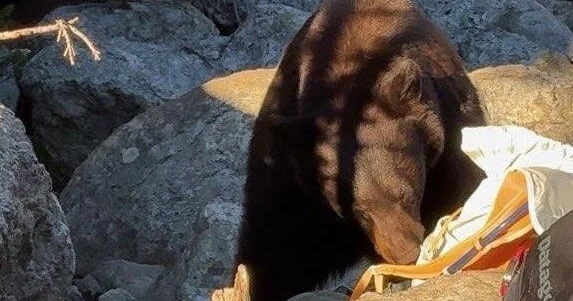
A black bear was euthanized at Grand Teton National Park last week after park officials said human visitors made decisions that contributed to the animal becoming a safety threat.
“We need to be clear—this bear was lethally removed because of poor decisions made by park visitors,” the park said. Officials reminded visitors that everyone has a role in keeping bears wild and urged them never to leave food unattended, even briefly.
Park staff killed the bear on Friday, Sept. 11, after witnessing what they described as a troubling pattern involving both the animal and visitors. The behavior, officials said, had intensified over several days.
The bear had repeatedly approached people near Delta Lake, a remote area of the Wyoming park. As staff monitored it more closely, they found the animal was unusually difficult to drive away, a sign that it may have learned to associate people with the prospect of receiving food.
The National Park Service says preventing bears from linking human activity with food is critical. Once bears begin associating campgrounds, picnic areas or other places frequented by people with an easy food source, their behavior can be difficult to reverse. They may then pursue food more aggressively, creating a potential danger for visitors, according to the agency’s website.
Grand Teton managers concluded that the bear’s repeated food rewards and growing proximity to visitors were consistent with food-conditioned behavior. The pattern created what the park called “an unacceptable safety risk” for anyone encountering the animal. Staff euthanized the bear in the Delta Lake area and removed its carcass from the backcountry the following morning.
The park advised visitors who see a bear approaching to immediately seal and stow any food or other items that could attract it.
“A bear that gets a food reward can learn that approaching people pays off,” the park said. “What may seem like a small decision in the moment can have serious consequences for the bear, other visitors and park staff. Help us keep bears wild by making the right choice every time.”
Grand Teton officials had received several reports about the black bear approaching visitors at Delta Lake earlier in the year. At that point, however, managers said they did not have enough information to determine whether the behavior reflected food conditioning or a limited series of isolated incidents. After the euthanasia, the park also explained why relocating the bear was not chosen.
“Translocation is an important tool, but it isn’t always a safe or effective option,” the park said. After reviewing the bear’s behavior and the surrounding circumstances, wildlife managers determined that all other options had been exhausted and that the animal posed a clear threat to human safety. The park emphasized that lethal removal is always a last resort.