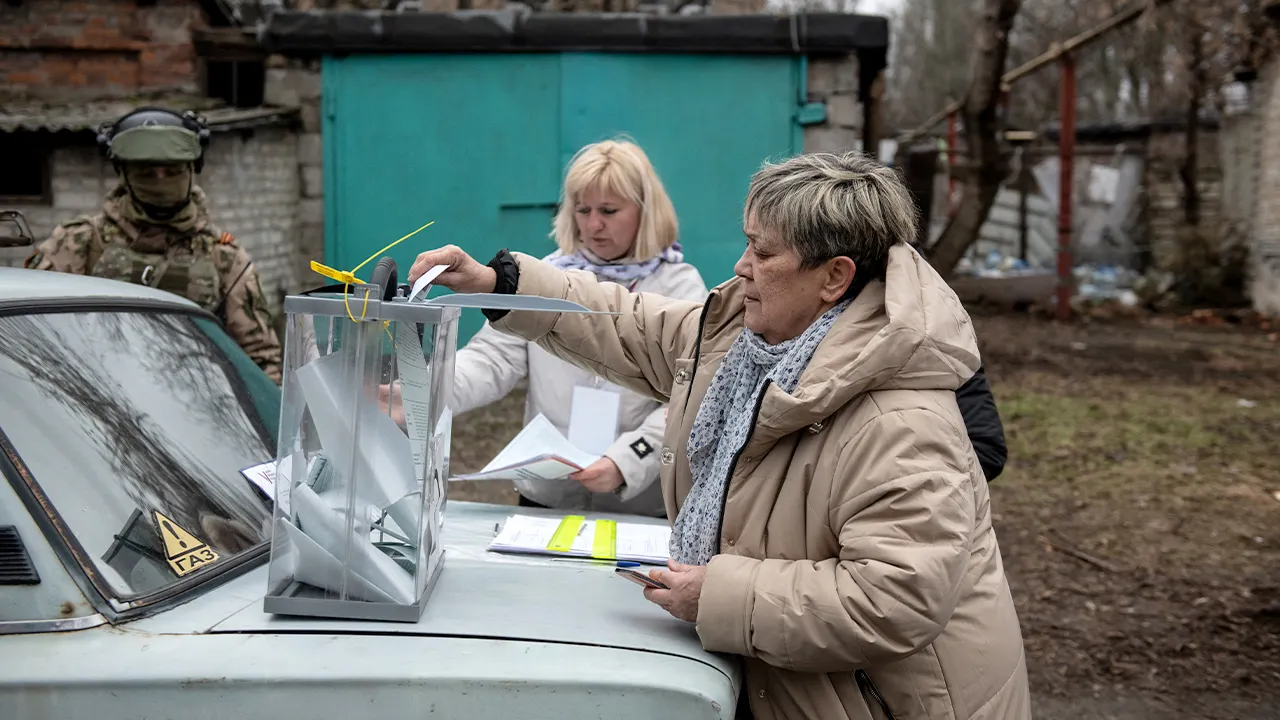

Russia’s State Duma elections opened Friday, marking the first parliamentary vote since Moscow launched its full-scale invasion of Ukraine in 2022. Voting is also taking place in Russian-occupied Ukrainian territories, where the Kremlin is seeking to manufacture an appearance of public backing for the war and its claimed annexation of parts of eastern Ukraine.
The Organization for Security and Cooperation in Europe was not invited to send election observers, which critics say underscores the Kremlin’s unwillingness to hold a free and fair contest.
“Russia’s refusal to invite an election observation mission seriously breaches its international commitments and shows a worrying disregard for democratic standards. Election observation is not optional — it is something that all OSCE participating States have agreed to, and it is a cornerstone of transparency and accountability,” OSCE Parliamentary Assembly President Pere Joan Pons told News Outlet.
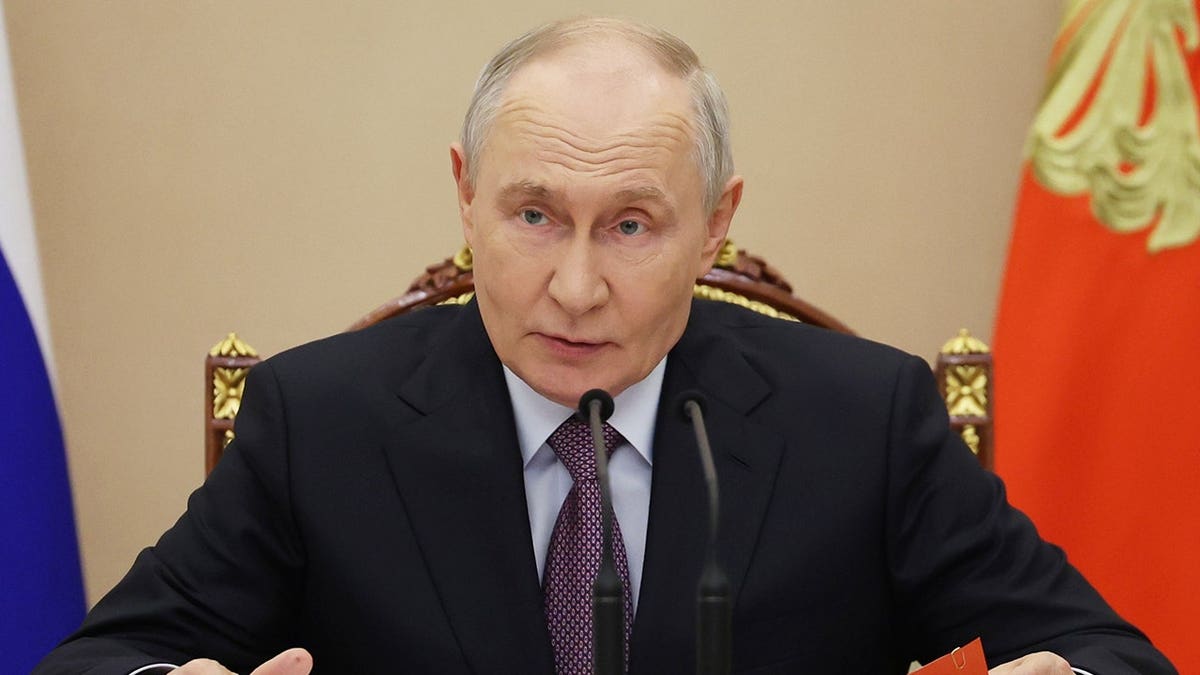
Russian President Vladimir Putin holds a Security Council meeting in Moscow on Friday, Aug. 7, 2026. (Alexander Kazakov/Pool Sputnik Kremlin via AP)
After the invasion, Russia introduced sweeping censorship measures that made dissent about the military operation or the armed forces a criminal offense while imposing state-backed narratives about the war.
The Kremlin’s effort to preserve public support for the war has also included a crackdown on political opponents. Lev Shlosberg, a prominent critic and leader of one of Russia’s few opposition parties, was sentenced by a Russian court to more than 11 years in a penal colony after condemning the war. Before his conviction, Russia’s Supreme Court barred Shlosberg’s Yabloko Party from competing in September’s Duma elections.
Nine parties are on the ballot, according to The Associated Press, and all are supportive of President Vladimir Putin. The list includes the Kremlin-aligned United Party.
After invading Ukraine in 2022, Moscow unilaterally declared the annexation of areas in the Ukrainian regions of Donetsk, Luhansk, Kherson and Zaporizhzhia. Putin signed legislation in 2023 authorizing elections in those occupied areas. Ukraine and the broader international community reject Russia’s claim of sovereignty over the territories.
Critics view Russia’s elections — including those held in occupied Ukrainian territory — as carefully staged exercises designed to reinforce Putin’s claim that the war and annexation were legitimate and lawful.
Keti Korkiya of the Foundation for Defense of Democracies’ Russia Program told News Outlet that, “Russians are ready to support, symbolically, Putin, the Kremlin and the war, but if they have to pay a personal price, or even [an] economic price, they are unwilling to do that. That’s why Russia has not done another wave of mobilization.”
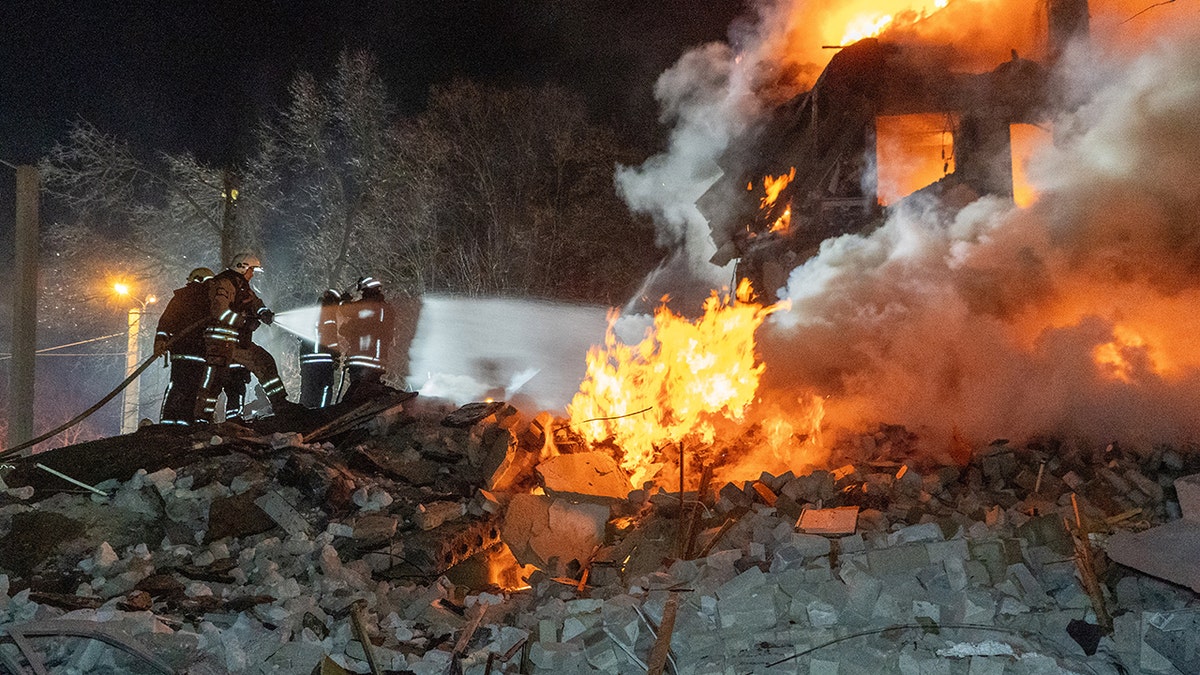
Firefighters put out the fire in a multi-story apartment building following a Russian missile attack in Kharkiv, Ukraine, on Saturday, March 7, 2026. (Andrii Marienko/AP)
Critics say the vote, like most elections held in Russia, is unfolding amid widespread fear, coercion and manipulation rather than the conditions needed for citizens to freely exercise a democratic right.
“It’s a total regime of terror,” Jaroslava Barbieri, a research fellow with the Ukraine Forum at Chatham House, told News Outlet.
The previous Russian election held in occupied Ukrainian territory took place in 2024, when Putin won a fifth presidential term with nearly 90% of the vote. Residents of occupied areas were pressured to obtain Russian passports, allowing authorities to create voter registries.
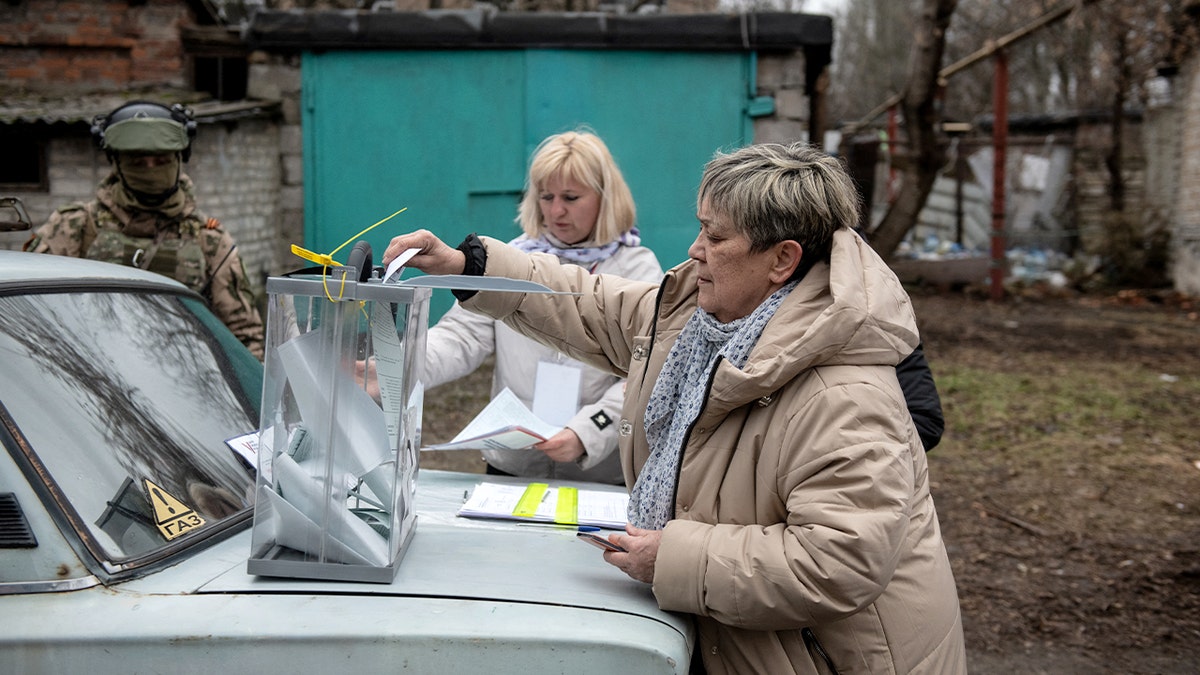
A woman casts her ballot at a mobile polling station during early voting in Russia’s presidential election in Donetsk, Russian-occupied Ukraine, on March 14, 2024. (Stringer/AFP via Getty Images)
“Election officials are escorted by Russian soldiers carrying ballot boxes door-to-door. Ostensibly framed as a security measure against Ukrainian partisan strikes, this is about direct intimidation, and it is a flagrant violation of international law,” Barbieri said.
Putin said in August that the Duma elections would demonstrate Russia’s stability on the global stage. The vote, he argued, would showcase the “maturity” of the country’s political system and its resilience in the face of foreign aggression, according to Turkey’s Anadolu Agency.
Russia’s Central Election Commission approved new voting rules for occupied Ukrainian territory, emphasizing early and at-home ballots. Officials said the measures were intended to prevent large gatherings that could be targeted in Ukrainian attacks.
Russia’s Foreign Ministry said on X that preparations for voting abroad were nearly finished. According to the ministry, 326 polling stations have been established at Russian embassies and consulates across 152 countries.
Volodymyr Ariev, a member of Ukraine’s Parliament, called on residents of temporarily occupied Ukrainian territories to boycott what he described as staged Russian elections.
“Any sort of elections held in the temporarily occupied Ukrainian territories is illegal and a breach of international law. Ukraine will never recognize any person ‘elected’ as a member of Parliament in the temporarily occupied territories,” Ariev told News Outlet.
Ariev said people living in the occupied east should leave their homes and spend election day someplace else, to avoid being coerced into voting.
Ivana Stradner, who focuses on Russian information security and influence operations at the FDD, says as Russia’s battlefield momentum stalls, the costs of war mount, and Ukraine brings the conflict to Russia’s doorstep, Putin is seeking political legitimacy this election.
“The State Duma elections give the Kremlin a chance to manufacture the appearance of public support… not only for United Russia, but for continuing Putin’s aggression in Ukraine. When the battlefield gets harder to sell, the ballot box becomes another way to sell the war,” Stradner told News Outlet.
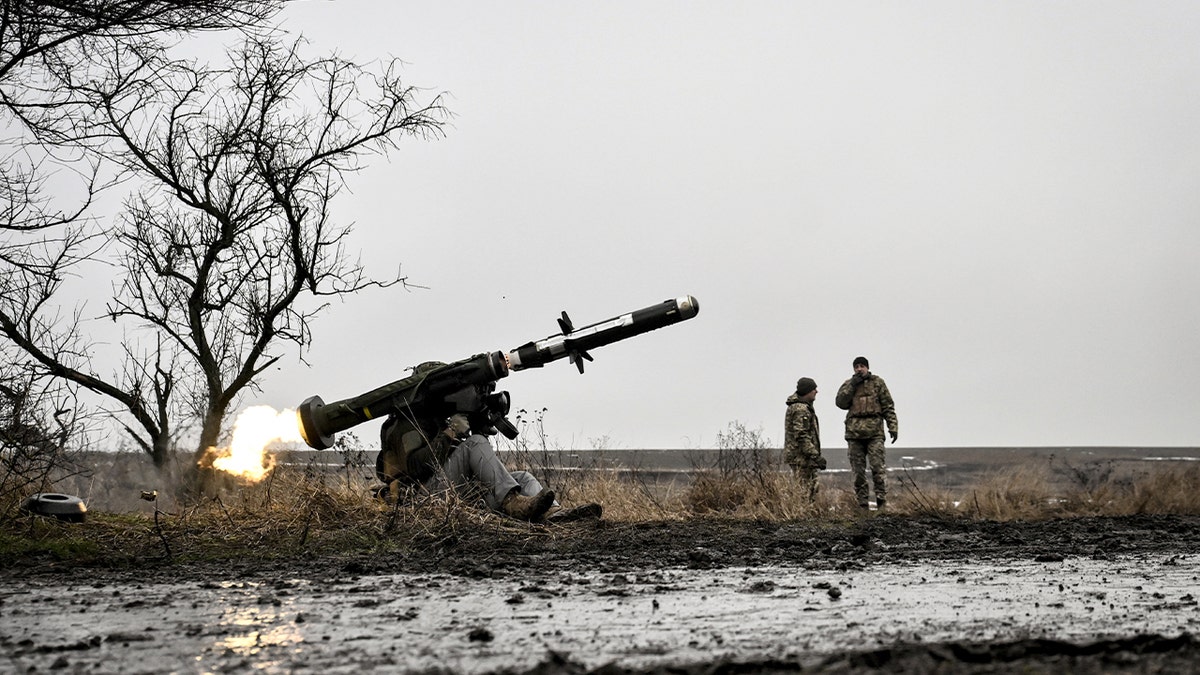
A soldier fires a third-generation Javelin man-portable anti-tank missile system during a professional training session on Jan. 7, 2026, in Ukraine. (Ukrinform/NurPhoto via Getty Images)
In the 2024 presidential elections, the annexed Donetsk People’s Republic and Luhansk People’s Republic delivered well above the current targeted 70% support, voting well over 90% for President Putin.
“Apparently, in Putin’s version of democracy, the voters get to choose… just not the result,” Stradner added. The three days of voting ends on September 20.