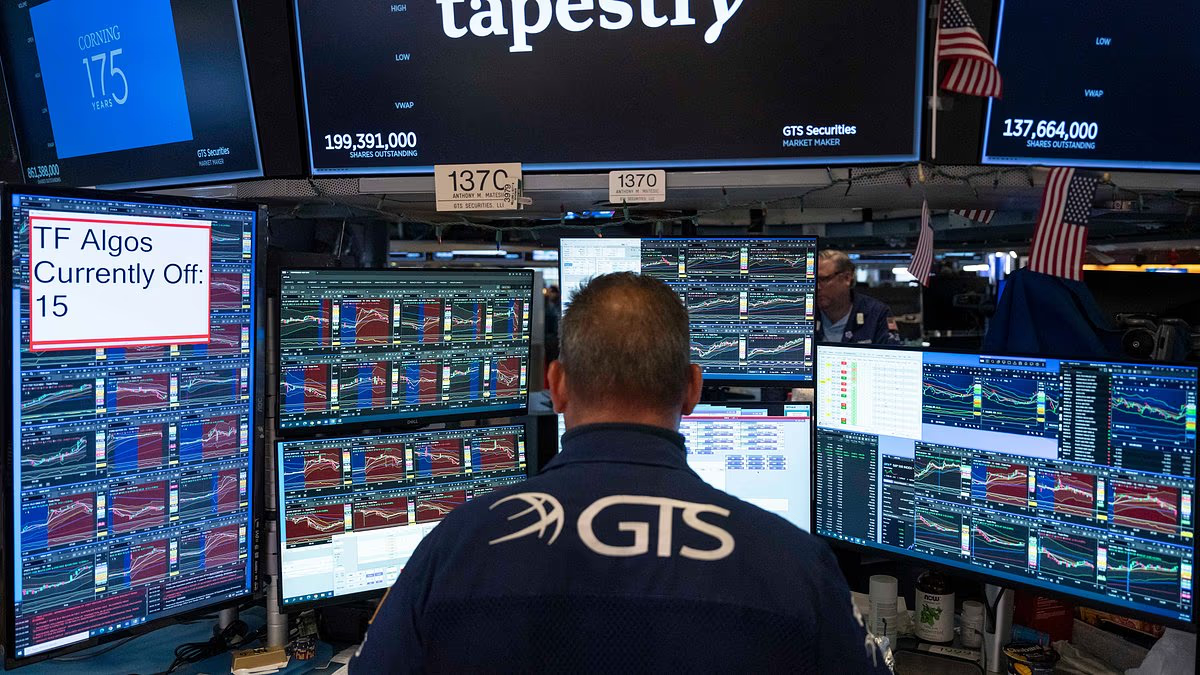

We are living through an extraordinary era, and financial markets are reflecting the same sense of unreality. One clear example is the artificial intelligence boom, which the hyperscalers are increasingly financing with debt rather than internally generated cash.
The boundary between science fiction and everyday life is becoming harder to distinguish. In Shanghai, shares in Unitree, a Chinese humanoid-robot manufacturer, surged by more than 600 per cent at one stage on its first day of trading.
Some technology billionaires claim that people will be commuting to work on the Moon within the next decade. (Have they tried persuading British civil servants who are addicted to working from home
to return to the office?) Meanwhile, US national debt has reached $40 trillion — a figure so vast it is almost impossible to comprehend.
Against this backdrop, a hedge fund tycoon recently told my colleague Alex Brummer that he expects a “great reckoning” to arrive. Alex advises investors to take the warning seriously and prepare. I agree.
But for ordinary private investors — those of us who are not billionaires — the difficult question is: how should we prepare?

Keep calm: History shows that shares recover, and investing in them remains the strongest hope for building lasting wealth that retains its purchasing power, writes Ruth Sunderland
With the Shiller CAPE ratio flashing a warning on Wall Street, the instinctive response may be to sell shares and move into supposedly safer assets such as cash or bonds. Yet recent turmoil in US and UK bond markets shows that investors increasingly recognise the risks attached to both.
Research published this month by financial services company Morningstar highlighted what it calls the “investor return gap” — the difference between the returns generated by investment funds and the lower returns actually received by the people who hold them.
Poor decision-making is partly responsible. Investors are often driven by powerful emotions, whether that means greed during a market rally or fear when prices begin to fall.
Morningstar estimates that these behaviours erased about 12 per cent of funds’ combined total returns over a 10-year period.
In monetary terms, approximately $3.8 trillion was lost through what Morningstar describes as “timing-related effects”.
My takeaway is straightforward: successfully timing the stock market is an exceptionally difficult skill, even for highly experienced and intelligent professionals.
Anyone can say that a market crash will eventually occur. Far fewer people can predict when it will happen. As a result, investors may sell too early and miss further gains, or wait too long and lock in painful losses.
Remaining invested, combined with patience — sometimes considerable patience — has historically been the more reliable approach. Shares have recovered from past downturns, and equities remain one of the best ways to build long-term wealth capable of preserving purchasing power.
Money held in cash faces not just the possibility but the near certainty of losing value over time as inflation erodes its purchasing power.
Bear markets are unavoidable. There is no foolproof strategy that removes all the pain, but investors can take practical steps to reduce its impact.
Keep an emergency cash reserve so that you are not forced to sell investments when prices are depressed. That reserve can also provide funds to buy shares at more attractive valuations.
Investing smaller amounts at regular intervals can be wiser than committing a large sum all at once. During a market decline, the same contribution buys more shares.
Finally, diversify across countries and sectors rather than relying on a single market or type of company. Retirees should also establish a clear withdrawal plan — and have the discipline to follow it.
A trusted financial adviser should help with this. In other words, keep calm and have a plan.
Tough justice
Life imprisonment and the confiscation of all personal property is a draconian punishment for white-collar crime.
That is how things are done in China, where Hui Ka Yan, the founder of Evergrande, has just been sentenced for his role in its collapse and the havoc it created.
He had already been banned from China’s capital market for life and fined millions for overstating revenues.
In the US, those who are found guilty of major financial wrongdoing, such as Sam Bankman-Fried, the former crypto-tycoon in jail for 25 years for fraud, also face severe consequences.
Here in the UK, there is little appetite for penalties like these, even if – without wishing to be overly flippant – we had the prison cells available.
The shenanigans at SVS Securities are not in anything like the same league as these mega-scandals, but the firm caused real harm to pension savers.
City watchdog the Financial Conduct Authority this week banned former chief Demetrios Hadjigeorgiou from senior management positions in financial services, which one can only hope will protect the public.
It also reduced the fine it gave him from £84,600 to £56,400, which must have infuriated victims.
Maybe we don’t want to lock people up and throw away the key, but if we want to protect investors against charlatans, surely we need to take penalties much more seriously.
DIY INVESTING PLATFORMS

AJ Bell
AJ Bell
Easy investing and ready-made portfolios

Hargreaves Lansdown
Hargreaves Lansdown
Free fund dealing and investment ideas

interactive investor
interactive investor
Flat-fee investing from £4.99 per month

Freetrade
Freetrade
Investing Isa now free on basic plan

Trading 212
Trading 212
Free share dealing and no account fee
Affiliate links: If you take out a product This is Money may earn a commission. These deals are chosen by our editorial team, as we think they are worth highlighting. This does not affect our editorial independence.
Compare the best investing account for you