The descent into terror began at 4pm, when the distant crackle of gunfire broke through the oppressive afternoon heat.
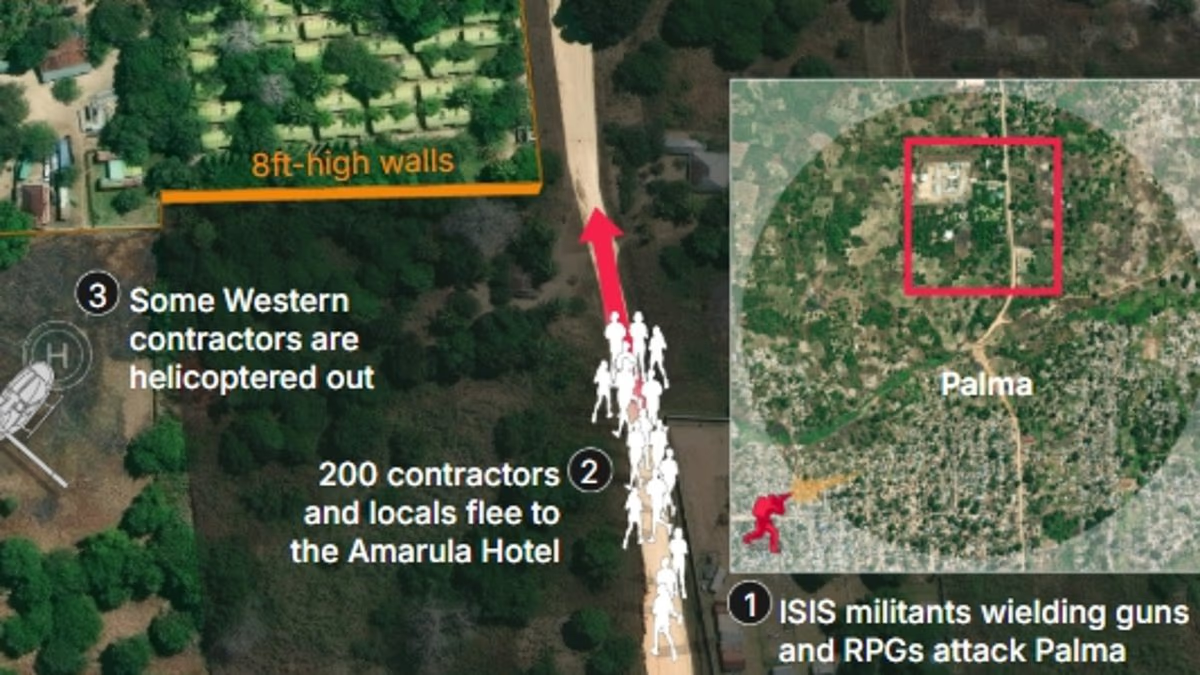
In Palma, a picturesque coastal town in northern Mozambique, ISIS-linked militants launched an assault from three directions, quickly overwhelming local security forces.
Armed with rocket launchers, rifles and machetes, the insurgents stormed through palm-lined streets, leaving beheaded bodies in their wake.
Just six miles from Palma stood a $20billion (£15billion) gas development operated by French energy giant Total. The project had drawn hundreds of foreign contractors to the area, including several Britons.
Now, foreign workers, local employees and residents were all fleeing to the Amarula Hotel, a fortified compound on the town’s outskirts. Once a refuge for homesick Western contractors, it had become the last line of defence against around 100 heavily armed insurgents.
The attack on Palma, which began on the afternoon of Wednesday, March 24, 2021, triggered five days of turmoil and left hundreds of people dead.
Among the victims was Philip Mawer, a 58-year-old from Somerset who worked as a project manager for RA International, a Dubai-based company contracted to build accommodation for gas workers.
Evidence heard this week at Mr Mawer’s inquest at Winchester Coroner’s Court revealed new details about his extraordinary courage. He reportedly declined a place on an evacuation flight from the Amarula Hotel, insisting that it should go to ‘women and children’ instead.
The inquest has also shed fresh light on the ordeal endured by those trapped inside the compound during the ‘Battle of Palma’, as they fought desperately to stay alive.
On the first day of the assault, during Mozambique’s hot season, Amarula Hotel employee Eusebio Alves Pinto was finishing his shift when he saw crowds running towards the compound.

ISIS-linked militants celebrate capturing the town of Palma in Mozambique in March 2011

People trapped inside the Amarula Hotel used white fabric to spell out the word ‘HELP’
‘I asked them what was happening? They said the situation was not good,’ he told local television station TVM. ‘Then I began to hear gunshot after gunshot.’
Mr Alves Pinto immediately turned around and joined the stream of people seeking shelter inside the hotel.
For Palma’s residents, the attack came at an especially vulnerable moment.
The town was not only crowded with contractors working on the region’s expanding gas industry; it was also sheltering thousands of people who had fled violence elsewhere in Cabo Delgado. The predominantly Muslim province has been battling an Islamist insurgency since 2017.
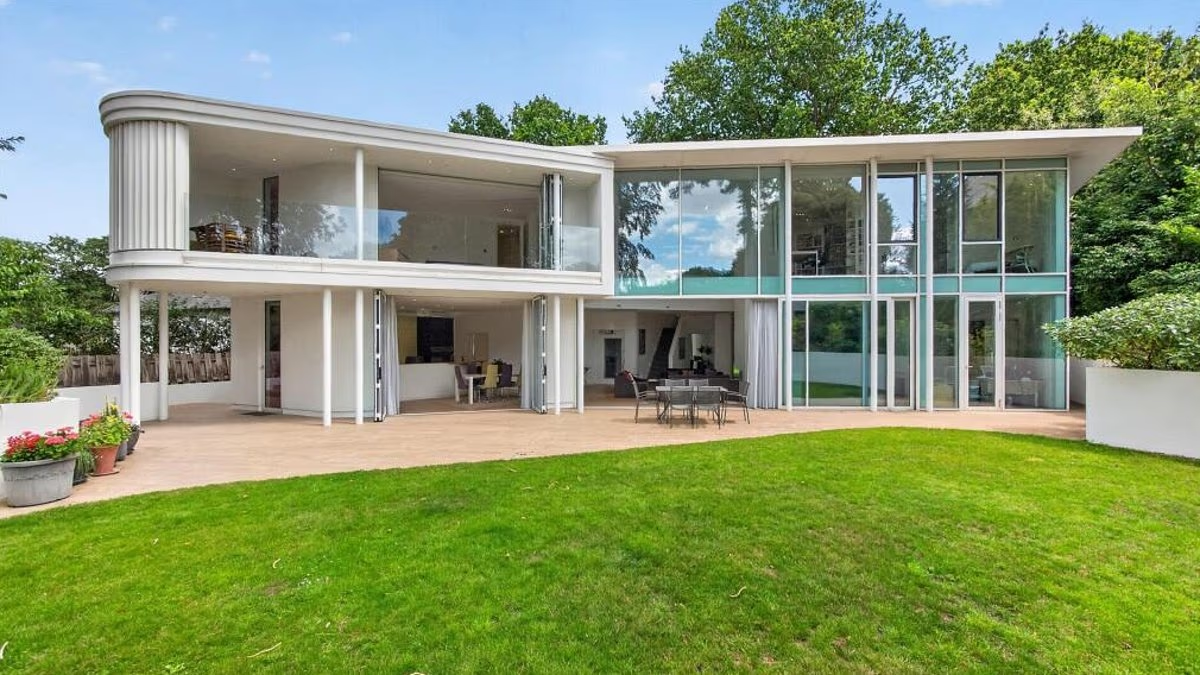
Before March 24, the Amarula Hotel had served as a home away from home for foreign contractors. Its landscaped grounds featured 60 air-conditioned rooms, a swimming pool and a seafood restaurant.
At first, the roughly 200 people sheltering inside were able to contact relatives and describe the unfolding crisis. But their telephone and internet connections were soon cut off.
Desperate to attract the attention of aircraft flying overhead, those trapped inside used white fabric to spell out ‘HELP’ in the hotel courtyard.
Beyond an eight-foot wall, fighters from an ISIS-linked group known locally as Al-Shabaab waited nearby. Despite the shared name, the group had no connection to the notorious Somali organisation of the same name.
Recalling his first 24 hours inside the compound, one foreign contractor recalled listening ‘to this battle through the day and night’.
By Thursday – a day after the initial assault – ‘mortar bombs were landing at our fence [and] the bullets were hitting the hotel,’ he told the BBC.
By this point, the battle against the militants had passed from the Mozambican military to the Dyck Advisory Group (DAG), a South African private security firm hired by the country’s government.
Despite the ever-present threat of gunfire, the company began airlifting people from the hotel in helicopters, which could carry six people at a time.
They evacuated 23 lucky souls on Thursday. Brit Philip Mawer was offered a seat on one of the flights, but heroically turned it down.

Up until March 24, 2021, the Amarula Hotel had been a home-from-home for foreign contractors

British contractor Philip Mawer in the hotel’s grounds with the two dogs that were airlifted out alongside the hotel’s manager. He died shortly after during an attempted breakout
After another hellish night, Friday morning dawned with another helicopter evacuation flight carrying hotel manager Timothy Roberts – accompanied by his two German Shepherd dogs.
Mr Roberts has been heavily criticised for ‘abandoning’ the hotel, and Mr Mawer’s inquest this week heard claims he ‘locked the fridges and switched off the WiFi’ before jumping into the aircraft
But the South African defended his decision by insisting he had been acting on the orders of its owners. Meanwhile, the helicopter pilot insisted the dogs were put in the hold, so they did not take up spaces that could have been used by other evacuees.
CONTINUE READING: Mike Rogers Taps Todd Beamer’s Father in Emotional 9/11 Michigan Ad
Back at the hotel, food and water supplies were running low, and the ISIS fanatics had encircled the perimeter fence.
In their desperation, around 170 of the remaining residents decided to attempt a breakout – gathering 17 vehicles in the courtyard before bursting out through a gate.
Mr Mawer took part in the convoy but declined a spot in an armoured B6 truck, opting to drive himself in a more lightly defended vehicle.
When the convoy screeched through the hotel’s gates, it was immediately met with a hail of gunfire from the insurgents.
Mr Mawer was struck with an RPG and killed. Also cut down in the convoy ambush was Adrian Nel, a South African who had been contracted to build workers’ accommodation camps.
His father and younger brother were also in the convoy but managed to escape and hide in the bush.
‘He died on a very violent and unnecessary day,’ Mr Nel’s mother, Meryl Knox, said later. ‘It’s just devastating, body numbing, mind numbing.’
Nick Alexander, a dual British-South African citizen, was in the final vehicle in the convoy that attempted to escape, with Mr Mawer just one vehicle ahead of him.

The bar area in the hotel shortly after it was recaptured by members of the security forces

Western contractors, staff and locals rapidly ran out of food during the siege. Pictured is the hotel’s kitchen

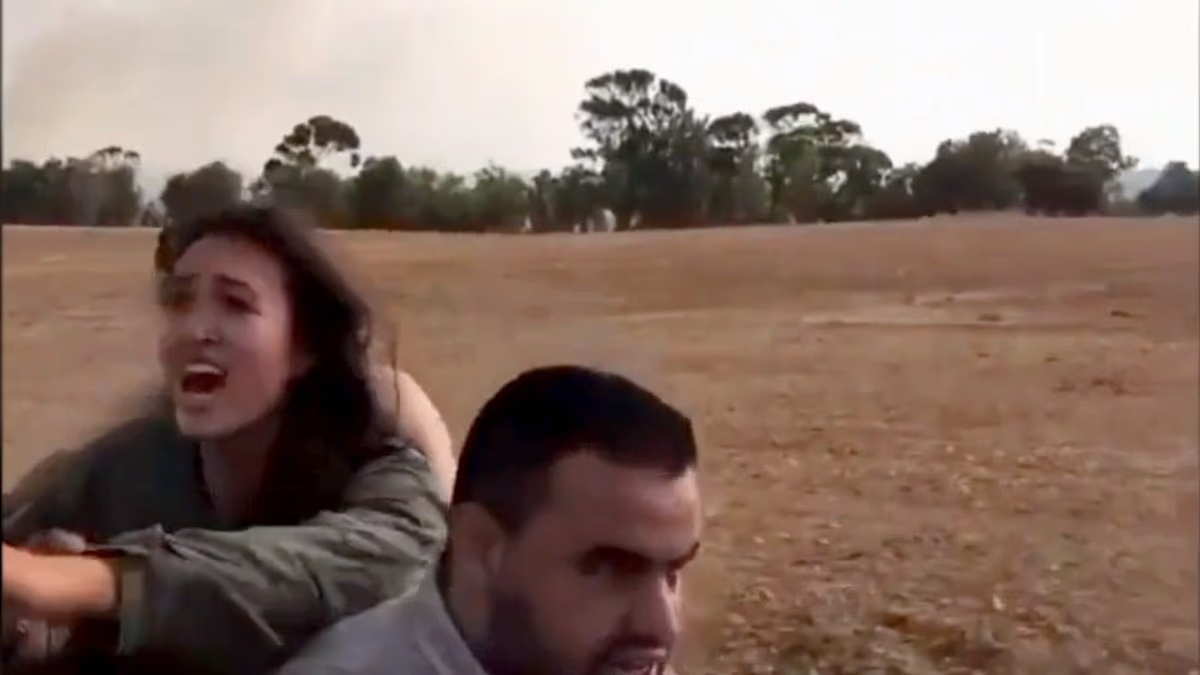
ISIS-linked militants streaming into the coastal town – forcing locals and foreigners to flee for their lives
He told Mr Mawer’s inquest that the decision to flee in convoy was ‘provoked’ by news that insurgents were at the south of the compound and ‘the manager leaving on the Everett chopper’.
Mr Alexander described breaking into a government vehicle to seize an AK-47 before heading to the bush to hide with two others.
They spent two days crawling through the dense vegetation before finally being rescued.
Only seven of the 17-car convoy made it past the insurgents. Between 40 to 50 people were inside – many shot and injured. At least seven people were confirmed to have been killed in the ambush, but witnesses believe it was many more.
The survivors scattered into forests, mangroves and nearby villages to avoid capture by the militants, and many were later picked up by DAG mercenaries.
While most of those sheltering inside the hotel had been rescued by the end of the week, it took soldiers several weeks to clear all the remaining terrorists out of Palma.
As they did, they came across countless horrors – including the bodies of 12 people laid under a tree. Each of them had their hands tied behind their backs and their heads cut off.
While the final death toll has not been established, more than a thousand people are believed to have been killed or abducted – the vast majority of them Mozambican civilians.
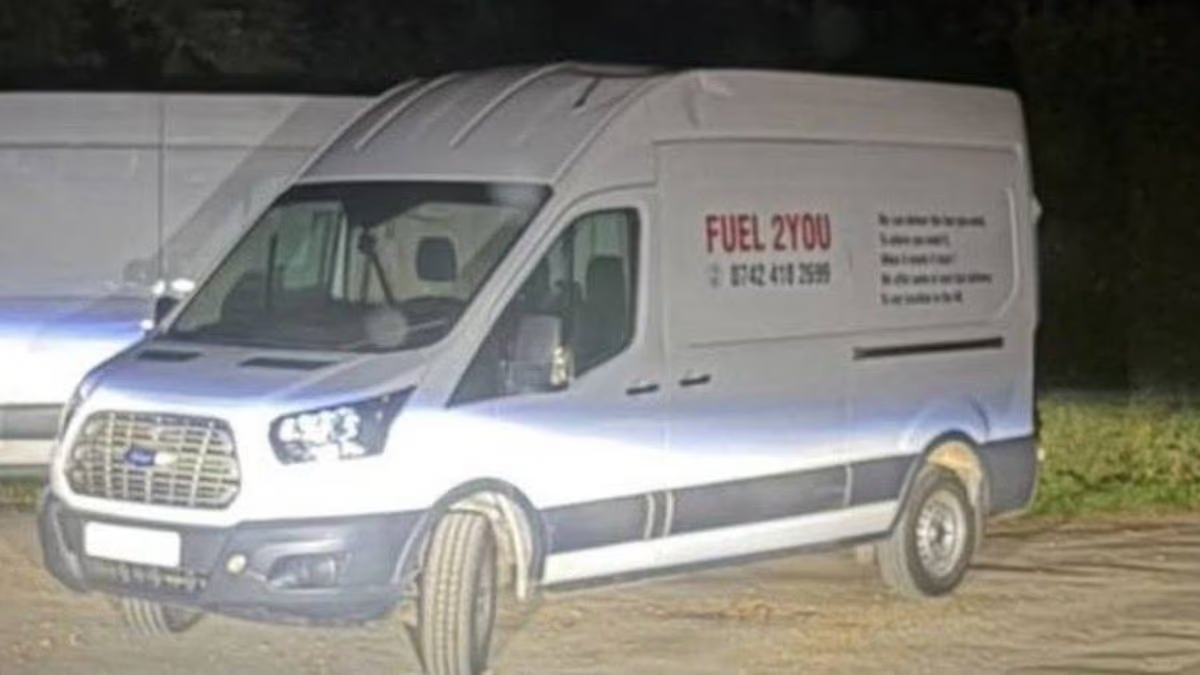
In the years that followed, French energy giant TotalEnergies came under heavy scrutiny for allegedly blocking a rescue attempt by the SAS. The company was also accused of failing to provide enough fuel for evacuation helicopters.
At this week’s inquest, TotalEnergies was said to have acted ‘contrary to the interests of Mr Mawer and everyone there’ and more people could have been saved if they had provided fuel for helicopters.

A car that was part of a convoy which broke out of the hotel – only to run into an ambush

A Mozambican soldier patrols through Palma in August 2021 after security forces regained control
In response, TEPMA1 – a TotalEnergies Mozambican subsidiary – denied having any responsibility for Mr Mawer and said it could not release fuel to DAG, the private military group working on behalf of the Mozambique government fighting insurgents and rescuing hostages.
Concluding Mr Mawer’s inquest, Hampshire coroner Jason Pegg ruled he did not have the evidence to find that corporations had any responsibility for evacuation.
‘There’s no evidence before me that any corporation had or should have assumed responsibility to formulate an evacuation plan for Philip or affect a rescue for Philip.
‘It might be that some within the hotel, perhaps Philip himself, hoped that in their time of crisis a corporation would come to their rescue.
‘But because that’s what they thought doesn’t mean there was any responsibility to do so. The speed of the attack was simply not anticipated.’
Addressing Mr Mawer’s two brothers directly, Mr Pegg said: ‘Your brother was a true leader.
‘He put his team and others first before himself and he did so at a time when it’s quite likely, very likely, he would have been in fear.’
FIND OUT MORE: Made In Abyss Author Controversy: Akihito In Trouble?