
British scientists have moved a step closer to understanding how ageing might be slowed after developing a compound that extends the lifespan of several animals.
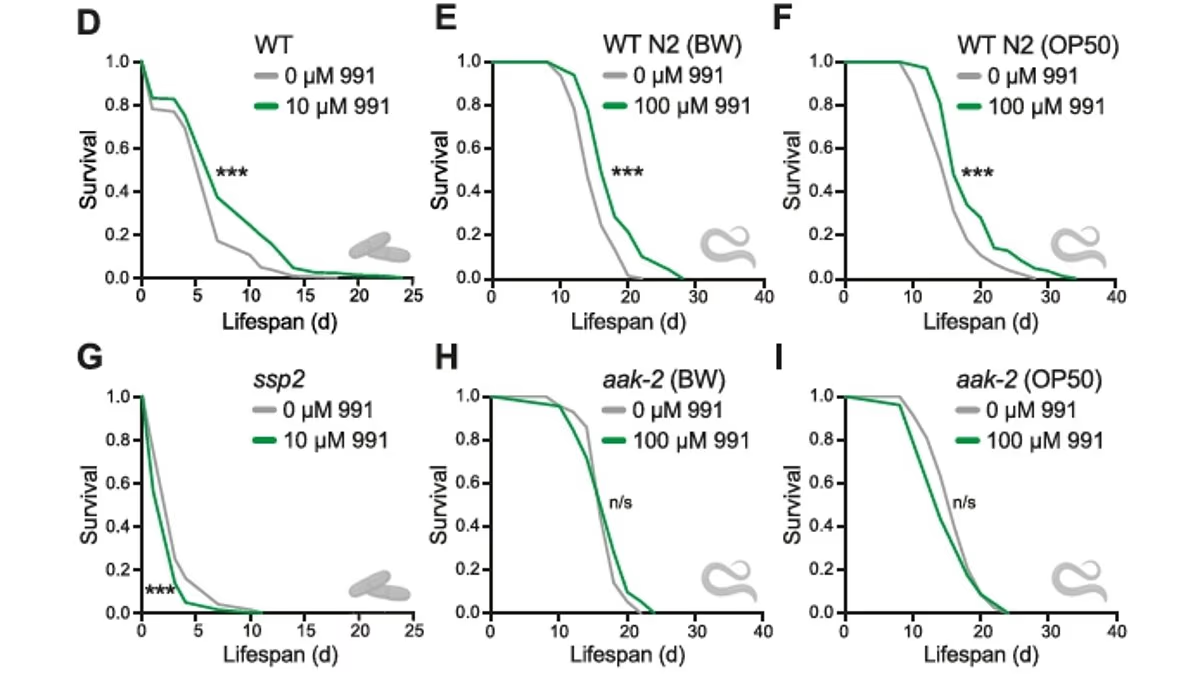
The experimental drug, known as 991, increased the lifespan of yeast, worms and fruit flies by as much as 25 per cent.
The compound activates AMPK, a protein that helps cells manage and generate energy during periods of stress, exercise or fasting. Researchers have long believed that this natural survival response may also help delay some of the biological processes associated with ageing.
The findings have raised the possibility that the approach could one day benefit humans, although scientists stress that such applications remain a long way off.
Professor Filipe Cabreiro of the UK’s Medical Research Council (MRC) said: ‘The field is still a long way from anti-ageing clinical trials in humans. This is because ageing is not technically classified as a disease.
‘But improving health in older age would be hugely beneficial from a societal and healthcare perspective, since ageing is a major risk factor for so many diseases, such as heart disease, diabetes, cancer and dementia.
‘The ability to make individuals healthier for longer, for instance by pharmacologically targeting energy balance through AMPK, would be a major biomedical breakthrough.’

The study found that the experimental drug extended the lifespan of yeast, worms and flies by up to 25 per cent
AMPK is sometimes referred to as the body’s ‘fuel gauge’ because it continuously tracks the amount of energy available within cells.
As energy supplies decline, the protein functions as a biological switch. It suppresses processes that consume large amounts of energy while activating systems that help produce more fuel.
Exercise, fasting and other types of physical stress naturally activate AMPK, allowing cells to adjust when resources are scarce.
Interest in AMPK has grown because the protein affects several processes associated with ageing, including metabolism, inflammation and the repair of damaged cells.
Its central role in the body’s metabolic network has also connected AMPK with conditions such as obesity, type 2 diabetes, cardiovascular disease and dementia.
IN CASE YOU MISSED IT: Off-Duty Emergency Workers Unable to Save Devoted Mother in M4 Crash
A number of widely used medicines, including the diabetes drug metformin, are known to activate AMPK. That has prompted researchers to investigate whether the pathway could be used to support healthier ageing.
However, many of these medications activate AMPK indirectly, making laboratory and clinical findings more difficult to verify and interpret.

Known as 991, the drug activates AMPK, a protein that regulates energy levels inside the body
To address that problem, the researchers used 991 to activate AMPK directly in fission yeast, nematode worms and fruit flies.
The organisms were selected because their relatively short lifespans allow scientists to observe the effects of potential treatments more quickly.
Dr Helena Cochemé, head of the MRC’s Redox Metabolism Group, said: ‘The fact that we can extend lifespan in yeast, worms and flies is very exciting.
‘Worms and flies in the lab live for around three weeks and three months respectively, …so we can make progress and discoveries much more rapidly and efficiently than in mammalian systems.
‘Our study is the first demonstration that directly targeting AMPK using a drug can have longevity benefits in living organisms.
‘If a treatment works successfully in three such distantly related species, then these results give us more confidence that in the longer-term, the effects possibly translate to mammals and eventually perhaps humans.’
Having demonstrated clear longevity benefits in yeast, worms and flies, the scientists are now aiming to see whether the same effects can be replicated in mice.
They say the fact that direct AMPK activators have already shown a good safety profile in trials for metabolic conditions raises hopes that the drugs could one day be used more widely in medicine.
The study, published in the journal Aging Cell, was primarily publicly funded by the MRC, part of UKRI.
The research also involved contributions from scientists at Queen Mary University of London, the Francis Crick Institute and the University of Lyon.