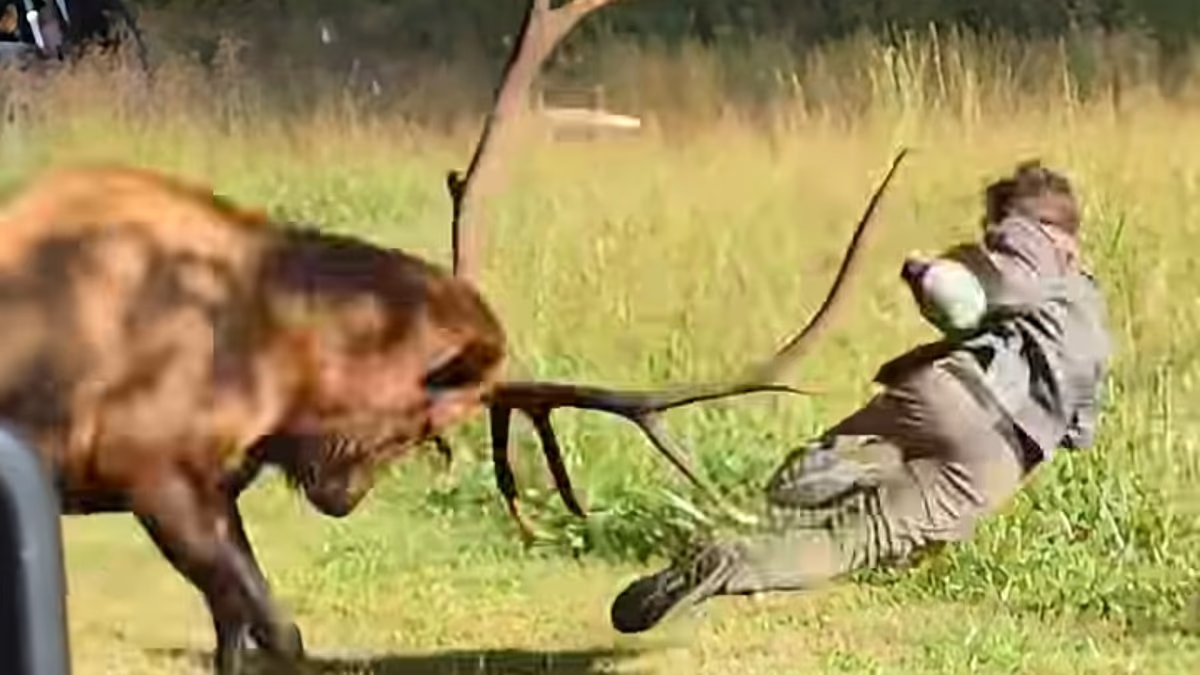
A dramatic video captured the moment a massive bull elk charged a man, knocked him into the air and left witnesses scrambling to drive the animal away by sounding their car horns.
The elk had been wandering along a street near the Great Smoky Mountains when the unidentified man appeared behind a tree.
As the animal suddenly rushed toward him, the person filming could be heard gasping. The elk pursued the man around the tree.
The man tried to escape but slipped and fell. The elk then closed in, striking him with its head and launching him into the air.
Several witnesses began honking from their vehicles in an effort to frighten the elk away. The man was later seen lying in the grass, although officials have not released details about the extent of his injuries.
Tracy Howells, who first posted the footage online, said the incident took place Saturday at the Oconaluftee Visitor Center on the north side of Great Smoky Mountains National Park.
“Please keep your distance from the elk, especially during rut!!” Howells wrote.
The video quickly spread across social media, prompting viewers to warn others against approaching the powerful wild animals.

A bull elk was captured on video headbutting a man, sending him flying into the air
“It’s important for people to realize that things like this don’t just happen in Yellowstone. Wild animals are unpredictable,” one commenter wrote.
Another person said they visit the area nearly every week to see the elk, but urged tourists to remain inside their vehicles. “It’s mating season and the big guys are territorial, especially now! It’s not a petting zoo! Signs are posted for everyone! Read!” the commenter added.
Charles Sellars, superintendent of Great Smoky Mountains National Park, responded by urging visitors to stay at least 25 yards away from elk, with extra caution advised during mating season.
“Visitors are encouraged to experience the beauty of elk in their natural habitat while prioritizing safety and conservation,” Sellars said.
“Elk are wild animals and can react instinctually to perceived threats. In particular females (cows) with calves and males (bulls) will defend their territory.”
The footage also prompted concern among conservationists that the elk could be euthanized. A petition was launched calling for the animal to be spared.
“Something feels inherently wrong about punishing a creature of the wild for acting on its instincts when it was intruded upon by a human who ignored clear safety advice,” the petition stated.
“The bull elk, a majestic symbol of our beautiful wilderness, has been marked for execution because it defended itself when a person chose to violate the park’s guidelines. This unfortunate encounter was not the animal’s fault. After all, how can we blame an elk for doing what comes naturally?”

Bull elk shed their antlers at the start of the year. They begin growing them back before shedding their velvet by August, making the animals especially likely to spar in September and October
Join the discussion
Should wild animals face consequences when humans ignore safety rules and get hurt?
The petition reached almost 5,000 signatures, with many arguing that the man intruded on the elk’s space.
However, Sellars denied the rumors and said in his statement that the park had no plans to euthanize the elk.
The incident occurred just two days after the park warned of the rut, which occurs from early September until late October.
Bull elk shed their antlers from the previous season at the start of the year and grow new ones under a velvet covering by August.
Hormonal changes during this time end the growth phase, and the velvet is rubbed off to reveal new antlers.
When they approach the rut, bull elk use their new antlers to intimidate and spar, often seeing anything as a threat.
Park officials have warned visitors to keep their distance, warning that encroaching on the elk’s space is against federal law.
Visitors have also been advised never to stop in the road or pull over to watch the elk from afar, and never to feed them.
Our News Outlet has reached out to park officials for additional comment.