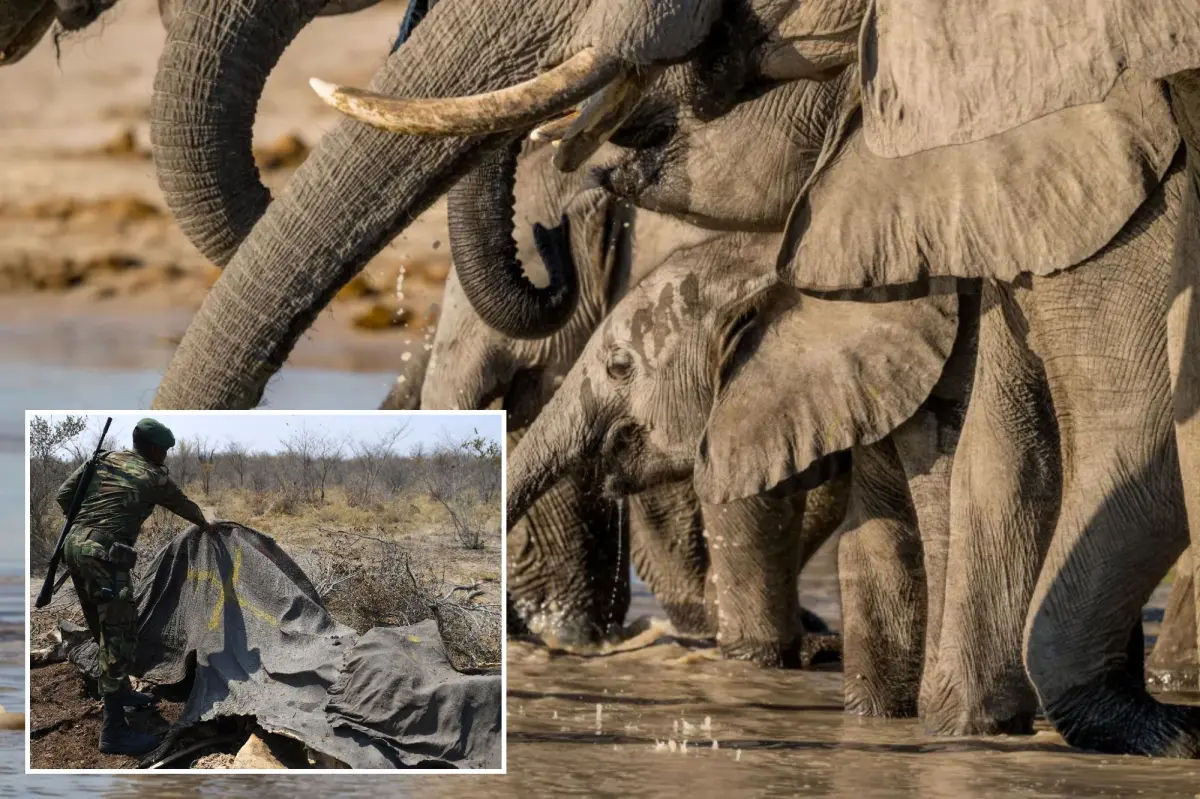

GABORONE, Botswana — Botswana’s decision to authorize the hunting of 23 elephants during its independence celebrations has triggered backlash from conservation advocates and former President Ian Khama.
Hunting permits were distributed among several districts, each assigned part of the national quota. Government officials said Friday that the elephant meat would be shared with rural communities facing food insecurity.
The African savanna elephant is classified as endangered by the International Union for Conservation of Nature. Botswana, however, is home to the world’s largest elephant population, estimated at roughly 130,000 animals.
The country’s elephant culling and hunting policies have repeatedly drawn international criticism. Authorities argue that regulated hunts are needed to control the population and reduce dangerous encounters between people and wildlife. Botswana ended a ban on elephant hunting in 2019, citing the animals’ rapidly increasing numbers.
In recent years, Botswana’s annual hunting quotas have ranged from about 200 elephants to more than 400, depending on the season and government assessment.
Officials also approved the hunting of dozens of antelope this week as part of the same program. The measures coincided with Botswana’s celebrations marking 60 years of independence from Britain on Wednesday.
The Botswana Elephant Protection Society condemned the elephant hunt as irresponsible, warning that it could make nearby herds more aggressive toward people. “When one elephant is shot, the rest become defensive,” the organization said.
Across Africa, elephants can pose a serious threat to communities, destroying crops, damaging infrastructure and, in some cases, injuring or killing residents.
ALSO READ: Ivanka Trump Shares Heartwarming Photos From Grandmother’s 100th Birthday
The resulting tension between people and wildlife remains a pressing challenge for countries across the continent.
Several other nations, including neighboring South Africa, also permit limited elephant hunting through government-set annual quotas.
Botswana relies heavily on wildlife tourism and has established a compensation system for residents affected by conflicts with animals. Hundreds of such incidents are reported each year.
The size of Botswana’s elephant population became a global political issue in 2024. Then-President Mokgweetsi Masisi and his administration responded to criticism of trophy hunting from Britain and Germany by offering to send tens of thousands of elephants to those countries.
“It is very easy to sit in Berlin and have an opinion on our affairs in Botswana,” Masisi said, according to Germany’s Bild newspaper. He also insisted that managing the country’s elephant population was “no joke.”
Dimakatso Ntshebe, deputy director in Botswana’s Department of Wildlife and National Parks, defended this week’s hunt.
“Wildlife conservation must deliver meaningful benefits to the communities that live alongside wildlife and contribute to its protection,” Ntshebe said Friday.
Khama, who led Botswana from 2008 to 2018 and now serves as a regional traditional chief, said he opposed the decision. He warned that it could create an “expectation” that elephants will be killed whenever the country holds major national celebrations.