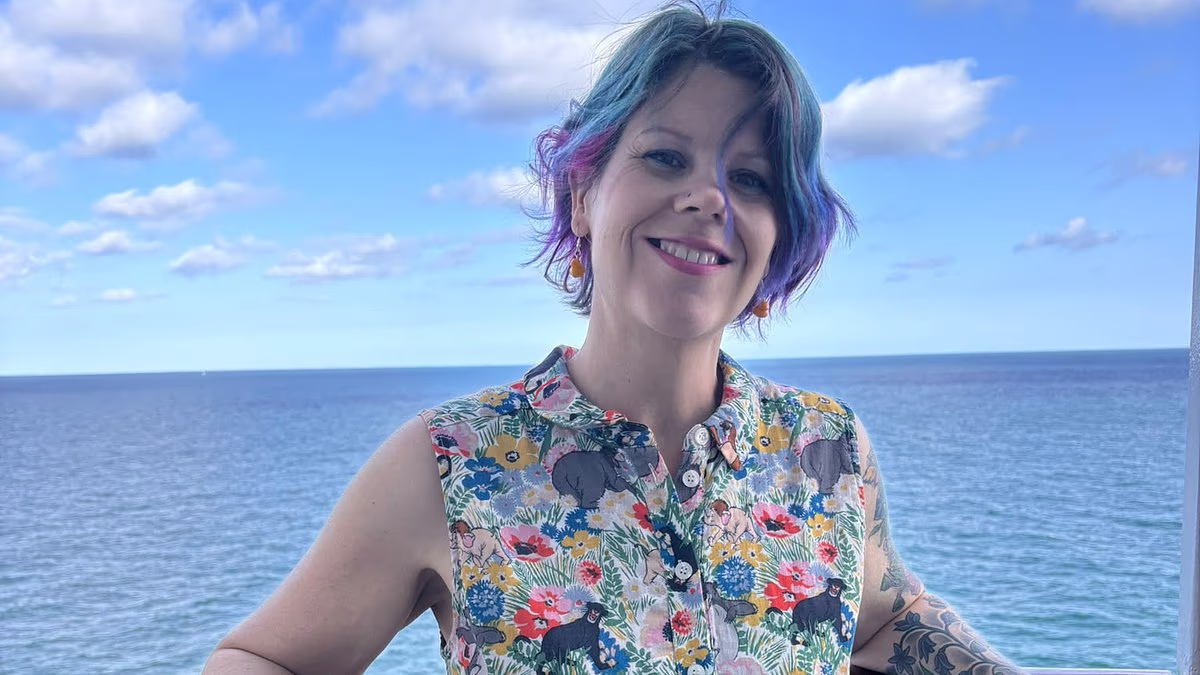

For almost two years, Samantha Pryke was encouraged to believe her worsening symptoms were caused by perimenopause, chronic fatigue or the demands of midlife. The 47-year-old civil servant and single mother of two teenagers, from Matlock in Derbyshire, was becoming increasingly drained, finding ordinary daily tasks difficult and feeling unlike herself. Crucially, she had none of the breast cancer warning signs women are commonly told to watch for: no lump, no visible breast changes and no obvious reason to undergo urgent cancer tests.
The reality was that a tumour had developed behind her sternum, where it could not be found through a routine self-examination. When doctors eventually discovered it, Sam was diagnosed with de novo secondary breast cancer – an incurable form of the disease that had already spread by the time it was identified.
“There’s no point using precious energy asking ‘why me?’ I’d rather ask how I can live as well as possible,” she says. “I want people to understand that secondary breast cancer can look completely different from one person to another. Many of us don’t match the stereotypes people associate with the disease. It may be invisible, but its effect on everyday life is enormous.”
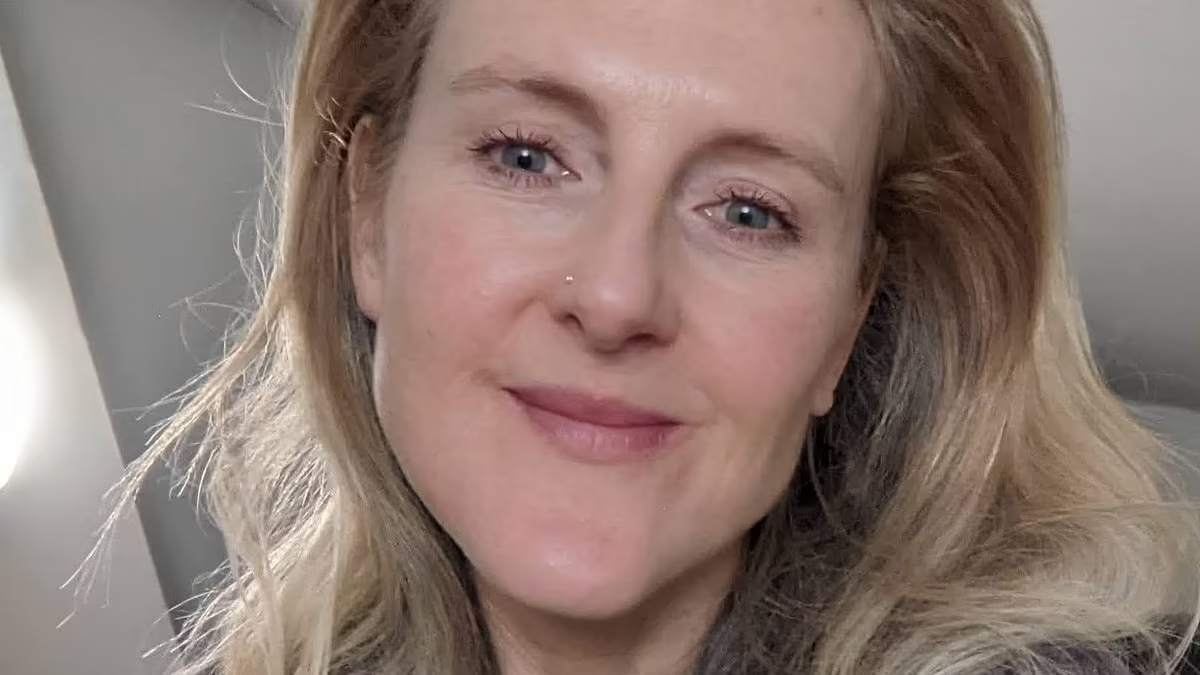
Jodi Jess, a 49-year-old Airbnb owner from Dorchester, Dorset, first learned she had primary breast cancer in 2018 after noticing a small lump in her armpit. She underwent treatment that included a mastectomy and chemotherapy, followed by long-term hormone therapy, and initially thought that chapter of her life was over.
But last year, Jodi sought medical advice for what seemed to be a shoulder injury and pain in her ribs when she breathed. Her doctor referred her to A&E to rule out possibilities including a blood clot or muscular problem. A CT scan instead revealed that the cancer had spread to her liver, spine, pelvis and ribs. She was told it could not be cured, with treatment aimed at controlling the disease, prolonging her life and protecting her quality of life.
Jodi has responded by continuing to pursue demanding endurance challenges. Her achievements include half marathons, full marathons in Paris and Rome, as well as major hiking adventures in the Lake District and elsewhere. “Having ambitious goals gives me something beyond my illness to concentrate on,” she says. “It has changed how I live, as I now focus on making the most of each three-month period between scans.”
“I’m learning to accept my new normal without losing hope. People need to know that life can continue after a secondary breast cancer diagnosis. I still go to the gym at 6am four or five times a week to stay strong. I have to pay closer attention to what my body is telling me, and sometimes I need an afternoon nap, but otherwise I haven’t stopped living. I don’t sit around waiting for good moments – I try to create them.”
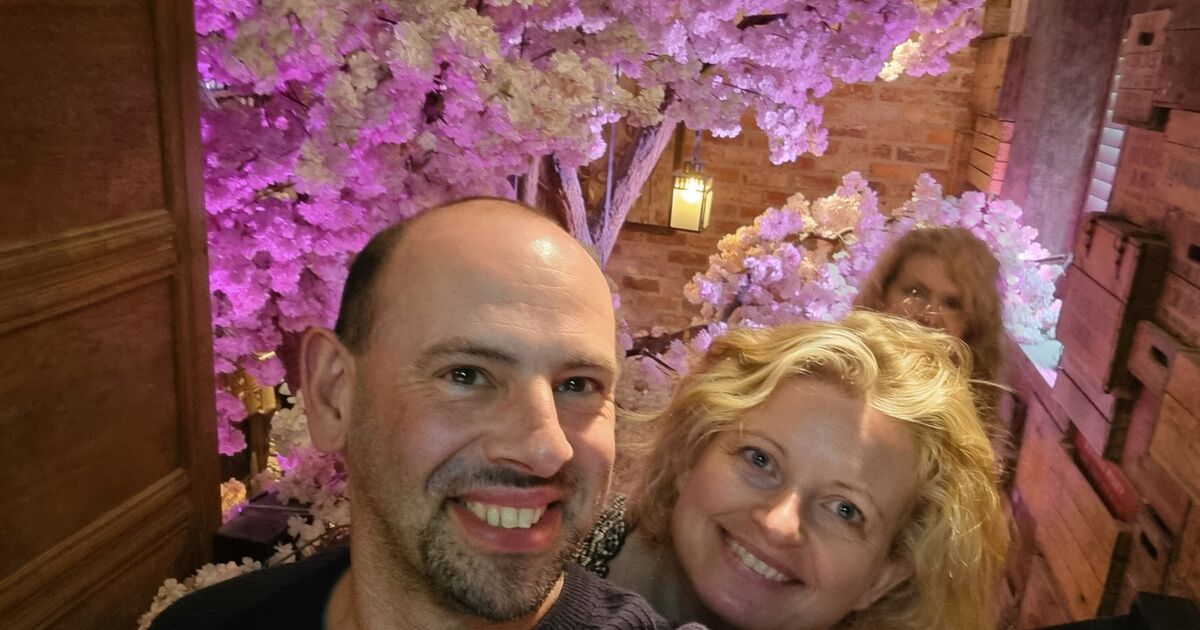
For Sally Laverick, 56, from the New Forest in Hampshire, being diagnosed with secondary breast cancer last year transformed her life almost instantly. The cancer had spread to her bones, and she underwent extensive surgery to reconstruct her arm and hip using titanium implants. The long recovery that followed brought both physical limitations and deep uncertainty. After years of prioritising her career and caring for other people, Sally had to learn to slow down. Her horse became an unexpected but vital source of comfort.
Sally calls her horse her “therapy”. His presence helps her remain grounded, find moments of peace and reconnect with happiness. Although she is no longer able to do everything she once did, time spent with her horse has become a central part of coping with the emotional strain of living with incurable cancer.
“When I was told the cancer had returned, I honestly believed it was a death sentence,” she says. “My oncologist explained that although it couldn’t be cured, it could be treated and managed. That conversation gave me hope when I needed it most. I had always been focused on my career and working hard, but my secondary diagnosis made me realise there was more to life.”
“My focus shifted to getting better, creating memories and looking for joy wherever I could. For me, that means spending time with my horse, Dexter, and working at my small equine reiki practice. Dexter has been a constant source of therapy throughout this experience. Horses get me outdoors, help me stay in the present and give me something positive to anticipate. Even when I’m having a difficult day, being with him makes me feel better.”