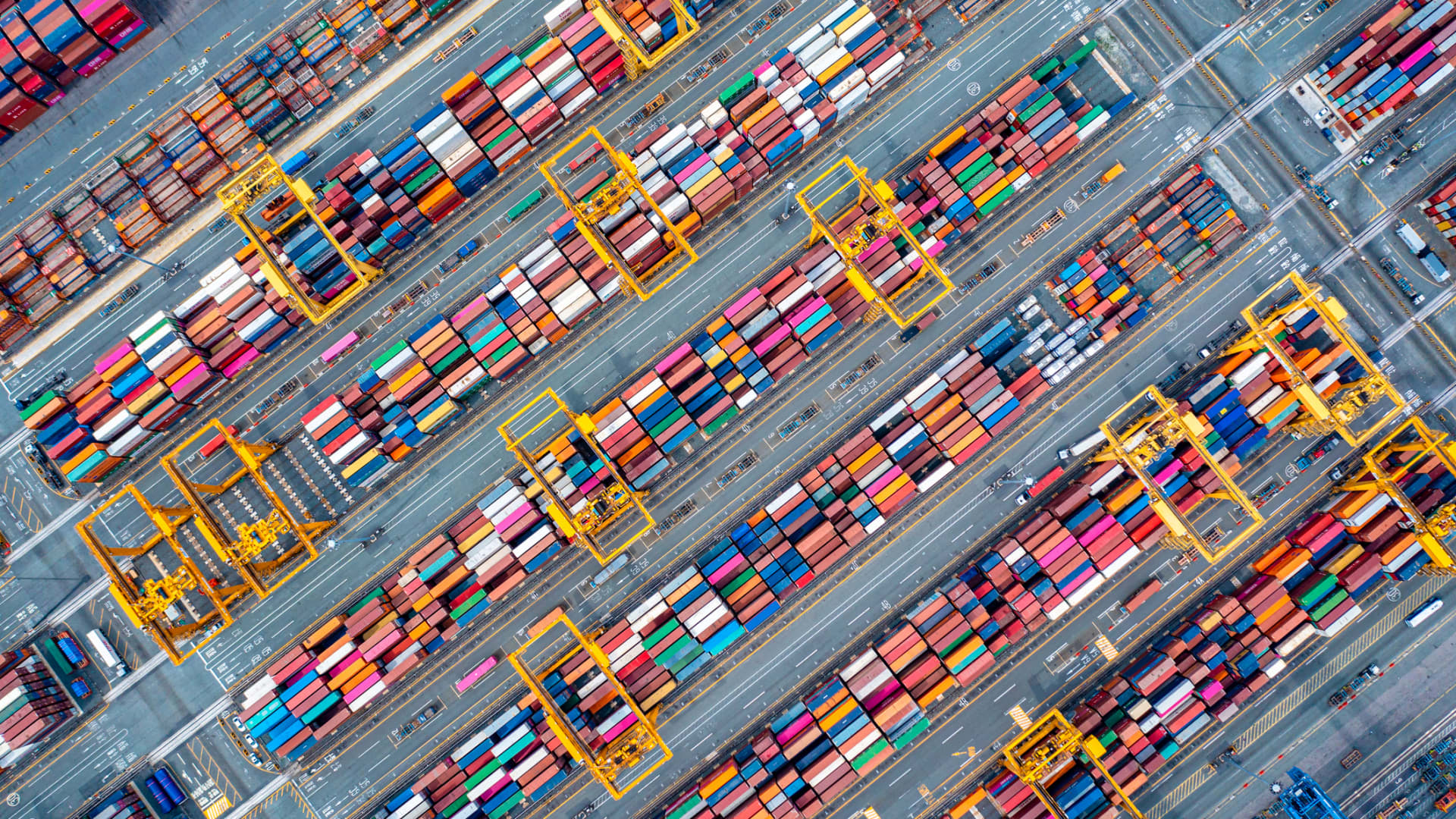

South Korea is seeing a rise in attempts to pass off foreign-made goods—mostly from China—as Korean exports in an effort to sidestep U.S. President Donald Trump’s sweeping tariffs, the country’s customs agency said Monday.
Insung Jeon | Moment | Getty Images
The World Bank has upgraded its growth outlook for East Asia and the Pacific, supported by a surge in artificial intelligence-related exports. But the bank cautioned that the region’s dependence on the AI boom could leave it exposed if global technology spending reverses.
The region covers 23 economies, including China, Vietnam, Indonesia, Malaysia and Thailand.
The East Asia and Pacific economy is now projected to grow 4.5% this year, 0.3 percentage point above the World Bank’s April estimate, according to its latest report released Tuesday. Growth is expected to slow to 4.4% in 2027 and 4.3% in 2028. Vietnam received the largest upgrade among the region’s major economies, with its forecast lifted 1.1 percentage point to 7.4%.
Yet the region’s economic resilience is heavily tied to AI manufacturing and exports. Outside AI-related products, trade growth has been “weak or negative,” the World Bank said. AI goods generated more than half of export growth across most regional economies and over 70% in Malaysia, the Philippines, Thailand and Vietnam.
China, Indonesia, Malaysia, the Philippines, Thailand and Vietnam exported $1.4 trillion worth of AI-related goods in the 12 months through April, the report said.
South Korea’s exports jumped 83.5% in September to a record $120.9 billion, with semiconductors accounting for half of the total, official data showed. The concentration of chip power is also reflected in the stock market: Samsung and SK Hynix alone represented 43% of the benchmark Kospi index’s value at the end of April, according to the World Bank.
The main risk surrounding AI lies in the scale of investment. AI-related capital spending has climbed to roughly 6% of U.S. gross domestic product, matching the peak reached during the 2000 information-technology investment boom. The current cycle, the bank said, has accelerated faster than previous ones and continues to gather pace.
In its annual economic report in June, the Bank for International Settlements said the size and speed of the AI surge resembled the dot-com frenzy of the 1990s and other speculative “manias.”

The funding behind the boom is also difficult to track. Of the $2.9 trillion in AI capital expenditure planned between 2025 and 2028, about $800 billion is expected to come from private credit, the World Bank said. AI lending accounted for 34% of private-credit activity in 2025, up from an average of 18% over the previous five years. Private-credit portfolios have already faced markdowns, investor outflows and defaults this year.
Private-credit markets are “less visible, and have not been tested by a severe downturn,” the bank warned.
Even so, the AI boom—fueled by plentiful liquidity—could lose momentum as financial conditions tighten. Major central banks have begun raising interest rates for the first time since 2023, according to the report. The U.S. Federal Reserve raised rates last month for the first time in more than three years and signaled that another increase could come before year-end.
A pullback would not necessarily signal the end of the AI supercycle. However, the World Bank said investment may have “run ahead of realized demand.”
A one-percentage-point slowdown in U.S. economic growth is estimated to reduce growth in other emerging markets by 0.6 percentage point, with the effect on investment roughly twice as large, the bank said. “A slowdown concentrated in AI would be material for East Asia because of the region’s prominence in the AI supply chain.”
Banks face the widest exposure through their funding structures. Foreign-currency liabilities appear particularly substantial in some economies, reaching 29.2% of GDP in Malaysia and 20.7% in the Philippines.
Taiwan’s statistics bureau recently raised its 2026 growth forecast to 11%, from 9.6%, on stronger AI demand. But it warned in June that “if the high-tech sector faces headwinds, the negative impact on the local economy could be bigger than expected.”


![Tenzing Review: A Formulaic But Inspiring Old-School Adventure Movie [TIFF 2026]](https://internewscast.com/wp-content/uploads/2026/10/Tenzing-Review-A-Formulaic-But-Inspiring-Old-School-Adventure-Movie-TIFF-260x140.jpg)