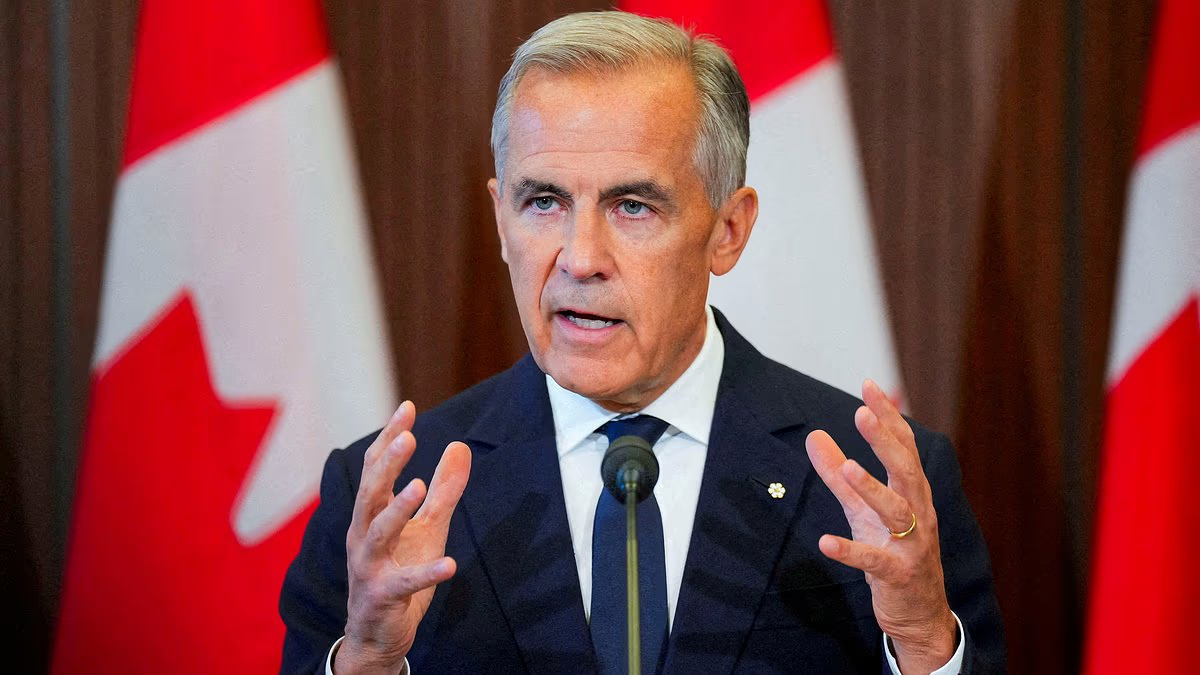


Canadian Prime Minister Mark Carney is exploring a closer relationship with Europe as ties with the United States continue to deteriorate, according to a new report. People familiar with the discussions told The Wall Street Journal that Carney has spent months considering whether Canada and its 41 million citizens could move toward deeper integration with the European Union amid the escalating trade conflict with Washington. The proposal could involve Canada becoming an “associate member” of the EU, a status Carney believes could bring significant economic and political advantages. Such a move, however, could further anger President Donald Trump and strain the Canada-US relationship, while there is no guarantee that European leaders would approve it. EU officials are reportedly open to creating a new form of associate membership for Canada, despite the bloc’s traditionally strict rules on expansion.
Canada-EU ties face ratification hurdles

Relations between Ottawa and Washington have worsened sharply since Trump returned to the White House in early 2025, with trade disputes at the center of the conflict. Tariffs have affected tens of billions of dollars in goods moving across the border. Carney has reportedly held repeated conversations with European leaders, including French President Emmanuel Macron, about the possibility of allowing Canadians to live and work in EU countries without visas, according to two people familiar with the discussions cited by the Journal. Building a closer Canada-EU partnership would be a complicated undertaking, however. Even a less ambitious trade agreement has faced resistance: more than 10 years after it was negotiated and nine years after it took effect provisionally, several EU member states have yet to ratify it.
Trump’s Lake America order sparks backlash

The dispute took another symbolic turn last month when Trump moved to rename one of the Great Lakes shared by the United States and Canada. Following an executive order, Google Maps began displaying “Lake America” instead of Lake Ontario for users in the United States. Trump directed the Interior Department to use the new name for federal purposes as tensions with Ottawa continued to rise. The order cannot force Canada or international bodies to recognize the change, and Canadian officials have publicly rejected the renaming effort.
Carney vows tariff-for-tariff retaliation

Carney, who has repeatedly clashed with Trump, criticized the decision and defended the name Lake Ontario, noting its Indigenous origins. The name comes from a Wendat expression commonly interpreted as meaning “the lake is beautiful” or “the lake is great.” The controversy unfolded as trade talks between the two longtime allies broke down. Trump has threatened additional tariffs on Canadian products, while Carney has vowed to respond with matching measures “dollar for dollar.” Trump has also said duties on Canadian vehicles, trucks, auto parts and steel could climb to 50 percent by 2027 as he pressures manufacturers to move more production into the United States.
Trump threatens tariffs on Canadian cars

While signing the renaming order, Trump indicated that his dispute with Ottawa extended well beyond the lake’s name. He said the United States would impose substantial tariffs on Canadian cars because he wants those vehicles manufactured domestically. Trump argued that Canada could continue producing cars for its own market, but should not make them for American consumers. His comments underscored the broader economic confrontation between the neighboring countries and the administration’s push to shift manufacturing into the United States.
Trump faults Canada over smoke and defense

Trump has also accused Canada of depending on American military protection without providing sufficient compensation. In July, he attacked Ottawa after wildfire smoke crossed the border into several northern US states, triggering hazardous-air-quality warnings and the cancellation of outdoor events. In a post on Truth Social, Trump blamed Canada for failing to properly manage its forests and brush, saying the United States was being exposed to unhealthy, polluted air. The remarks added another layer of tension to an already strained relationship shaped by tariffs, defense spending disputes and increasingly bitter political exchanges.