

Static Media
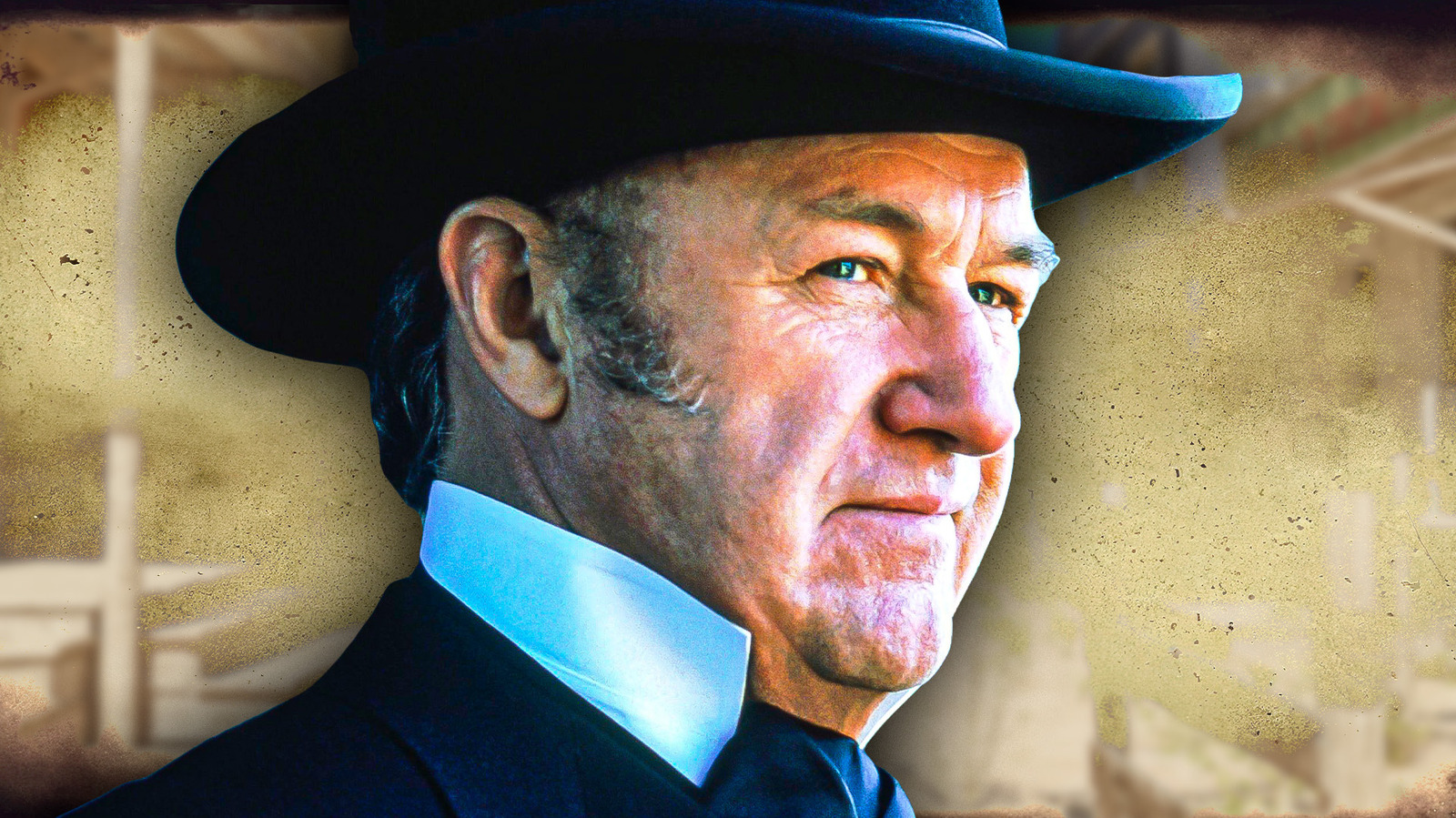
Gene Hackman was a legend, but even that description barely captures the extraordinary body of work he left behind. He made an immediate impression with his unforgettable performance in “Bonnie and Clyde,” then spent the rest of his career drawing audiences in with his resonant voice, commanding physical presence, and uncanny ability to make every character feel fully lived-in. Hackman could deliver broad, crowd-pleasing performances—his gleefully villainous Lex Luthor in “Superman” remains a prime example—but his quieter work in films such as “The Conversation” revealed an even deeper level of skill. A glance toward the floor or a meek attempt to speak with a woman could become completely mesmerizing in his hands.
Hackman was still delivering terrific performances as late as 2001, when he starred in “The Royal Tenenbaums.” Among the many highlights of his wide-ranging filmography were his appearances in Westerns. Hackman had a rare gift for seeming like an ordinary person rather than a polished movie star pretending to be one, which made him especially well-suited to a genre built on grit, sweat, violence, and hardship. Ranking Gene Hackman’s seven Western movies from worst to best, based on their average Letterboxd ratings, showcases both his impact on the genre and the remarkable range of his acting.
Even the lowest-rated film on this list offers a glimpse of why Gene Hackman was one of the greatest actors ever to appear on screen. So saddle up as we revisit Hackman’s finest—and not-so-fine—rides across the Old West.
7. Wyatt Earp
Warner Bros. Pictures
Often counted among Kevin Costner’s five best Westerns, “Wyatt Earp” is a 1994 epic directed by Lawrence Kasdan, with Costner playing the legendary lawman. Hackman portrays Wyatt’s father, Nicholas, in a star-studded cast that also includes Dennis Quaid as Doc Holliday and Bill Pullman as Ed Masterson. Yet even the presence of a distinctive talent like Hackman could not keep the film from being overshadowed by other early-1990s Westerns. “Tombstone,” another film about Wyatt Earp, had arrived in theaters only a few months earlier, while Costner’s own 1990 hit “Dances with Wolves” remained an imposing comparison.
That uneven reputation has continued over the years. “Wyatt Earp” holds an average Letterboxd rating of 3.2, and while viewers do not necessarily regard it as a bad film, many agree that its visual style and screenplay are not strong enough to justify a runtime of more than 210 minutes. Even with a shorter running time—or without the more popular “Tombstone” looming over it—the film would likely still feel laborious. Its slow pace and faithful adherence to familiar biopic conventions disappointed many viewers, although Letterboxd users consistently singled out the cast for praise.
Hackman’s performance is part of that acclaim, with several viewers calling his work one of the movie’s strongest elements. Unfortunately, even he could not prevent “Wyatt Earp” from becoming one of the 10 worst films to run longer than three hours.
6. Zandy’s Bride
Warner Bros. Pictures
After helping launch the New Hollywood era with his supporting role in “Bonnie and Clyde,” Gene Hackman worked steadily with some of the most important directors of the late 1960s and 1970s. He led Francis Ford Coppola’s acclaimed thriller “The Conversation” and appeared in William Friedkin’s cultural phenomenon “The French Connection.” That run continued with 1974’s “Zandy’s Bride,” directed by Jan Troell, who had earned a Best Director Oscar nomination just a few years earlier for his 1971 film “The Emigrants.”
The success of that epic established Troell as a filmmaker worth watching, ensuring that his later projects—particularly one featuring an actor of Hackman’s stature—would attract plenty of attention. Set in the late 1800s, “Zandy’s Bride” follows Zandy Allan (Gene Hackman) as he clashes with his unexpectedly defiant mail-order bride, Hannah Lund (Liv Ullmann). The story of their gradual relationship has an average Letterboxd rating of 3.3, a respectable score that nevertheless falls below those of many of Hackman’s other films from the period.
For many Letterboxd reviewers, the film’s biggest flaw is Troell’s seemingly detached treatment of the abuse and sexual violence Zandy inflicts on Hannah. That aspect makes it difficult to become invested in the couple’s developing bond. More enthusiastic reviews, however, praise the performances by Hackman and Ullmann, along with Troell’s striking ability to frame expansive natural landscapes through expressive, carefully composed camerawork.
If you or anyone you know has been a victim of sexual assault, help is available. Visit the Rape, Abuse & Incest National Network website or contact RAINN’s National Helpline at 1-800-656-HOPE (4673).
5. Bite the Bullet
Columbia Pictures
Some films rely on elaborate plots, unexpected twists, tangled relationships, or nonlinear storytelling. Others need only a straightforward objective to keep the action moving. In the case of 1975’s “Bite the Bullet,” that objective is a 700-mile horse race involving nine larger-than-life competitors, with Gene Hackman’s Sam Clayton at the center of the story. The ensemble includes a remarkable collection of familiar faces, among them Candice Bergen, James Coburn, Jan-Michael Vincent, Ben Johnson, Dabney Coleman, and Walter Scott.
Directed by Richard Brooks, whose credits also include “Cat on a Hot Tin Roof” and “In Cold Blood,” “Bite the Bullet” has an average Letterboxd rating of 3.3. Some users felt that the film’s inherently exciting premise was undermined by a sluggish pace, while others struggled to find a compelling emotional connection to the story. Many still appreciated the impressive ensemble and the sweeping Western landscapes. One opinion appeared nearly universal, however: Letterboxd reviewers were astonished by how strong Hackman was in the film.
“Bite the Bullet” may not have become an enduring classic, but it gave Hackman another opportunity to demonstrate his considerable range. Even within a relatively straightforward Western, he found ways to make his performance stand out.
4. The Hunting Party
United Aritsts
Brandt Ruger (Gene Hackman) has a serious problem: his wife, Melissa (Candice Bergen), has been kidnapped. Determined to bring her home, Brandt and his ragtag group of followers set out to pursue the people responsible and exact some old-fashioned revenge. Oliver Reed and Simon Oakland also join the cast of director Don Medford’s “The Hunting Party.” The film explores familiar revenge-Western territory, but its initial reception was largely hostile. Many critics argued that it borrowed the brutality associated with Sam Peckinpah while lacking the artistry that made Peckinpah’s films distinctive.
“The Hunting Party” has not developed a huge cult following on Letterboxd, but its reception there is considerably warmer than the original critical response. The film’s average rating is 3.3, with some negative reviews objecting to its relentlessly bleak tone. Others found its grim, abrasive worldview compelling, particularly because it offered unusual performances such as British actor Oliver Reed speaking with an American accent while playing a Western character.
If any actor was willing to throw himself completely into a Western as disturbing as some of the most unsettling movies ever made, it was Gene Hackman. He never shied away from grimy, unpleasant, or morally repellent characters. That commitment helped “The Hunting Party” find more appreciation among modern viewers than it received when it was released in 1971.
3. Geronimo: An American Legend
Columbia Pictures
1993’s “Geronimo: An American Legend” achieved something unusual in American cinema: it made audiences wish Gene Hackman had not been part of the movie. That reaction was not a criticism of Hackman’s acting. Instead, it reflected frustration that Walter Hill’s film, ostensibly centered on the Apache leader Geronimo (Wes Studi), devotes so much attention to white characters played by Hackman, Jason Patric, Robert Duvall, and Matt Damon. Whatever his talent, Hackman’s screen time might have been better allocated to additional Indigenous performers.
The version of “Geronimo: An American Legend” released in theaters remains the one represented by its 3.3 average Letterboxd rating. That score could have been higher if not for complaints about the film’s slow pace and underwhelming performances, particularly from Patric. Those weaknesses prevent “Geronimo” from fully reaching the ambitions of a sweeping historical epic. Still, reviewers regularly praise the film’s visual style and Wes Studi’s widely acclaimed performance. Hackman’s dependable supporting work also earns recognition in a number of reviews.
By this point in his career, Hackman was firmly established as a legend, yet he showed that he could still function as one part of a larger ensemble. He contributed to a story that was meant to be bigger than any individual star—even if “Geronimo” might ultimately have benefited from reducing the roles played by Hackman and Jason Patric.
2. The Quick and the Dead
Columbia Pictures
Sam Raimi’s Western “The Quick and the Dead” is notable for several reasons, including the presence of two future movie stars who would become major Hollywood names only a few years after the film’s February 1995 release. Russell Crowe would go on to appear in additional Westerns, but his status as a major star was cemented by the back-to-back-to-back successes of “The Insider,” “Gladiator,” and “A Beautiful Mind” between 1999 and 2001. Leonardo DiCaprio plays a young gunslinger known as “The Kid,” appearing two years before “Titanic” transformed his career. Sharing the screen with both rising actors was the already established Hollywood icon Gene Hackman.
All these actors are assembled for the saga of Ellen (Sharon Stone) coming to the town of Redemption to seek revenge against Mayor Herod (Hackman). A local quick-draw tournament could be the perfect opportunity to finally put a bullet in Herod’s head. Considered one of the 10 most rewatchable Western movies of all time, “The Quick and the Dead” has amassed a 3.5 average rating on Letterboxd. Raimi’s gifts for delivering gnarly entertainment are in rare form here as the bullets and outsized Western characters fly.
Plus, Raimi’s gift for unspooling memorable performances out of his actors inspired many Letterboxd reviewers to heap praise on the various “Quick and the Dead” cast members, including Hackman’s nefarious turn. A significantly more unhinged creation than most other Hackman Westerns, “The Quick and the Dead” unified multiple eras of movie stars with thrilling results.
1. Unforgiven
Warner Bros. Pictures
1992’s “Unforgiven” was about ’60s cinema legends coming to terms with mortality and grappling with the complicated consequences of the classical Western image. The film’s leading man and director, Clint Eastwood, was clearly embodying that as Will Munny, a tormented man conscious of violence’s long-ranging consequences. That’s a sharp contrast to the ’60s spaghetti Westerns Eastwood once headlined, which dished out carnage without giving a second thought to the ripple effects of such behavior. Similarly, Gene Hackman, who also got his start in the ’60s playing law-breaking figures in rural settings, is around to subvert his initial movie star image as the “Unforgiven” villain.
Hackman, who once played Bonnie and Clyde’s most trusted associate, is now the bloodthirsty Sheriff “Little Bill” Daggett. Eastwood and Hackman’s respective performances are richly in conversation with their past, but their turns also work like gangbusters even for those who haven’t seen those landmark titles. It also explains how “Unforgiven” has scored a 4.2 average rating on Letterboxd. The reviews on this site are constantly heaping praise on its haunting atmosphere and commanding collection of performances.
That includes Hackman’s Oscar-winning work, which stands out even in a career chock full of antagonist turns. Some movies get too lost in the past when reflecting on yesteryear. With talented actors like Gene Hackman, “Unforgiven” — one of Taylor Sheridan’s major inspirations for “Yellowstone” — effortlessly used pre-existing films as a launchpad for something new and exceptional.


