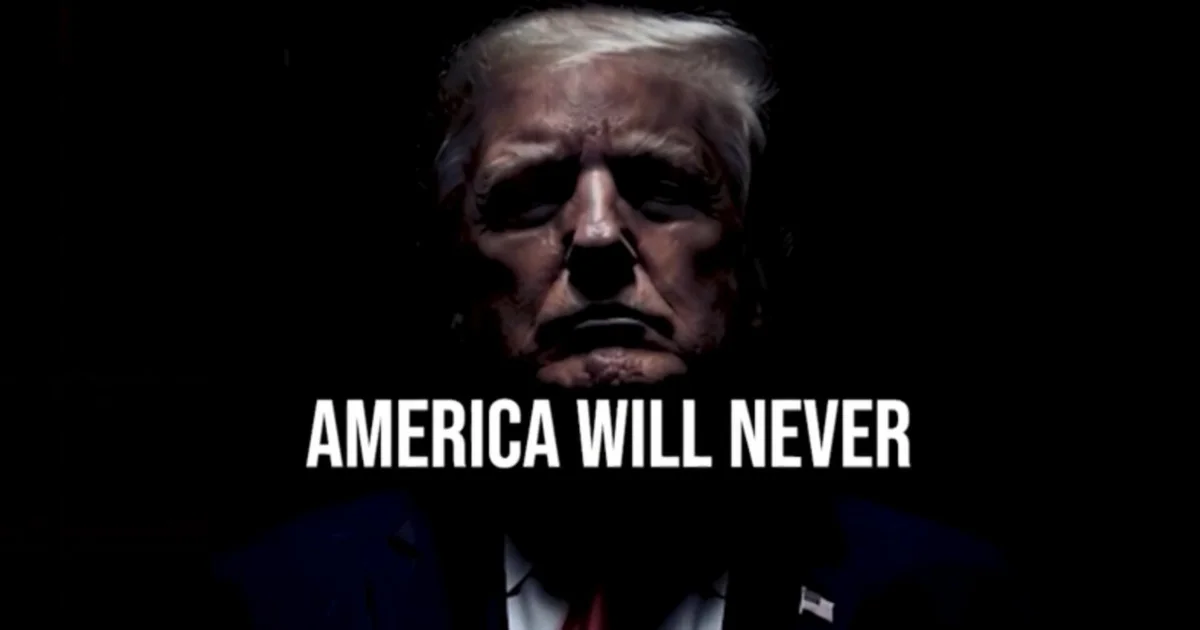

A federal judge on Sunday night ordered President Trump’s administration to pull any remaining television commercials funded with millions of taxpayer dollars to promote his political message, even as officials maintained that the campaign was already scheduled to end.
U.S. District Judge Jennifer L. Rochon of New York granted a temporary restraining order sought by a coalition that includes the nonpartisan watchdog Common Cause. The group argued that the advertisements amounted to an unlawful use of government funds. Rochon directed the administration to stop any remaining spots, including those scheduled to air Sunday evening.
For the next two weeks, the judge barred the government from entering, renewing or expanding contracts connected to the “development, creation, dissemination, placement, or airing” of the disputed advertisements.
The order took effect at 6:45 p.m. Eastern time Sunday.
The White House, asked for a response, pointed to an Oct. 5 social media statement in which Trump called the taxpayer-funded campaign “rather standard.” After facing criticism, he said he would instead cover the cost through political fundraising. In a filing submitted late Saturday, the Justice Department contended that an emergency court order was unnecessary because “the alleged offending conduct will end tomorrow.”
The Department of Homeland Security allocated $20 million in public money for the campaign. Legal scholars have raised concerns that the spending may violate a federal law barring the use of congressionally appropriated funds for “publicity or propaganda,” along with potentially other statutes.
The plaintiffs welcomed the ruling in a statement released through Democracy Forward, the nonprofit legal group representing them. “We are pleased the court acted swiftly to prevent more taxpayer dollars from being used for such blatantly unlawful political propaganda,” they said, arguing that the president had no legal basis or precedent for using government resources and money designated by Congress to shape electoral outcomes.
In a declaration filed Saturday, DHS senior official Holly Mehringer said the funding came from congressional appropriations that could be used, among other purposes, for “commemorating efforts and events related to border security.”
Federal contracting records show that DHS awarded LMD Agency a $20 million agreement for a “National Media Campaign” beginning Sept. 20. The previous day, the White House Office of Management and Budget authorized DHS’s Customs and Border Protection to receive $20 million for “OBBB Commemorative Events,” according to a nongovernmental database. The funding connection was first reported by The Washington Sun.
White House officials have described the commercials as public service announcements, comparable to campaigns used by previous administrations to explain or promote government policies. Critics, however, note that the Trump ads do not appear designed to help people access a particular public program or service.
A White House official said last month that the spots were “clearly not political,” pointing out that Trump was not on the ballot and that the advertisements contained no explicit call to action.
The commercials began airing in late September and portray Trump in a favorable light while reinforcing themes from his political messaging ahead of the midterm elections. One spot includes Trump discussing the threat of communism, while another revives an advertisement from his most recent presidential campaign. A fifth commercial, which began airing Tuesday, highlights the Trump administration’s capture of former Venezuelan leader Nicolás Maduro.
CHECK THIS OUT: Country Music Star’s Wife Faces New Accusations
The decision to use public money for the campaign has triggered widespread criticism, including objections from Republicans.
“It shouldn’t be paid for with taxpayer dollars,” Senate Majority Leader John Thune, a South Dakota Republican, told reporters.
Republican Sen. John Kennedy of Louisiana made a similar argument last month on “Face the Nation,” saying, “I don’t think any public official, including President Trump or [former DHS Secretary] Kristi Noem or John Kennedy, should spend public money on private ads for themselves.”
The Democratic National Committee has also filed a separate lawsuit against the Republican administration over the advertising campaign.
A group of Senate Democrats condemned the effort in a letter last month, calling it “the sort of government propaganda one might expect in North Korea, not the United States of America” and describing it as an “egregious and illegal misuse” of taxpayers’ money.
As the controversy intensified, Trump said his campaign account would begin covering the advertising costs. A White House official said, however, that the administration had no immediate plans to repay the government for money already spent.
The campaign has faced another dispute as well. Lawyers for musician JMSN sent a cease-and-desist letter last month to White House Chief of Staff Susie Wiles, demanding that the administration stop using his song “Love Me” in one of the ads.
“To anybody who has followed my career and knows what I stand for and built my career on, it should go without saying that I would never authorize my music to be used for ANY political agenda or campaign,” the artist posted on social media.