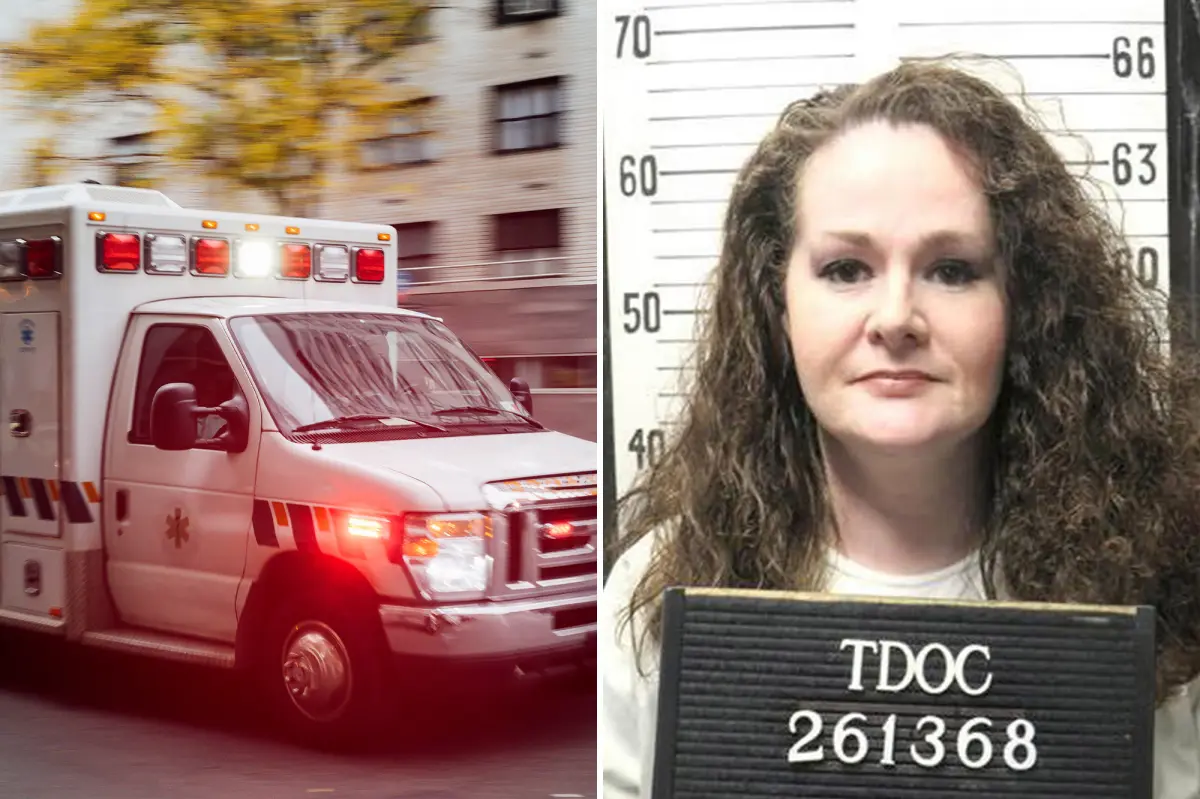

Emergency crews reportedly waited nearly 30 minutes before being allowed to treat Christa Pike after her failed lethal injection, with 911 recordings revealing confusion over whether the death row inmate actually needed medical help.
The audio shows dispatchers, prison personnel and first responders struggling to determine whether an emergency call from the execution chamber was genuine. Pike, who was convicted of torturing and killing a classmate in 1995, remained alive after officials administered two doses of the execution drug pentobarbital on Sept. 30.
Dispatchers received the first call at about 8:40 p.m. Yet prison officials did not verify the request until 9:11 p.m., when emergency crews were finally cleared to enter Riverbend Prison, according to recordings obtained by The Associated Press.
“Per supervisors here at the DEC [Department of Emergency Communications], we have been informed it is a false call,” an unidentified speaker said at 9:03 p.m. “There is no medical assistance needed at Riverbend Prison.”
Only minutes later, however, a responder said someone at the prison entrance was adamantly claiming that the emergency was real.
“Somebody is outside the gate at the prison telling us that it’s real and demanding us to go in. They say they are some sort of state official. I need somebody to get out to the gate and talk to those people,” the responder said in the recording.
Call records indicate that prison officials did not confirm the medical request until 9:11 p.m.
Pike, 50, remained strapped to a gurney for roughly an hour while medical personnel attempted to administer the drugs. Her attorney, Randy Spivey, said staff used at least seven needles, including one that bent as it was removed from her arm.
Following the failed execution, Pike was taken to a hospital, where she was unconscious and placed on a ventilator. Her legal team initially feared she had suffered irreversible brain damage.
CONTINUE READING: No Verified Reports Confirm Breaking Bad Star RJ Mitte’s Death at 34
But last week, the death row inmate regained consciousness and began communicating, in what her lawyers described as an unexpected recovery.
When Pike first awoke, she reportedly asked, “Where am I and who are you?” She was also able to walk the following day.
Her attorneys said earlier this week that Pike developed a blood clot in one arm, pneumonia and “extraordinary” swelling after the botched execution.
They added that she was experiencing “cognitive challenges” and “profound psychological trauma,” warning that “significant questions remain about the long-term effects of what she endured.”
Pike left the hospital after 10 days and was returned to prison.
She had been scheduled to become the first woman executed in Tennessee in more than two centuries. Instead, Pike became the first person in the United States known to survive a lethal injection.
Pike received a death sentence for the 1995 killing of 19-year-old Colleen Slemmer, a fellow Jobs Corps student whom prosecutors said she attacked in a jealous rage.
Pike was 18 at the time, while her boyfriend, Tadaryl Shipp, was 17, and their acquaintance Shadolla Peterson was also 18. Authorities said the three lured Slemmer to a secluded section of the University of Tennessee’s Knoxville campus, where she was tortured and killed. Pike was convicted of striking Slemmer in the head and keeping part of her skull as a souvenir.
The Tennessee Department of Correction has not explained what caused the execution to fail.
With Post wires