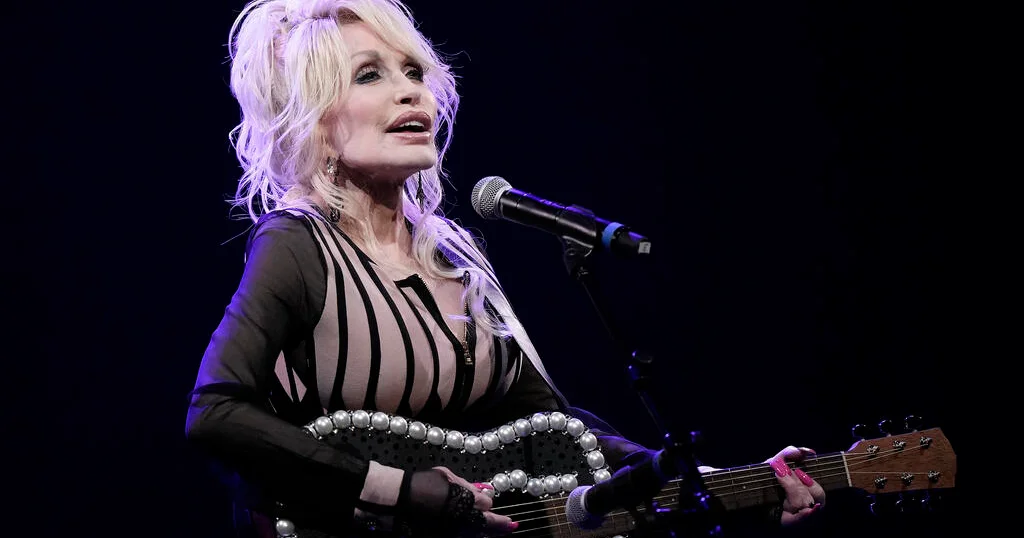

Dolly Parton’s nephew and longtime security chief said in a Tennessee court filing Tuesday that he had been a close friend and trusted ally of Parton’s longtime manager, Danny Nozell, before Nozell sought a restraining order alleging that he had threatened violence and intended to damage Parton’s legacy and business empire.
In an affidavit opposing a permanent version of the temporary order, Bryan Seaver described the text messages Nozell submitted as evidence as a “private conversation between two friends who were both frustrated, grieving and discussing strategy.” The messages were exchanged shortly before and after Parton’s Aug. 25 death.
Seaver maintained that he never sent threatening messages to any of Parton’s companies, business partners or their employees.
Last month, a Tennessee judge granted a temporary restraining order requested by She’s Alive, an entity founded to oversee Parton’s estate and operated by Nozell, against Seaver and his private security company, Squadron Augmented Protection Services.
Under the order, Seaver and SAPS are prohibited from communicating with or coming within 1,000 feet of She’s Alive employees, attorneys and business partners. The order also bars Seaver from disrupting the organization’s business relationships.
Tuesday’s filings marked Seaver’s first public response since a bitter dispute within the country music icon’s inner circle became public soon after her death.
Seaver’s filing asserted that Nozell did not appear alarmed by the messages when they were sent and even responded favorably to some of them. According to Seaver, Nozell encouraged him to promote SAPS’s military and weapons-related capabilities as an effective business strategy, only to later cite those same statements as evidence that Seaver posed a danger.
She’s Alive ended its relationship with Seaver and SAPS in early September. The organization filed for a restraining order the following week, arguing that his “terrorizing conduct made their continued retention untenable.”
In granting the temporary order, Chancellor I’Ashea L. Myles pointed to Seaver’s “claimed access to weapons, experience with violence, and intention to retaliate.”
The complaint filed last month accused Seaver and his company of using “terroristic threats, harassment, and intimidation” against She’s Alive.
“Those means are especially improper because they have been deployed as part of a calculated campaign by a trained military/private-security operative with access to an arsenal of military-grade weaponry, rather than through any legitimate commercial or legal process,” the complaint stated.
Seaver said the order caught him off guard because it was issued while he was in Haiti performing contract security work.
In a Sept. 1 message cited by She’s Alive, Seaver wrote: “I’m going to set up a podcast dedicated to ruining Dolly’s brand partnerships and telling the violations these people have done on us. It’s going to be great. Or f****** pay me.”
The complaint also accused Seaver of becoming “emboldened” and “relentless” in his alleged threats against She’s Alive after Parton’s death.
“He has individually, and through his associates, made repeated written threats to Ms. Parton’s staff, legal and business advisers, and others,” the complaint stated. “These were not ordinary workplace disputes or heated words; they were deliberate threats from a self-proclaimed heavily armed, former security operative with a military-contractor background.”
In another message, Seaver claimed that he had “just sold 29 million dollars worth of ammo to Haiti.”
In his Tuesday response, Seaver argued that the order was so sweeping—and Parton’s business network so extensive—that large portions of Nashville, along with some of his own relatives, were effectively inaccessible to him.
Seaver said his frustration and payment demands stemmed solely from more than $250,000 his company was owed for completed work by Herschend Family Entertainment. HFE operates Parton’s Dollywood amusement park and Songteller Hotel, which opened after her death.
Seaver acknowledged that his messages to Nozell included crude and profane language but denied allegations that he had “menaced and intimidated” HFE employees. In his filing, he said he had “never threatened physical harm” against Nozell or any She’s Alive employee.
As an exhibit, Seaver submitted a 2024 letter from Parton praising him and his company. Parton had personally selected Seaver to announce her death after she succumbed to cancer.
“I have declined to speak with the media about this case and have asked my attorneys to handle all media communications,” Seaver wrote in his affidavit. “I care about Ms. Parton, her music, her legacy, and her family. I do not want this dispute to harm her legacy.”
In a prerecorded video announcing Parton’s death last month, Seaver said that his video was “something Dolly asked of me years ago, before I fully absorbed it as a future reality.”
He described it as “an honor that is mixed with absolute pride and great sadness. But sadness lies with us, not with Dolly. Dolly has lived in the light and is in the arms of Jesus.”
Parton was a widely beloved country music giant, philanthropist and cultural icon who wrote hundreds of songs, including classics such as “Jolene,” “Coat of Many Colors” and “I Will Always Love You.” Her music earned a total of more than 100 million worldwide sales and more than 1 billion online streams.