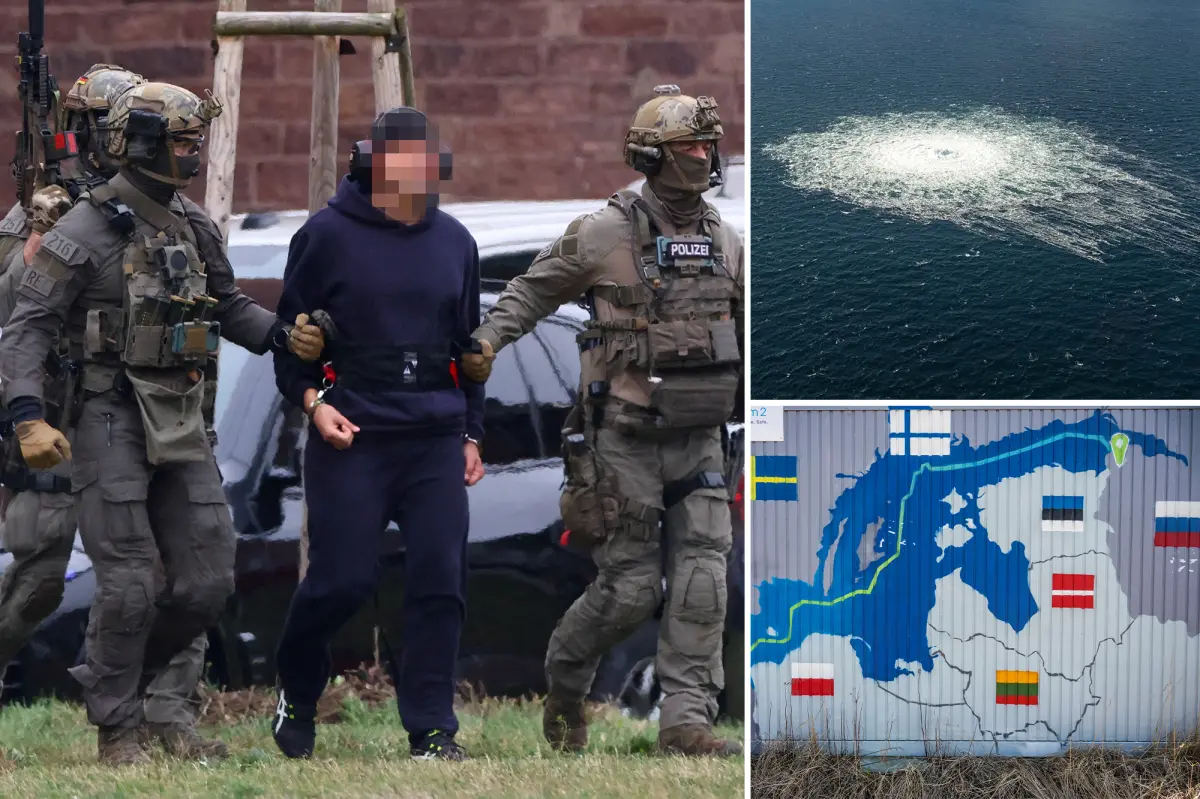

A former Ukrainian military officer is due in court in Germany on Wednesday over the underwater blasts that tore through the Nord Stream pipelines connecting Russia and Germany four years ago. The case concerns one of Europe’s most significant acts of sabotage since World War II.
German prosecutors have charged the suspect with causing an explosion, destroying property, disrupting public services and aiding war crimes through an attack on civilian infrastructure.
Because of Germany’s privacy laws, the defendant will be referred to in court as Serhii K. He was identified publicly as Serhii Kuznietsov during extradition proceedings in Italy.
Although Moscow was initially blamed by many international observers, the investigation has increasingly focused on claims that Ukrainian state security agencies could have played a role. The allegations are politically sensitive because Germany remains one of Ukraine’s strongest allies.
Proceedings are taking place under heavy security at Hamburg’s Hanseatic Higher Regional Court. The defendant is believed to have been the suspected coordinator of the operation.
The indictment alleges that he helped orchestrate the Sept. 26, 2022, blasts that damaged the pipelines beneath the Baltic Sea, which had been designed to transport Russian natural gas to Germany.
The explosions came as European nations were trying to reduce their reliance on Russian energy after the Kremlin launched its full-scale invasion of Ukraine in February 2022.
Prosecutors say the alleged mission was intended to permanently halt gas shipments and cut off revenue that Russia could use to support its military campaign.
According to the case against him, the defendant and his alleged associates operated from a yacht that left the German port of Rostock. The vessel was reportedly rented through intermediaries using counterfeit identification documents.
The blasts ruptured Nord Stream 1, which had served as Russia’s primary natural gas route to Germany until Moscow halted deliveries in August 2022.
Nord Stream 2 was also damaged. That pipeline had never begun operating because Germany suspended its certification process shortly before Russia invaded Ukraine.
Prosecutors allege that the suspect helped arrange and execute the placement of at least four explosives, each weighing between 31 and 62 pounds, at depths ranging from 230 to 263 feet near Denmark’s Bornholm island.
Italian authorities arrested him in 2025 at a village where he had been staying with his family. Officers raided a bungalow and said he surrendered peacefully. He was transferred to Germany in November.
A second suspect was detained in August under a European arrest warrant in Pula, a city in northern Croatia. He has sought asylum in Croatia in an effort to block his extradition to Germany.
For years, the Nord Stream pipelines had faced opposition from the United States and several allied governments, which warned that the projects would deepen Europe’s dependence on Russian natural gas.
Russia has alleged that American and British intelligence services helped stage the blasts and has also pointed to NATO. Several Western governments, meanwhile, initially accused Russia of responsibility.
Ukrainian President Volodymyr Zelensky has rejected claims that Ukraine had any role in the destruction of the pipelines.
The German government has declined to comment on the trial, stressing that the courts are independent and that no verdict has been delivered.
The court has scheduled 16 hearings through Dec. 17, with further sessions planned for January and February 2027. The timing of a verdict remains uncertain.