
The International Monetary Fund has urged John Healey to begin reducing Britain’s debt immediately, putting pressure on the Chancellor’s hopes of delivering a low-key, “steady as she goes” Budget.
In guidance aimed at advanced economies, including the UK, IMF specialists warned that postponing efforts to bring public finances under control would leave governments facing a far more difficult adjustment later.
The longer countries delay fiscal tightening, the more money they will have to devote to interest payments, reducing their ability to respond to economic pressures or fund other priorities, the experts said.
“The more countries wait, the more painful the adjustment becomes,” IMF economists wrote in a blog published during the organisation’s annual meeting in Bangkok.
In a separate intervention, IMF chief economist Silvana Tenreyro, a former Bank of England rate-setter, also called on Britain to “stay the course” with efforts to restore order to its public finances.
Until now, ministers had indicated that the Budget would be relatively uneventful, with a series of temporary measures aimed at easing the pressure on households facing the cost-of-living squeeze.

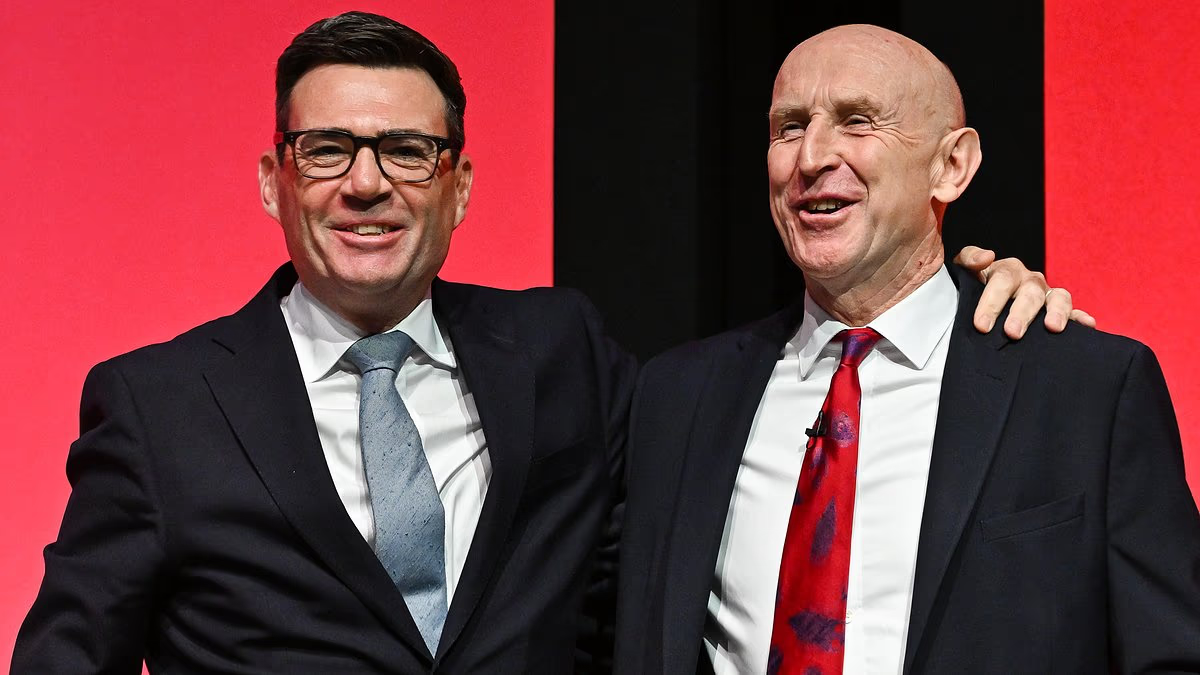
Chancellor John Healey, pictured last month, is facing an IMF warning that Britain must begin cutting its debt burden now
That position is becoming harder to maintain as ministers face growing demands to set out the spending reductions or tax increases required to meet their targets for lowering borrowing.
Bank of England governor Andrew Bailey added to the pressure last week, telling Mr Healey that the Government’s plans would need to appear “credible” to financial markets.
The Institute for Fiscal Studies, one of Britain’s leading economic think-tanks, has warned that listing savings the Chancellor does not genuinely intend to deliver would turn the Budget into a “work of fiction”.
The warning comes as turbulence in the bond market raises the cost of government borrowing and further restricts the Chancellor’s options. Analysts estimate that his fiscal “headroom” — the buffer available to meet targets for reducing debt and borrowing — has fallen from £24 billion in the spring to about £12 billion.
A bond sell-off, driven by inflation concerns linked to the war in Iran, has pushed up yields on UK and overseas government debt. In practical terms, investors are demanding higher returns to lend money to governments, increasing the urgency of a credible debt-reduction plan.
The IMF said average yields on 10-year bonds issued by G7 countries had reached their highest level in almost 20 years in recent months.
Worldwide public debt is forecast to exceed 100 per cent of global economic output by 2030, a level last seen in the period immediately after the Second World War. In the UK, public debt is just below £2.9 trillion, equivalent to 94 per cent of gross domestic product.
“Higher yields leave countries with less margin for delay,” the IMF said.
“Major advanced economies with high debt need concrete measures supported by credible medium-term plans and realistic assumptions.
“This is essential to place debt on a sustainable path, control borrowing costs and reduce the risk of financial pressures spreading across the global economy.”
The Fund said rising debt-interest bills were becoming an increasingly large and rigid demand on public finances, leaving governments with less money for investment and essential spending.
It added that high interest costs could weaken governments’ ability to respond to an economic downturn, at a time when demands for greater spending on defence, energy security and ageing populations are all increasing.
Although the IMF’s message was directed at several countries, its warning is likely to carry particular weight in Britain, coming just two weeks before Mr Healey delivers his first Budget.
While Labour has set out its plans to bring down borrowing overall, it has yet to flesh out how it will do so, including how it will account for higher defence spending.
Yesterday, IMF chief economist Silvana Tenreyro said: ‘The UK has already started with the consolidation path, fiscal consolidation. It is in that trajectory, and the message for the UK is simply stay the course and continue on that trajectory.’
Simon French, chief economist at City broker Panmure Liberum, said: ‘The warning to “stay the course” is code for doubts over the credibility of some of the government spending restraint pencilled in… given increased defence spending demands.
‘Those decisions tee up a very tough spending review in 2027 particularly for public sector pay – and the potential for backsliding.’
The Fund has already warned Britain and other advanced economies not to splash out on cost-of-living measures that they cannot afford – insisting that they should instead be tightening their belts.
In comments that could give the Chancellor second thoughts about any costly measures designed to give households ‘breathing space’, it said measures to cap fuel and other prices should be avoided.
The IMF has also cut the UK’s growth outlook for next year, from 1.3 per cent to 1.2 per cent.
Britain and crisis-ridden France – mired in a budget crisis and violent public unrest – were the only two members of the G7 group of major advanced economies to see downgrades.
DIY INVESTING PLATFORMS

AJ Bell
AJ Bell
Easy investing and ready-made portfolios

Hargreaves Lansdown
Hargreaves Lansdown
Free fund dealing and investment ideas

interactive investor
interactive investor
Flat-fee investing from £4.99 per month

Freetrade
Freetrade
Investing Isa now free on basic plan

Trading 212
Trading 212
Free share dealing and no account fee
Affiliate links: If you take out a product This is Money may earn a commission. These deals are chosen by our editorial team, as we think they are worth highlighting. This does not affect our editorial independence.
Compare the best investing account for you


