
It always began in the middle of the night, with my chest racing. My heart would pound like a steam train, even though I was safely tucked up in bed.
My palms would become clammy and I’d fidget beneath the covers, unable to keep still. I was constantly going to the bathroom, as though my bladder had developed a will of its own.
Eventually, worried that I might wake my husband, Guy, or our ten-month-old daughter, I would retreat to our attic bedroom.
Then I would lie there, stewing.
If you’re not among the 10 per cent of people who have experienced a panic attack, let me assure you: there is nothing quite like it.
Panic attacks feel different for everyone, but mine felt like sinking beneath the water, unable to breathe, while my aching heart thudded and the surface drifted further away. It was pure, blinding terror. Every nerve felt stretched taut. I was trapped, out of control and somehow burning from the inside. I would scream into a pillow or punch my legs, desperate to jolt myself out of the episode. Afterwards came an overwhelming sense of exhaustion, helplessness and self-loathing.

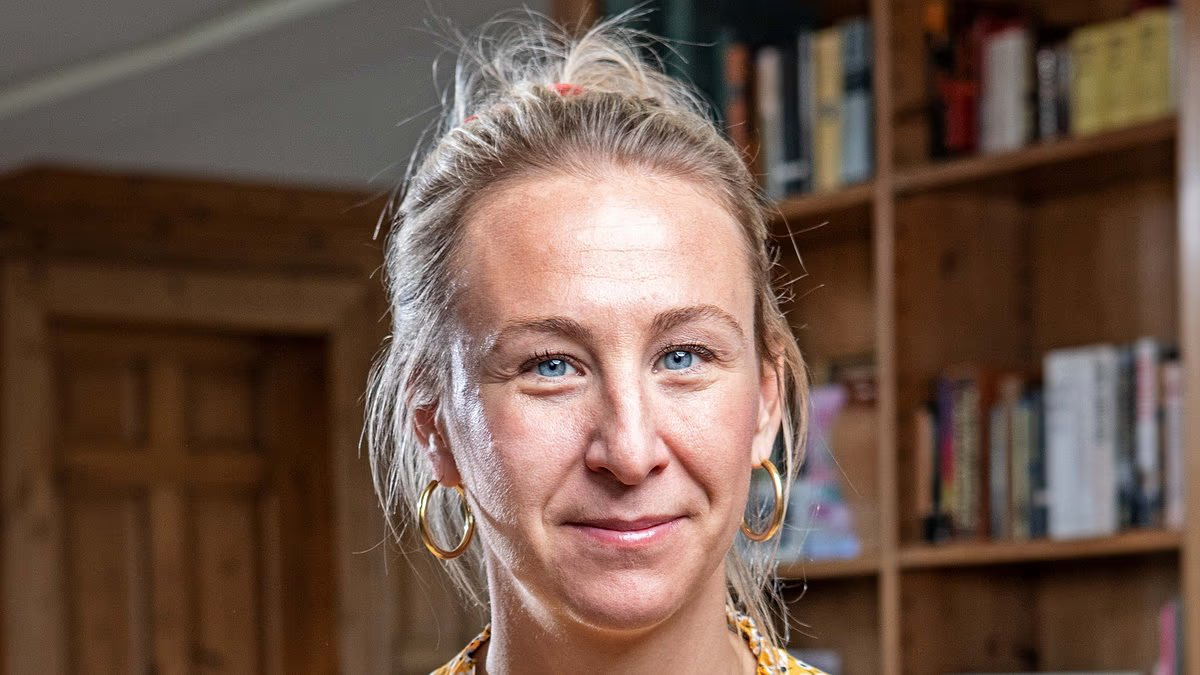
India Sturgis is among the 10 per cent of people who have experienced a panic attack; she describes hers as feeling like sinking deep underwater

Alison Hammond suffered a panic attack live on ITV’s This Morning earlier this month and later said in an Instagram video that it was the scariest experience of her life
Chest tightness and hyperventilation are common symptoms, often causing dizziness. Some people believe they are dying, while others shake or feel nauseous.
A small number even experience hallucinations.
When Alison Hammond had a panic attack while presenting ITV’s This Morning earlier this month, she believed she was having a heart attack and was taken to hospital. The following day, she shared a video on Instagram describing it as the scariest thing she had ever experienced.
I experienced panic attacks for several months in 2019, when I was at the height of a damaging combination of generalised anxiety disorder, chronic insomnia and post-traumatic stress disorder. Each episode lasted perhaps five to ten minutes, although it felt far longer.
Now 39, I no longer suffer from anxiety. The panic attacks gradually became less intense and then disappeared as I addressed both my anxiety and insomnia. Although they can seem impossible to overcome, I discovered that a range of strategies can help.
In my case, panic was closely linked to insomnia: the fear of being unable to sleep again, anxiety about becoming anxious and the conviction that my inability to switch off was slowly damaging my life, mind and body.
NEXT UP: Trump Rally Descends Into Chaos as Screaming Protesters Are Dragged Out

Prince Harry spoke to neuroscientist Dr Mary-Frances O’Connor last week about the panic attacks he experienced while carrying out royal duties
The problem had come and gone for years. I resisted medication because I feared it would stop me waking up for our daughter, worried I might become dependent on it and, truthfully, did not want to accept that I needed help.
I eventually received help after a doctor admitted me to The Priory psychiatric hospital in Roehampton. I was considered a risk to myself because of self-harm and suicidal thoughts; prolonged insomnia had pushed me to the edge. It was there that I began the slow process of finding my way back to myself.
Because of my own experience, I recognised something of myself in Prince Harry, who last week discussed the panic attacks he used to suffer while carrying out royal duties. Speaking to neuroscientist Dr Mary-Frances O’Connor, the Duke of Sussex explained that putting on a dress shirt could trigger panic. ‘The tightening of the collar literally felt like I was suffocating, and I would be experiencing panic attacks just in the car on the way to work,’ he said. ‘And that’s when I realised, OK, there’s something bigger, there’s something else that you need to look into here.’
For me, investigating what was happening was crucial to regaining control. Understanding the physiology of panic — that it is caused by a surge of adrenaline and cortisol, and that the sensation will pass — changed everything.
Panic attacks occur when the body’s fight-or-flight response triggers a powerful rush of fear and stress hormones, typically lasting between five and 20 minutes. A build-up of stress, hormonal changes, genetics, heightened sensitivity and exposure to trauma can all increase a person’s vulnerability.
Cruelly, the fear of experiencing one can encourage it to happen, leading sufferers to self-isolate or barely dare to leave their house for fear of having an attack in public.
Many things can help, including grounding exercises, distraction, slow breathing or other forms of cognitive training, and exposure therapy – facing things that trigger panic. James Nestor, author of Breath: The New Science of a Lost Art, says the number one thing you can do to inhibit panic attacks is to control your breathing.
‘It’s in the scientific literature,’ he says, citing a 2010 study by Dr Alicia Meuret, at Southern Methodist University in Dallas, that showed slow, shallow breathing reversed hyperventilation and panic attacks in those with panic disorder.
You are in control of your breathing,’ he says, ‘and your breathing is controlling your panic. Once you master control of your breathing, you are driving the car – you are no longer a passenger.’
I’ve met those who have used music, feeling grass under their bare feet, singing or taking a shower to navigate away from panic.
Now I know a panic attack is not dangerous, despite how unpleasant it is. I haven’t experienced another one since about a month after coming out of hospital in 2019, largely thanks to my sleep improving with medication and cognitive behavioural therapy (among other things). But, crucially, if a panic attack does occur, I now know I will not fear it. That, perhaps, is the greatest deterrent of all.
How To Eat An Elephant: The Life-changing Power Of Managing Anxiety, One Bite At A Time by India Sturgis (£16.99) is available now.
MORE STORY: McLaren Crash Kills Founder of World’s Biggest Car Show


