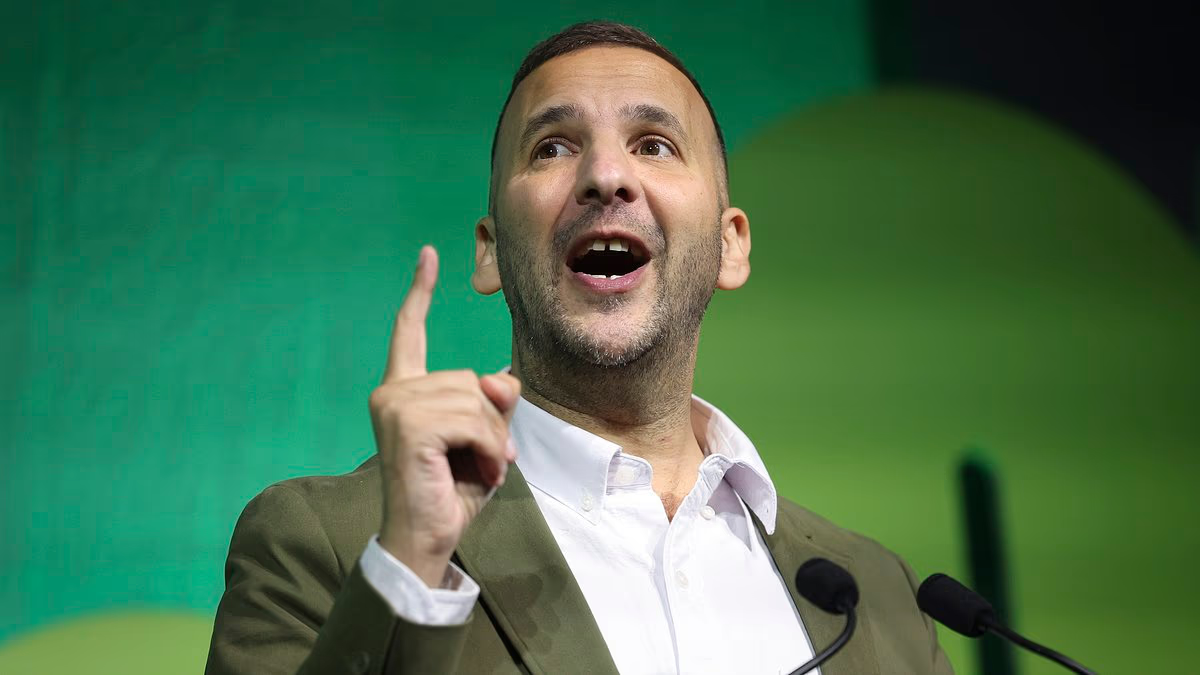

Labour’s warning that it could end power-sharing agreements with the Green Party over its controversial “Zionism is Racism” motion threatens to throw councils across the country into political uncertainty.
Labour said yesterday that local Green Party branches would have seven days to reject the motion, which was passed at the party’s conference in Brighton earlier this month.
The policy calls for Israel to be treated in the same way as apartheid-era South Africa. Critics have described it as an attempt to undermine Israel’s existence.
The announcement followed Andy Burnham’s decision to rule out national coalition talks with the Greens over what Labour has called the party’s “antisemitic” new stance. Labour’s chairman said the same principle would apply to agreements at council level.
Bridget Phillipson said: “Where local Labour Parties currently have an arrangement with the Greens in local government, we expect their Green counterparts to make clear that they reject this position and to call on their national leadership to reconsider the policy.
“We have asked local Green groups to respond as a matter of urgency. Where they are unable to provide that assurance, Labour will bring any such local arrangement to an end.
“This isn’t an issue of party politics; it’s about doing what is right and upholding the values anyone holding public office should share.”
Labour’s firm response was welcomed by Labour Against Antisemitism, which told the Daily Mail it was “relieved to see the Prime Minister listening to our concerns after we wrote to him”.

Zack Polanski’s Greens could lose control of councils across England if Labour ends coalitions and agreements with the party over its new “Zionism is Racism” motion

Green Party deputy leader Mothin Ali was a prominent supporter of the motion, passed at the party’s conference earlier this week, and warned Mr Polanski against overriding the membership
However, Labour’s tougher line could trigger upheaval in councils across Britain, with more than a dozen currently governed through Labour-Green pacts or other forms of cooperation.
Mail analysis suggests that if Labour ends every council-level agreement with the Greens, nine of the 14 authorities could see their administrations placed under serious pressure. In those areas, existing governing arrangements could collapse or become difficult to operate.
Eleven of the 14 councils would lose their current majorities, potentially giving the Conservatives, Liberal Democrats or Reform an opportunity to take advantage of the political vacuum.
Notably, many councils currently run through Labour-Green agreements are located in some of the country’s most affluent and traditionally middle-class areas.
Here is a look at whether your council could face political turbulence next week if its local Green Party branch refuses to disown the party’s new policy on Israel.
Sheffield
Current situation: The council is led by Labour with Green support. Together, the two parties hold a majority coalition of 45 seats out of 84.
If Labour abandons its agreement with the Greens, that majority would vanish, leaving Labour well short of the 43 seats needed to control the council.
Labour could try to govern as a minority administration, but it would need backing from other parties to pass decisions.
Lewes
Current situation: Labour props up Green-led council. Green/Labour majority coalition (26/41 seats)
Seats: Green (18), Liberal Democrat (14), Labour (8), Independent (1)
If Labour withdraws its agreement with the Greens, the coalition loses its majority and effectively ends in its present form.
Greens have 18 seats and Labour 8.
Without Labour, the Greens would be well short of the 21-seat majority threshold and would need a new arrangement.
Greens would probably seek a new agreement involving some combination of the 14 Lib Dems and/or the single independent.
Warwick
Current situation: Labour props up Green-led council. Green/Labour minority coalition (22/45 seats)
Seats: Green (15), Liberal Democrat (9), Independent (8), Labour (7), Conservative (5)
If Labour withdraws its agreement with the Greens, the existing Green/Labour administration effectively breaks apart.
The coalition is already one seat short of an outright majority. Removing Labour’s seven councillors leaves the Greens with only 15 of 45 seats.
The Greens would need a replacement arrangement or would have to attempt to govern as a much smaller minority, potentially seeking support from the Lib Dems and/or independents.

Sheffield is one of the councils most at risk of political upheaval if Labour terminates its pact with the Greens

Lewes is also at risk, where Labour props up a green-led council with a tiny majority

In Oxford, Labour has a minority administration with an agreement for ‘closer working’ with the Greens on a number of issues
Forest of Dean
Current situation: Labour props up Green-led council through a confidence and supply arrangement. Green minority administration (15/38 seats)
Seats: Green (15), Independent (11), Conservative (6), Labour (4), Reform (1), Liberal Democrat (1)
If Labour withdraws its confidence and supply agreement, the Green administration loses its guaranteed Labour support on key votes.
The Greens would remain the largest governing group with 15 seats but would be far short of the 21 required for a majority.
The administration would not automatically fall, but its ability to survive key votes and pass its programme would become much less secure, requiring support or abstentions from other groups.
West Sussex
Current situation: Labour is part of a Liberal Democrat/Green/Labour/Independent majority ‘rainbow’ coalition (36/70 seats)
Seats: Liberal Democrat (23), Reform (23), Conservative (11), Green (7), Labour (5), Independent (1)
If Labour withdraws, the existing coalition loses its majority.
Removing Labour’s five councillors leaves the Lib Dems, Greens and Independent with 31 of 70 seats, well short of the 36 required for a majority.
The Lib Dems and Reform are tied as the largest parties on 23 seats each, so Labour withdrawal could trigger substantial negotiations over who runs the council.
Broadland
Current situation: Labour is part of a Liberal Democrat/Labour/Green majority coalition (25/47 seats)
Seats: Conservative (19), Liberal Democrat (14), Labour (7), Green (4), Independent (2), Reform (1)
If Labour withdraws, the coalition loses its majority, and the existing administration cannot continue on the same numerical basis.
Without Labour’s seven seats, the Lib Dems and Greens have 18 of 45 seats.
The Conservatives are the largest single party on 19 seats, so Labour withdrawal could lead to a new minority administration.
Havant
Current situation: Labour is part of a Labour/Green/Liberal Democrat coalition (18/36 seats)
Seats: Reform (10), Labour (7), Green (6), Liberal Democrat (5), Conservative (5), Independent (3)
If Labour withdraws, the existing three-party coalition is reduced to only 11 of 36 seats and cannot continue in its present form.
Labour itself has only seven seats, so it could not replace the coalition with a Labour administration on its own.
A new governing arrangement would have to be negotiated, with Reform the largest single party on ten seats and several different combinations potentially possible.
Arun
Current situation: Labour is part of a Liberal Democrat/Labour/Green/Independent majority coalition (33/54 seats)
Seats: Conservative (19), Liberal Democrat (14), Labour (8), Independent (6), Green (five), Reform (two)
If Labour withdraws, the existing coalition loses its majority.
Removing Labour’s eight councillors leaves the Lib Dems, Greens and Independents with 25 of 54 seats, short of the 28 required for an outright majority.
The remaining partners could try to continue as a minority administration but would need outside support or abstentions to pass key business.
Derbyshire Dales
Current situation: Labour is part of a Liberal Democrat/Labour/Green majority coalition (22/35 seats)
Seats: Liberal Democrat (12), Conservative (nine), Labour (six), Green (four), Independent (four)
If Labour withdraws, the administration loses its majority.
Without Labour’s six councillors, the Lib Dems and Greens have 16 of 34 seats, short of the 18 required for a majority.
They could potentially continue as a minority administration but would need support or abstentions from independents or other groups on key votes.
West Oxfordshire
Current situation: Labour is part of a Liberal Democrat/Labour/Green majority coalition (31/49 seats)
Seats: Liberal Democrat (19), Conservative (17), Labour (eight), Green (four), Reform (one)
If Labour withdraws, the remaining Lib Dem/Green administration loses its majority.
Without Labour’s eight councillors, the Lib Dems and Greens have 23 of 49 seats, two short of the 25 required for an outright majority.
The Lib Dems and Greens could potentially continue as a minority administration but would need outside votes or abstentions to pass key business.
Coventry
Current situation: Labour minority administration propped up by the Greens through an informal arrangement, including two Green Scrutiny Board chairs (24/54 Labour seats)
Seats: Labour (24), Reform (20), Conservative (six), Green (four)
If Labour ends the arrangement with the Greens, Labour remains the largest party and could try to continue as a minority administration but loses dependable Green support.
Labour has 24 seats, four short of the 28 required for an outright majority.
Labour would therefore need support or abstentions from other groups to pass budgets and other contested business, and the Green scrutiny arrangements would likely need to be revisited.
North Somerset
Current situation: Labour is part of a Labour/Liberal Democrat/Green/Independent majority partnership administration (35/50 seats)
Seats: Conservative (12), Labour (ten), Liberal Democrat (nine), Green (eight), Independent (eight), Reform (three)
If Labour withdraws, the remaining Lib Dems, Greens and Independents would have 25 of 50 seats.
That is exactly half the council rather than an outright majority, so the remaining administration would lose its existing majority but would be much closer to retaining workable control than in most other affected councils.
The practical effect would depend on voting arrangements and whether the remaining partners could secure support or abstentions from elsewhere.
Oxford
Current situation: Labour minority administration (20/48 seats) with an agreement for ‘closer working’ with the Greens on a number of issues rather than a clearly described formal coalition or confidence and supply deal.
Seats: Labour (20), Green (13), Liberal Democrat (nine), Independent (six)
If Labour ends the closer-working arrangement, there may be less immediate structural change than in councils with a formal coalition.
Labour would remain a 20-seat minority administration and would continue to need support or abstentions from other groups to pass contested business.
Whether the national instruction requires this looser arrangement to end depends on whether Labour treats this case as a power-sharing arrangement.
West Devon
Current situation: Labour is part of the Independent/Green/Liberal Democrat/Labour ‘West Devon Alliance’ majority coalition (21/31 seats)
Seats: Independent (11), Conservative (ten), Green (six), Liberal Democrat (three), Labour (one)
If Labour withdraws, the effect on the administration is small.
Removing Labour’s single councillor leaves the Independents, Greens and Lib Dems with 20 of 31 seats, still comfortably above the 16 required for a majority.
The existing alliance would need to change formally, but the remaining partners could continue to control the council without Labour.