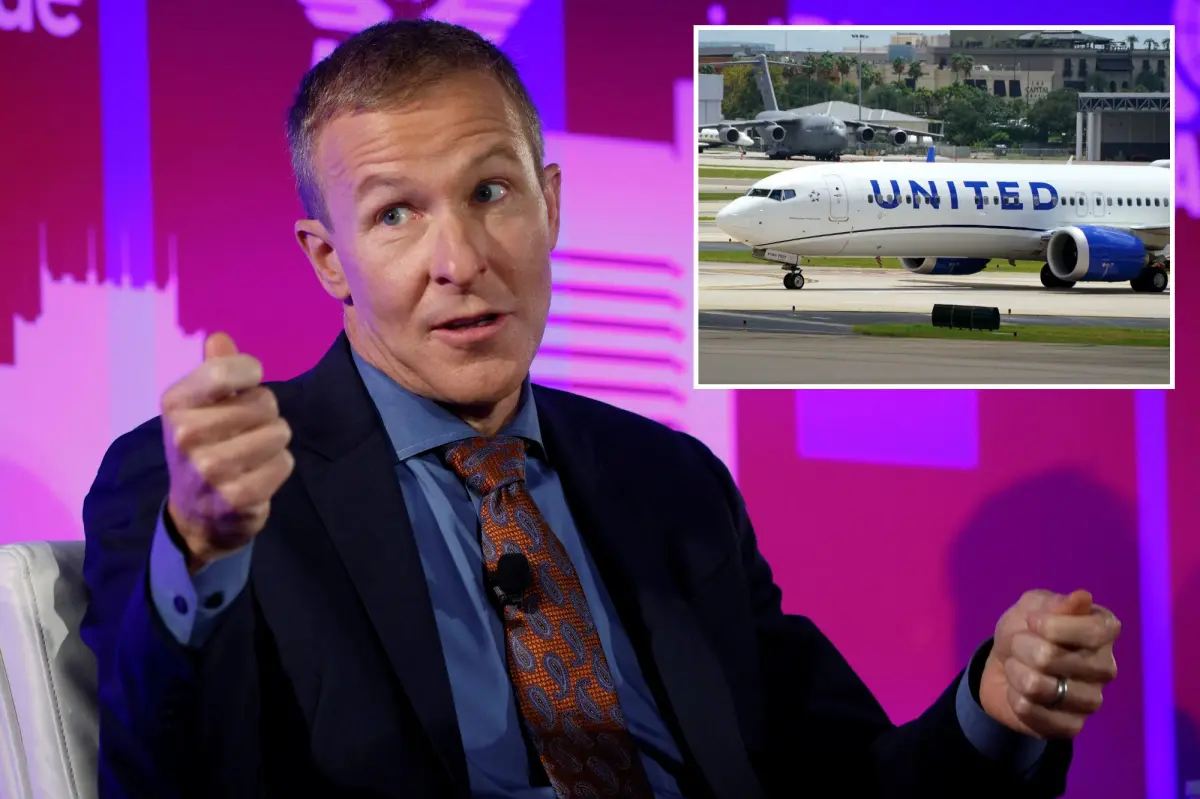

United Airlines CEO Scott Kirby is urging the federal government to adopt a national wealth tax and inheritance levies that could approach 100% on some estates, saying the widening gap between rich and poor has become a serious risk to American society.
Kirby made the comments in a New York Times interview about falling public confidence in corporate leaders. His remarks come after he received approximately $32.3 million in total compensation for fiscal year 2025.
“Wealth inequality has become a danger to our society, and we need to address that,” Kirby said in the interview, which was published Sunday.
The airline chief argued that any wealth tax would have to be enacted at the federal level. A state-by-state approach, he said, would encourage wealthy residents to move elsewhere to avoid the levy.
“We should have a national wealth tax — it won’t work by state because people will just move,” Kirby told the Times. He also endorsed inheritance taxes that could reach “close to 100 percent” above a certain level, adding, “I would pay them.”
Kirby did not identify the level of wealth at which his proposed inheritance tax would apply, nor did he outline a specific rate for a nationwide wealth tax.
YOU MAY ALSO READ: Gavin Newsom Addresses Ex-Wife Kimberly Guilfoyle’s Greek Tragedy
His comments arrive amid an ongoing debate over higher taxes on wealthy Americans, including questions about how such policies might affect investment, economic growth and federal revenue.
Unlike income or estate taxes, which focus on earnings or assets passed on after death, a federal wealth tax would be based on the overall value of a person’s holdings while they are alive.
The proposal would mark a major shift from the existing federal estate tax structure. The current system has a top marginal rate of 40% on taxable estates above the applicable exemption, which the IRS lists at $15 million per person in 2026.
During the interview, the United Airlines CEO also addressed airline pricing. He defended charging more for preferred seats after being asked about the cost faced by travelers without frequent-flyer status who want to avoid middle seats.

“There are some customers who want to sit in a window seat or a better seat, and that costs money to deliver,” Kirby said, according to the Times.
He maintained that charging separately for the products and services passengers select enables airlines to accommodate a wider range of customer preferences.
While warning about the consequences of extreme wealth inequality, Kirby struck an upbeat tone about the US economy. He told the newspaper that he sees the nation’s long-term future as “incredibly bright.”
RELATED: New Twist in Cocaine Case Behind Raid on Couple’s $27M Mansion