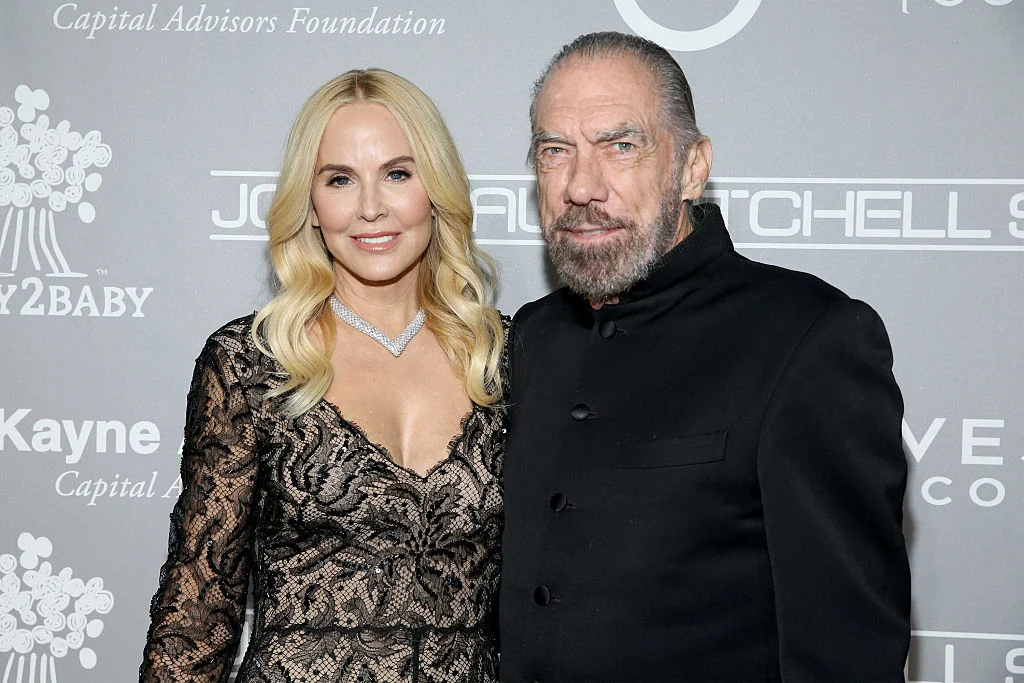

One evening in the 1960s, John Paul DeJoria returned from work to find his wife rushing down the stairs. She said she was going to the store, climbed into the family’s only car, and drove away. Upstairs, their two-and-a-half-year-old son sat beside a small pile of clothes. A note explained that his mother was leaving—and that the child would remain with his father.
DeJoria later recalled that his wife had emptied their bank account and stopped paying the rent and utility bills without warning. An eviction was already underway. Within days, the 22-year-old father and his young son were living in a borrowed 1951 Cadillac whose water pump no longer worked.
With no money for food, DeJoria searched vacant lots and the ground around soda machines for discarded bottles. Stores paid two cents for a small bottle and five cents for a large one. He collected every bottle he could find, exchanged them for cash, and used the proceeds to feed his son.
This was not an early business experiment or a calculated entrepreneurial move. It was survival, and DeJoria had no idea how long the crisis would last.
Learning to Survive a Closed Door
Poverty was familiar to DeJoria from childhood. He grew up in Los Angeles with an Italian immigrant father and a Greek immigrant mother, who separated when he was two. His mother worked to support him and his brother, and the boys spent part of their childhood living with a foster family during the week. By age nine, DeJoria was selling Christmas cards. At 11, he delivered newspapers before school and gave much of what he earned to his family.
After graduating from high school, he joined the Navy. The period in the Cadillac came several years after he returned to civilian life and ended when a biker friend, Lee Meyers, offered DeJoria and his son a spare room. Friends helped care for the boy while DeJoria worked. The immediate danger had passed, but lasting financial stability remained out of reach.
DeJoria moved through a series of jobs, working as a janitor, selling insurance, and pitching Collier’s encyclopedias door-to-door. That encyclopedia job taught him a lesson that would later serve him better than a business degree: how to absorb rejection, walk to the next house, and deliver the next sales pitch with the same energy as the first. While the typical salesperson reportedly lasted only three days, DeJoria stayed for three years.
In 1971, a friend encouraged him to enter the professional hair-care business. DeJoria joined Redken for $600 a month and eventually rose into management, overseeing the company’s chain-salon and beauty-school divisions. Despite his accomplishments, he was fired in 1975. He later joined Fermodyl, helped increase sales, and was dismissed again. At the Institute of Trichology, he earned enough in commissions that, by his account, he was making more than the owner. That position also ended.
Three firings could have pushed DeJoria out of the industry. Instead, they gave him a detailed understanding of how hair-care products were made, how salons purchased them, how distributors worked, and what persuaded customers to reorder. He knew how to sell the products. The next challenge was learning how to own the company behind them.
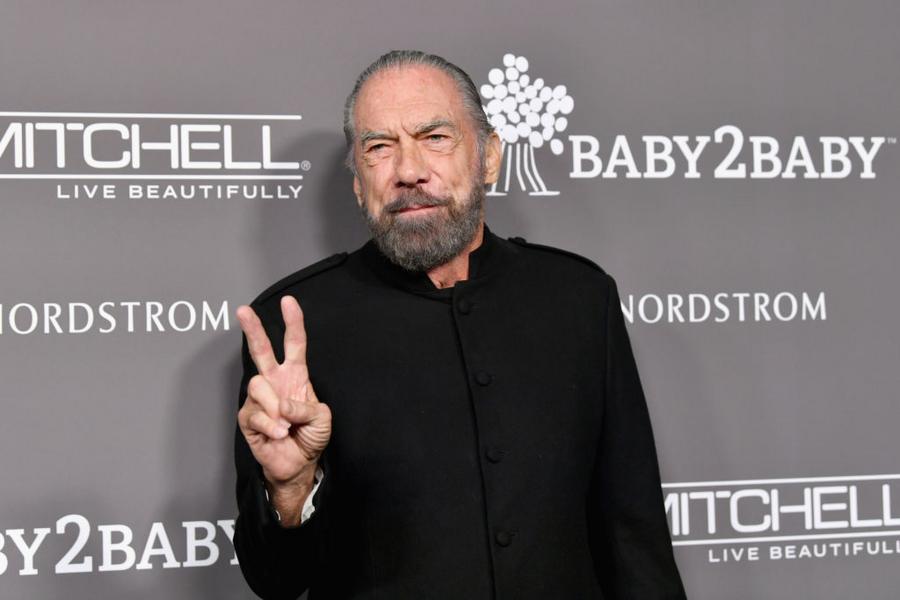
Emma McIntyre/Getty Images
A Half-Million-Dollar Plan That Fell Apart
That opportunity emerged through Paul Mitchell, a renowned hairstylist who understood hair and product development but needed a partner with business experience. In 1980, the two men planned to launch a professional hair-care company. Under their proposed agreement, DeJoria and Mitchell would each hold 30%, while an investor contributing $500,000 would receive the remaining 40%.
They believed the financing was secured, so DeJoria left his job to focus on the new venture. His marriage was also breaking down, and he left his wife the house, their money, and the better car. Then the promised $500,000 never arrived.
For the second time, John Paul DeJoria found himself homeless. This time, he slept in an aging Rolls-Royce parked along Mulholland Drive and occasionally used the public showers at Griffith Park. He was nearing 36, with a potential business partner and a business plan—but almost no cash to put either into action.
Actress Joanna Pettet, whom DeJoria had known years earlier, eventually saw him living in the car. She offered him a room for a few months. DeJoria accepted and printed business cards featuring her telephone number, giving the fledgling company an established appearance despite having no office.
When no new investor appeared, Mitchell and DeJoria chose to launch the company anyway. Their combined startup capital, including borrowed money, came to only $700.

John Paul DeJoria – Billionaire /Kevin Winter/Getty Images
Seven Hundred Dollars and a Lot of Shampoo
The company’s first products were two shampoos and a leave-in conditioner created for professional stylists, not supermarket shoppers. The founders persuaded suppliers to manufacture the initial batch on credit and used their limited cash to prepare the packaging. The bottles featured white backgrounds and basic black lettering because color printing was too expensive. That cost-cutting choice eventually became one of the most recognizable looks in professional hair care.
DeJoria packed the products into his car and visited salons one at a time. Most owners rejected the pitch. He and Mitchell demonstrated the products, trained stylists, and promised to take back unsold bottles if salons were unhappy. Instead of spending heavily on advertising, they relied on a simple strategy: if hairdressers saw good results, they would reorder the products and recommend them to their clients.
At one point, DeJoria convinced 12 salons to place orders and write checks with the payee line blank. He presented those checks to a beauty distributor as evidence that customers were ready to buy. The distributor agreed to accept 2,000 bottles if DeJoria helped sell them. To secure immediate payment instead of waiting the customary 45 days, he offered a 5% discount. The cash was essential to keeping the young company operating.
The strategy soon began producing results. John Paul Mitchell Systems reported $1.37 million in sales for fiscal 1982. Annual sales exceeded $10 million by 1985 and reached $60.7 million by 1988. The company that had nearly collapsed before shipping its first products had become a major force in professional hair care.
Then, in 1989, Paul Mitchell died of pancreatic cancer. DeJoria continued building the business they had founded, maintaining its commitment to professional salons. But even as the shampoo company grew, a friend had begun talking to him about a product about which he knew almost nothing. The idea had nothing to do with salons.
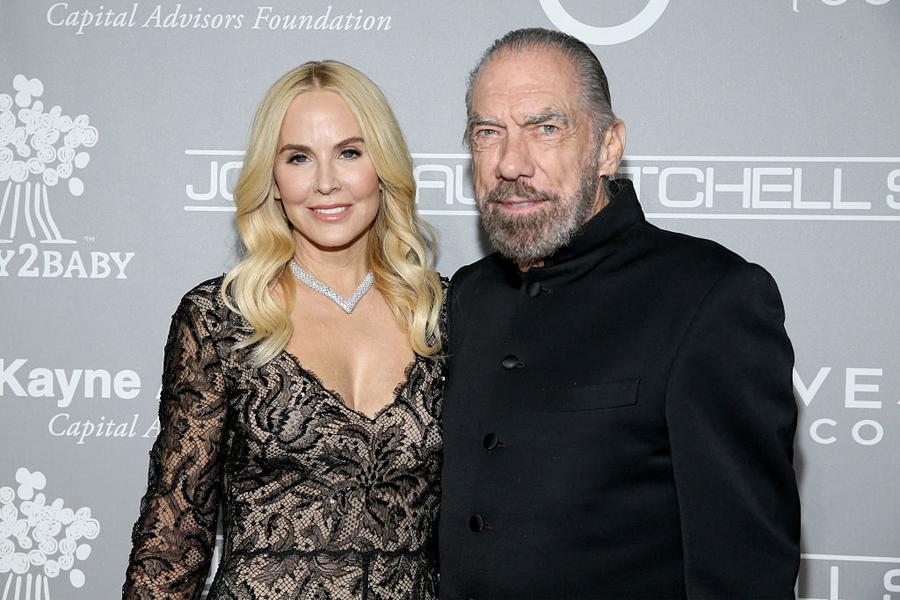
Alberto E. Rodriguez/Getty Images
The $37 Bottle Nobody Took Seriously
DeJoria had asked his friend Martin Crowley to bring back some good tequila from Mexico. Crowley returned fascinated by a hand-blown bottle and the possibility of producing a tequila smooth enough to sip, not just shoot or bury in a margarita. Working with tequila expert Francisco Alcaraz, they developed the product that became Patrón.
In 1989, DeJoria financed the first 12,000 bottles. The retail price was $37 each, at a time when many Americans were accustomed to tequila costing a fraction of that amount. Distributors were skeptical. The two men were trying to sell a luxury version of a spirit that much of the U.S. market didn’t yet regard as luxurious.
There was no instant explosion in sales. Crowley did much of the difficult work of building the spirits business while DeJoria continued running Paul Mitchell. The partners fought for distribution, handed out samples, and introduced Patrón to the network of stylists and salon owners who attended Paul Mitchell events. Later, executive Ed Brown helped turn it into a major international brand. Slowly, the expensive tequila began finding its audience.
Patrón also endured a complicated ownership battle. Crowley died in 2003, leaving his interest in the company to benefit a charitable trust supporting children’s education. DeJoria claimed a contractual right to buy that interest for $43 million, but the estate challenged the arrangement as Bacardi pursued its own interest in the company. Years of legal maneuvering ended in a 2008 settlement. Bacardi acquired a 30% stake, and DeJoria emerged with the other 70%.
The brand continued expanding. By the time its founders’ ambitions had been fully realized, Patrón had helped change how Americans thought about tequila. Instead of being an inexpensive spirit for shots, premium tequila had become a luxury category, with Patrón one of its most recognizable names. The spirits business was producing more than three million cases annually. Bacardi already owned nearly a third of the company, and eventually it wanted the rest.
On January 22, 2018, Bacardi announced an agreement to acquire the rest of Patrón at a $5.1 billion enterprise valuation. The transaction closed that April. DeJoria sold his approximately 70% stake, a holding corresponding to roughly $3.57 billion of the headline valuation before debt, taxes, and other adjustments.
The Empire He Chose Not to Sell
The striking thing about DeJoria’s two biggest companies is that he made opposite decisions about what to do with them. He sold Patrón. But in 2007, he had established a 360-year trust intended to keep John Paul Mitchell Systems independent, family-operated, and committed to professional hairdressers. His daughter Michaeline later became CEO, carrying that business into another generation.
His fortune, which today stands at $3 billion, also made possible the kind of giving he had learned about before he had any money. DeJoria remembers being six when his mother handed him and his brother a dime to put in a Salvation Army collection bucket. The family could hardly spare it, but she wanted them to know that someone else could still need help more. In 2011, he joined the Giving Pledge, committing to donate at least half his fortune to charitable causes.
He likes to say that “success unshared is failure.” It’s a philosophy informed by the people who helped him when he had nothing: the biker who found a room for a father and son, and the actress who opened her home to a man trying to start over.
When DeJoria was 22, a discarded bottle was worth two or five cents to him. Decades later, bottles bearing names he had helped create were sold all over the world. One company became a multibillion-dollar acquisition. The other was the business he wanted his family to keep for generations.
(function() {
var _fbq = window._fbq || (window._fbq = []);
if (!_fbq.loaded) {
var fbds = document.createElement(‘script’);
fbds.async = true;
fbds.src = ”
var s = document.getElementsByTagName(‘script’)[0];
s.parentNode.insertBefore(fbds, s);
_fbq.loaded = true;
}
_fbq.push([‘addPixelId’, ‘1471602713096627’]);
})();
window._fbq = window._fbq || [];
window._fbq.push([‘track’, ‘PixelInitialized’, {}]);


