
A Sydney-based researcher is at the forefront of a world-first cancer vaccine trial after results showed a striking reduction in the likelihood of melanoma returning or proving fatal.
Patients given the personalised vaccine alongside the immunotherapy drug pembrolizumab had a 42 per cent lower risk of recurrence or death than those treated with pembrolizumab alone. The medicine is widely marketed as Keytruda.
The landmark melanoma vaccine results raise hopes that personalised cancer vaccines could eventually improve survival for people with melanoma and possibly a wider range of cancers.
Professor Georgina Long, medical director of Melanoma Institute Australia and chair of melanoma medical oncology and translational research at the University of Sydney, served as the trial’s principal investigator.
Professor Long said the findings pointed to a completely new approach for treating patients with earlier-stage melanoma once surgery had removed the tumour.
She described the results as significant not only for melanoma but for cancer treatment more broadly, comparing the potential impact of personalised neoantigen therapy with the way email reshaped communication.
The vaccine, called intismeran, is being developed through a partnership between pharmaceutical giants Moderna and MSD.
Intismeran is an individualised messenger RNA, or mRNA, vaccine created for each patient using the specific genetic features of their tumour.

Professor Georgina Long (pictured) headed the clinical trial for a world-first cancer vaccine that significantly lowered the risk of melanoma recurrence or death

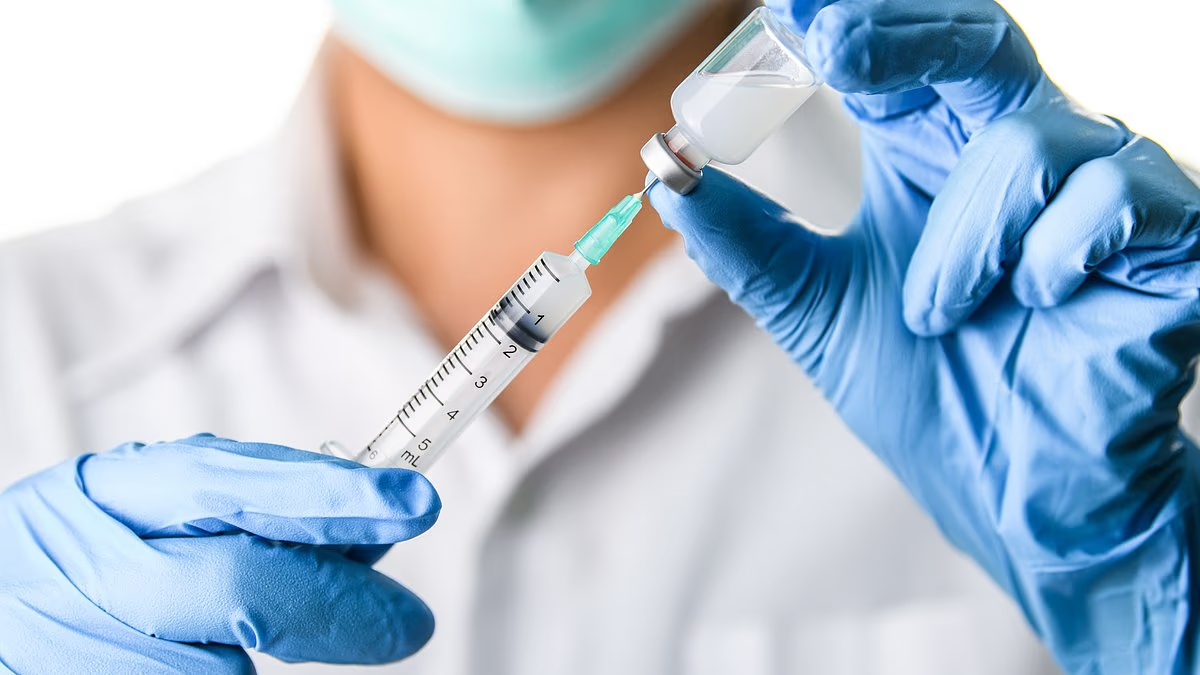
Researchers found the vaccine reduced the risk of melanoma returning or causing death by 42 per cent compared with standard treatment (stock image)
The treatment is designed to identify neoantigens—abnormal proteins created by genetic mutations in cancer cells. By exposing the immune system to these distinctive markers, the vaccine aims to help it recognise and destroy tumour cells.
Because the vaccine is matched to the biology of each person’s cancer, researchers hope it can produce a more powerful immune response and reduce the chance of the disease coming back.
Professor Long said the breakthrough brought together personalised medicine, mRNA technology and sophisticated data analysis in a way that represented a major advance in cancer care.
She said the approach represented an unprecedented combination of an mRNA platform, patient-specific treatment and algorithms capable of analysing complex cancer data.
In her view, the development could mark a transformation in cancer treatment comparable to the way the first email changed how people communicate.
Funded by Merck and Moderna, the international trial took place at 157 locations and included 1,137 patients. Each had undergone surgery for melanoma but remained at high risk of the cancer returning.
None of the participants had previously been treated with cancer drugs.
Australian trial locations included Melanoma Institute Australia, Westmead Hospital in New South Wales, Princess Alexandra Hospital in Queensland, and the Paula Fox Melanoma and Cancer Centre and Peter MacCallum Cancer Centre in Victoria.

Professor Long hailed the results as a major step forward in the treatment of cancer
Professor Long has spent her career working to reduce melanoma deaths and find more effective treatments for cancers that resist existing therapies.
In 2024, she was named Australian of the Year alongside her late colleague, Professor Richard Scolyer.
Associate Professor Seth Cheetham, director of the Australian mRNA Cancer Vaccine Hub, described the findings as a major breakthrough that could usher in a new era of cancer research and treatment.
‘This is the first really large trial that’s shown definitively that this technology works, it reduces the risk of recurrence or spread and results in better outcomes compared to standard of care,’ he said.
‘This is really the gold standard, and it’s what the entire field’s been waiting on,’ he added.
Professor Long said the results could have implications far beyond melanoma.
‘I think track record predicts future,’ she said.
‘So advances in melanoma transformed lung cancer, kidney cancer, head and neck cancer, bladder cancer, so many other cancers.’

Professor Georgina Long was named Australian of the Year in 2024 alongside her late colleague Professor Richard Scolyer
Join the discussion
How should access to breakthrough personalised cancer vaccines be prioritised or funded?
She said the findings represented a fundamental change in cancer treatment by using the immune system in a more personalised way to reduce the risk of melanoma returning or causing death.
‘This has not been achieved before in the history of cancer drug development,’ she said.
Moderna’s shares reportedly surged by more than 170 per cent in a single trading day in August after news of the trial’s promising results emerged.