
Lymphoedema is a poorly understood condition that can cause painful, debilitating swelling in the arms or legs.
The condition develops when the lymphatic system fails to drain fluid properly. As a result, fluid collects in the limbs, sometimes causing dramatic enlargement.
More than 400,000 people in the UK are thought to live with lymphoedema. There is currently no cure, while existing options offer limited relief from its symptoms.
Now, scientists have developed a pioneering daily tablet that could offer meaningful relief for people living with the condition.
In a Stanford Medicine study in California, patients who took the anti-inflammatory drug acebilustat once a day for 12 months saw reduced swelling. They also experienced improvements in skin thickness, scarring and overall quality of life.
Acebilustat is not currently licensed to treat lymphoedema in either the UK or US. However, researchers hope to begin a large-scale clinical trial as they work towards possible regulatory approval.
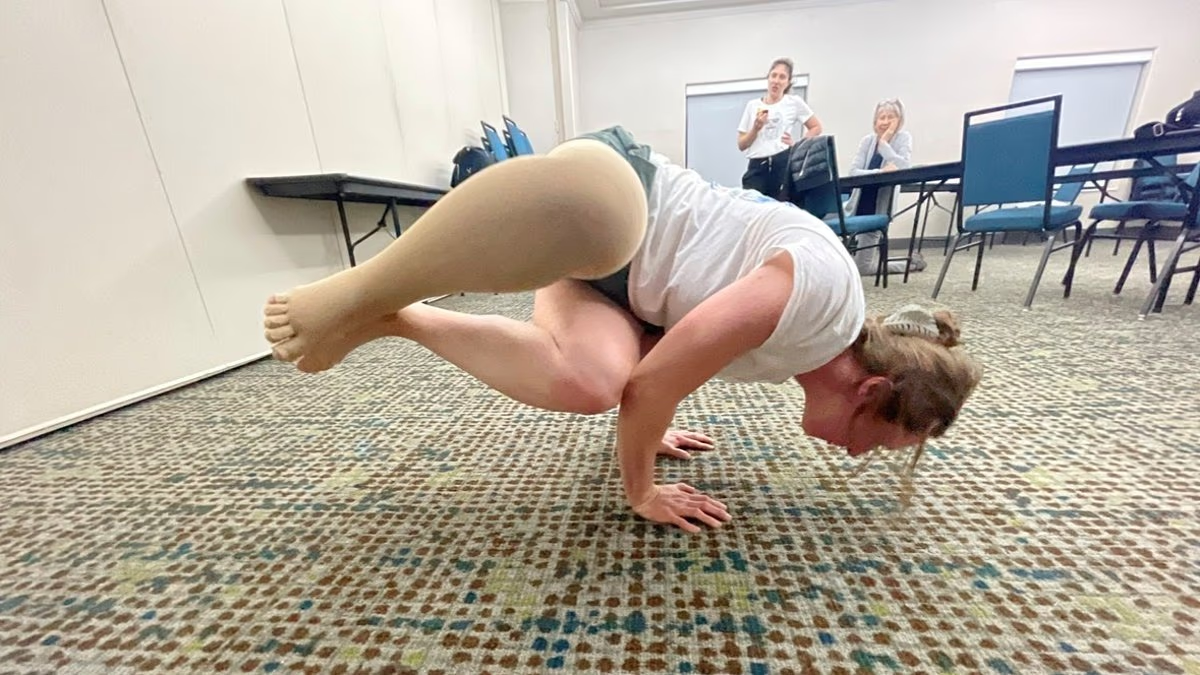
Among those to report a striking improvement was Lauren Scheidegger, 34, from Texas, who has had lymphoedema in her right leg since birth.
The swelling had made walking more difficult, restricted her joints and limited her ability to exercise.


Lauren Scheidegger has lived with lymphoedema in her right leg since birth, but after a year on the experimental daily pill, she says the affected limb had become one-third smaller

Lauren noticed the first signs of improvement after roughly three months and saw further changes by the six-month mark
Lauren said she began noticing a difference after about three months of taking the study medication, with more pronounced improvements emerging around six months.
Over the course of the year, she estimated that her swollen leg had reduced in size by around a third. “I could start seeing the ligaments and veins on my foot, as well as more definition around my ankle and knee,” she said.
Before joining the study, Lauren relied on heavy compression garments and regular manual lymphatic drainage, or MLD. The specialist massage uses gentle pressure and rhythmic movements to encourage fluid away from swollen areas.
She said the swelling and feeling of heaviness normally worsened as the day went on. While taking acebilustat, movement became easier. “The drug seemed to take off that overload,” she said. However, the swelling began returning after she stopped taking the medication when the trial ended.
In some cases, however, The Mail on Sunday can reveal that patients believe the improvements continued even after they discontinued the drug.
That was the experience of Debon Cochrane, who developed lymphoedema following surgery for ovarian cancer in 1999.
MORE ON THIS: Arson Damages Hitler’s Former Alpine Hideout; Suspect Flees by Motorbike
Before taking acebilustat, Debon managed her symptoms with compression garments and MLD massage. The 62-year-old nurse from California said the garments could be almost as troublesome as the condition itself. “They put a lot of pressure in places where there shouldn’t be pressure, so I have issues with bunions and ingrown toenails,” she said.

Lauren previously managed her lymphoedema with heavy compression garments and regular manual lymphatic drainage, a specialised form of massage

Lymphoedema had previously restricted Lauren’s movement, stiffened her joints and made exercise more challenging
Debon said it took around nine months for the most significant changes to appear. By the end of the study, she estimated that her symptoms had improved by approximately 20 per cent.
‘The skin got smoother and more supple. You could feel the texture changing,’ she says.
A year and a half after stopping acebilustat, Debon has had no progression of her symptoms.
The tablet is thought to work by blocking a molecule called leukotriene B4, or LTB4, which is found at elevated levels in people with lymphoedema and is believed to drive the inflammation.
In an early stage trial, researchers treated 23 patients with lymphoedema affecting their legs. After 12 months, limb swelling fell by around 5 per cent – equivalent to one litre of fluid.
Participants also reported improvements in limb heaviness, tissue softness, self-confidence and overall quality of life.
Researchers found no major safety concerns.
Senior study author Dr Stanley Rockson says the findings suggested drug therapies could eventually reduce patients’ reliance on self-management techniques.
His team has already launched a larger trial using acebilustat in patients with lymphoedema affecting their arms.
However, the British Lymphology Society cautioned that the first trial was small and lacked a control group – where patients are given a placebo drug for comparison – making it difficult to know how much of the improvement was due to the drug itself.
Carol-Ann Barrett, a lymphoedema specialist practitioner for professional association MLD UK, says: ‘A further larger randomised placebo-controlled trial would provide stronger evidence.’
However, Professor Dominic Furniss, from the British Association of Plastic, Reconstructive and Aesthetic Surgeons, says: ‘This study shows some promise that we may have a desperately needed drug treatment for lymphoedema in future.’


