
What Is Curtis Priem’s Net Worth?
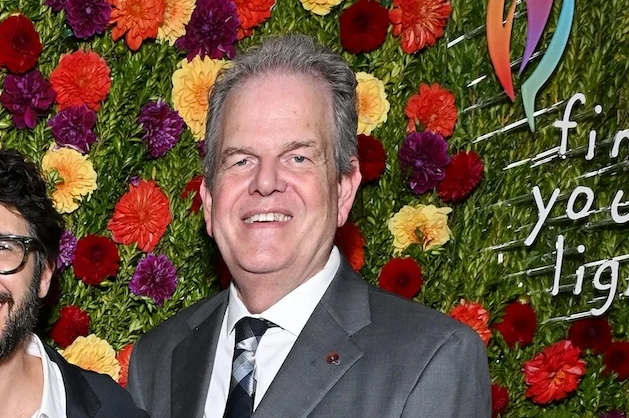
Curtis Priem is an American electrical engineer, entrepreneur, and philanthropist with an estimated net worth of $30 million.
He is best known as one of the three co-founders of NVIDIA, the semiconductor company that helped transform computer graphics and later became a major force in artificial intelligence. Priem launched the company in 1993 alongside Jensen Huang and Chris Malachowsky, serving as NVIDIA’s first chief technology officer. Before that, he worked on influential graphics hardware for personal computers and Sun Microsystems workstations. His engineering work ultimately led to nearly 200 U.S. and international patents.
Priem’s financial journey is striking, even by Silicon Valley standards. Following NVIDIA’s 1999 initial public offering, he donated most of his shares to a charitable foundation, retired from the company in 2003, and sold his remaining personal holdings by 2006. As a result, he did not participate in NVIDIA’s remarkable stock-market rise in the years that followed. Instead, much of his wealth supported education and research, especially at Rensselaer Polytechnic Institute. His donations helped finance a performing arts center and bring an IBM quantum computer to the campus, establishing him as one of RPI’s most influential benefactors.
Early Life and Education
Curtis R. Priem spent his childhood moving around the East Coast before his family ultimately settled near Cleveland, Ohio. Music played a central role in his early life. He studied cello with Donald White, a musician with the Cleveland Orchestra, played trombone, and attended summer programs for classical musicians.
Priem studied electrical engineering at Rensselaer Polytechnic Institute in Troy, New York, graduating with a bachelor’s degree in 1982. During his time at the university, he also performed as a cellist in the orchestra. His twin interests in technology and music would later converge in his support for RPI’s Experimental Media and Performing Arts Center.
Early Engineering Career
After graduating, Priem worked at Vermont Microsystems from 1982 to 1984. While there, he designed the IBM Professional Graphics Adapter, an early breakthrough that brought advanced graphics capabilities to personal computers. RPI credits Priem with designing the first graphics processor for a PC.
He later joined GenRad, an electronic testing-equipment manufacturer, before moving to Sun Microsystems in 1986. At Sun, Priem helped create the GX graphics architecture, including a single-chip accelerator designed to handle graphical user interfaces. He also worked alongside Chris Malachowsky, forming the technical partnership that would eventually help launch NVIDIA.
Founding NVIDIA
In 1993, Priem, Malachowsky, and Jensen Huang began developing the idea for a new company during conversations over meals at a Denny’s in Silicon Valley. Priem and Malachowsky brought experience in workstation graphics, while Huang had backgrounds in chip design and management at AMD and LSI Logic. Together, they anticipated that increasingly advanced computer graphics would require dedicated processors.
The trio officially founded NVIDIA in April 1993. Huang took on the role of chief executive officer, Malachowsky headed engineering, and Priem became chief technology officer. His responsibilities centered on the core architecture that engineers used to design the company’s graphics chips.
NVIDIA’s future success was anything but guaranteed. Its first major product, the NV1, relied on a graphics approach that did not align well with the standards emerging in the personal-computer market. The company regained momentum with the RIVA 128, introduced in 1997, which helped position NVIDIA as a serious contender in the fast-growing market for 3D gaming graphics.
In 1999, NVIDIA unveiled the GeForce 256, which it promoted as the world’s first graphics processing unit, or GPU. The product helped define a new class of specialized computing hardware that would eventually power applications well beyond video games. Priem continued as NVIDIA’s chief technology officer until retiring in 2003.
NVIDIA began trading publicly on January 22, 1999, at $12 a share. The company’s pre-IPO registration documents listed Priem, Huang, and Malachowsky as each holding 3 million shares. Before the offering and the additional shares associated with the IPO, each founder controlled 12.8% of NVIDIA. At the $12 offering price, a 3 million-share stake was valued at $36 million.
Later in 1999, Priem created the Priem Family Foundation and transferred more than three-quarters of his NVIDIA holdings to it. In an interview with Forbes, he described the shares as an “excessive amount of money.” He said he would rather use them for charitable purposes than sell them and incur the resulting taxes.
Priem ultimately sold the NVIDIA shares he still held personally, completing his exit by 2006. In the years that followed, the company expanded well beyond gaming into scientific computing, data centers, and artificial intelligence—helping produce one of the most extraordinary stock-market success stories in modern history.
The value of the opportunity he gave up is difficult to overstate. NVIDIA carried out six stock splits between 2000 and 2024, turning each original share into 480 shares. If Priem had retained the 3 million shares listed in the pre-IPO filing, that original stake would have grown to 1.44 billion shares after the splits.
The following examples illustrate what that hypothetical holding would have been worth at different NVIDIA share prices:
| NVIDIA Share Price | Value of 1.44 Billion Shares |
|---|---|
| $100 | $144 billion |
| $200 | $288 billion |
| $250 | $360 billion |
Even if Priem had kept only 1% of his original stake, he would have held 14.4 million shares after the splits—worth $3.6 billion at a share price of $250. These estimates track the original share count through NVIDIA’s stock splits; his percentage ownership would have declined as the company issued additional shares.
Priem acknowledged some regret in a 2023 Forbes interview, saying, “I did a little crazy thing, and I wish I’d kept a little bit more.” Still, the decision also created the resources for decades of philanthropic work that would not otherwise have been possible.
Philanthropy and Rensselaer Polytechnic Institute
The Priem Family Foundation initially supported groups such as The Nature Conservancy and the Monterey Bay Aquarium. Over time, its giving increasingly focused on education, with Rensselaer Polytechnic Institute becoming a major beneficiary. Priem joined RPI’s board of trustees in 2003 and later served as vice chair.
By November 2023, Forbes reported that Priem had donated $275 million to RPI since 2001 and pledged approximately $80 million more. His completed gifts represented about 40% of the university’s donations during that period. His influence went beyond financial contributions, as he also helped guide projects bringing together engineering, scientific research, and the arts.
One of his most prominent contributions was a $40 million unrestricted gift announced in 2004. RPI named its Experimental Media and Performing Arts Center in his honor. The facility opened in 2008 and includes a 1,165-seat concert hall, a theater, and spaces for performance, research, and multimedia production.
Priem later pledged $95 million toward bringing quantum computing to RPI and establishing a related research center. In April 2024, RPI and IBM unveiled an IBM Quantum System One on campus, the first such installation at a university. The machine was housed in the historic Voorhees Computing Center and became part of the Curtis R. Priem Constellation, which also supports faculty and collaborative research.
The initiative gave Priem another opportunity to back a developing computing technology long before its full commercial potential was clear. His ambition was to help turn New York’s Capital Region into a center for quantum research and train students to work in the field. In 2023, he said the foundation planned to spend down its remaining resources rather than operate indefinitely.
Marriage, Divorce, and Spousal Support Dispute
Priem married his first wife, Veronica, in July 1999. They had two sons, born in 2000 and 2007, and she filed for divorce in January 2010. Their separation led to a significant California appellate ruling concerning domestic violence and spousal support.
During the proceedings, Curtis alleged that a decade of abusive behavior had resulted in 19 police reports, five arrests, and three criminal convictions. The court record included Veronica’s May 2008 misdemeanor conviction for spousal battery following a no-contest plea. The trial court ultimately denied her request for temporary spousal support, finding that she had not overcome the legal presumption against support arising from that conviction.
Veronica appealed, arguing in part that the court should not have relied on her no-contest plea. In March 2013, the California Court of Appeal upheld the orders. The trial court had separately ordered Curtis to pay $14,602 per month in child support, which was distinct from the denied spousal support.
Priem later advocated for legislation addressing the treatment of no-contest pleas in domestic violence cases. California’s SB 28, enacted in 2015, clarified that such pleas constitute documented evidence of domestic violence that courts must consider when determining spousal support.
Personal Life and Real Estate
Priem has maintained a considerably lower public profile than NVIDIA’s chief executive. A 2023 Forbes profile described his residence near Fremont, California, as a $6 million property where he lived off the grid. The same profile reported that he purchased a Gulfstream G450 private jet in 2021, named it Snoopy, and used it for trips to RPI.
His connection to the university has also brought numerous honors. RPI recognized him with its Entrepreneur of the Year award in 2000, the Albert Fox Demers Award in 2005, and a Presidential Lifetime Achievement Award in 2016.
All net worths are calculated using data drawn from public sources. When provided, we also incorporate private tips and feedback received from the celebrities or their representatives. While we work diligently to ensure that our numbers are as accurate as possible, unless otherwise indicated they are only estimates. We welcome all corrections and feedback using the button below.


