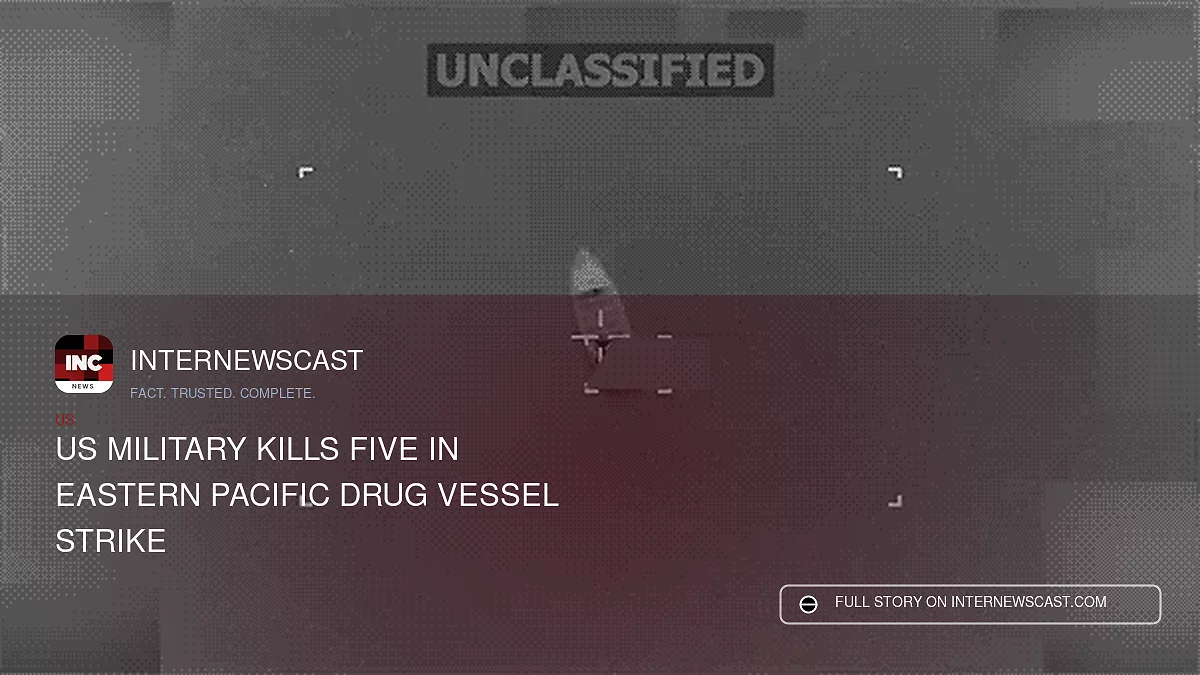

The U.S. military conducted a deadly strike Tuesday against a vessel it said was engaged in drug trafficking in the eastern Pacific, killing five people identified by U.S. Southern Command (SOUTHCOM) as “narco-terrorists.”
“On October 27, under the direction of SOUTHCOM, Joint Task Force Western Hemisphere executed a lethal, kinetic strike on a go-fast vessel operating along established narco-trafficking routes in the Eastern Pacific,” the command said in a statement.
The statement said intelligence had confirmed that the vessel was actively involved in narco-trafficking.
According to SOUTHCOM, five people described as narco-terrorists died in the operation.
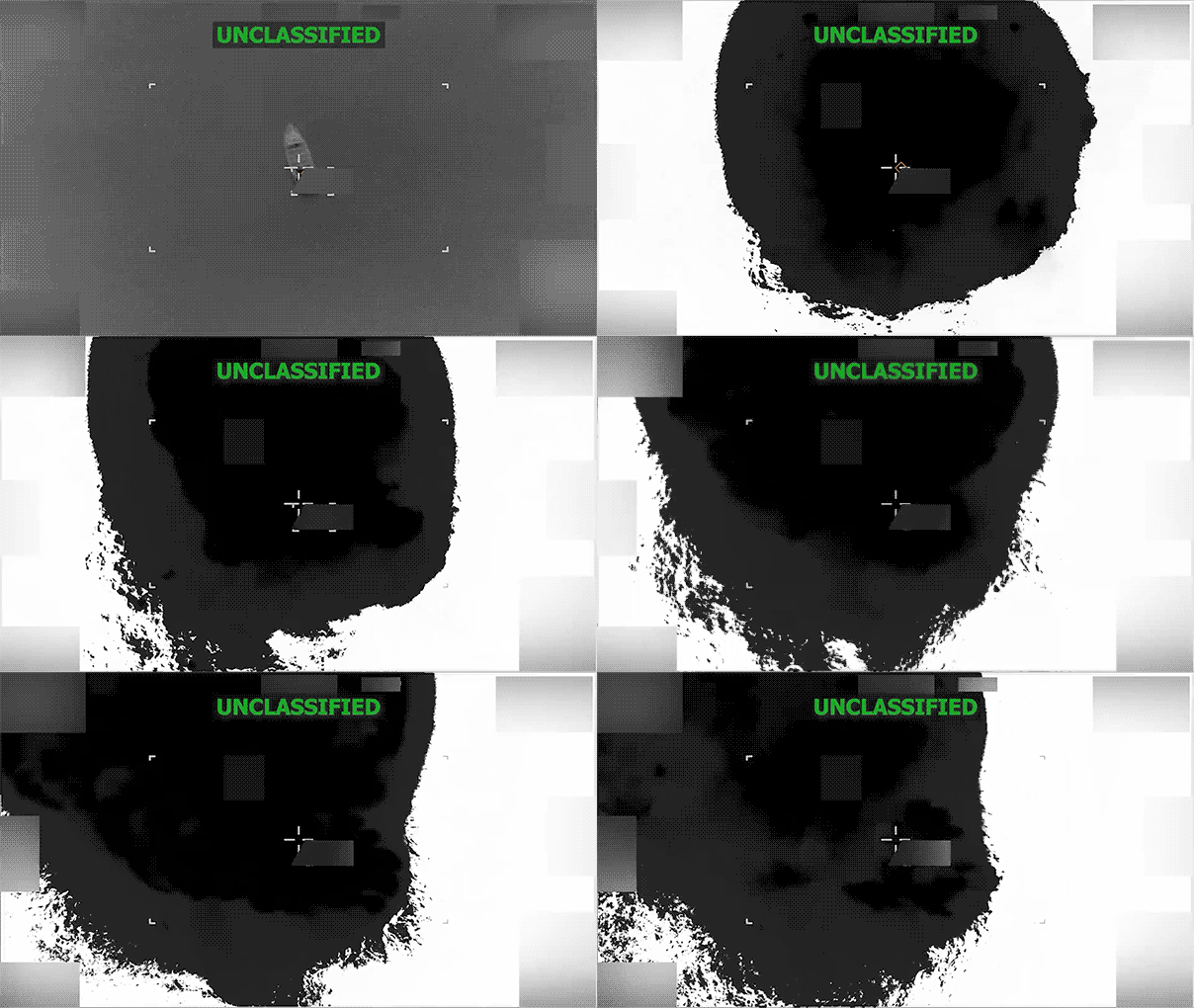
U.S. Southern Command released footage of a military strike on a suspected drug-trafficking vessel in the eastern Pacific on Oct. 27, 2026. (U.S. Southern Command)
The attack is the latest action in the Trump administration’s months-long campaign against suspected cartel vessels. More than 70 strikes have now left at least 240 people dead, according to The Associated Press.
Footage released by SOUTHCOM shows the vessel moving across the water before it suddenly bursts into a large fireball.
SOUTHCOM did not provide a more precise location, saying only that the strike occurred in the eastern Pacific along established drug-trafficking routes.
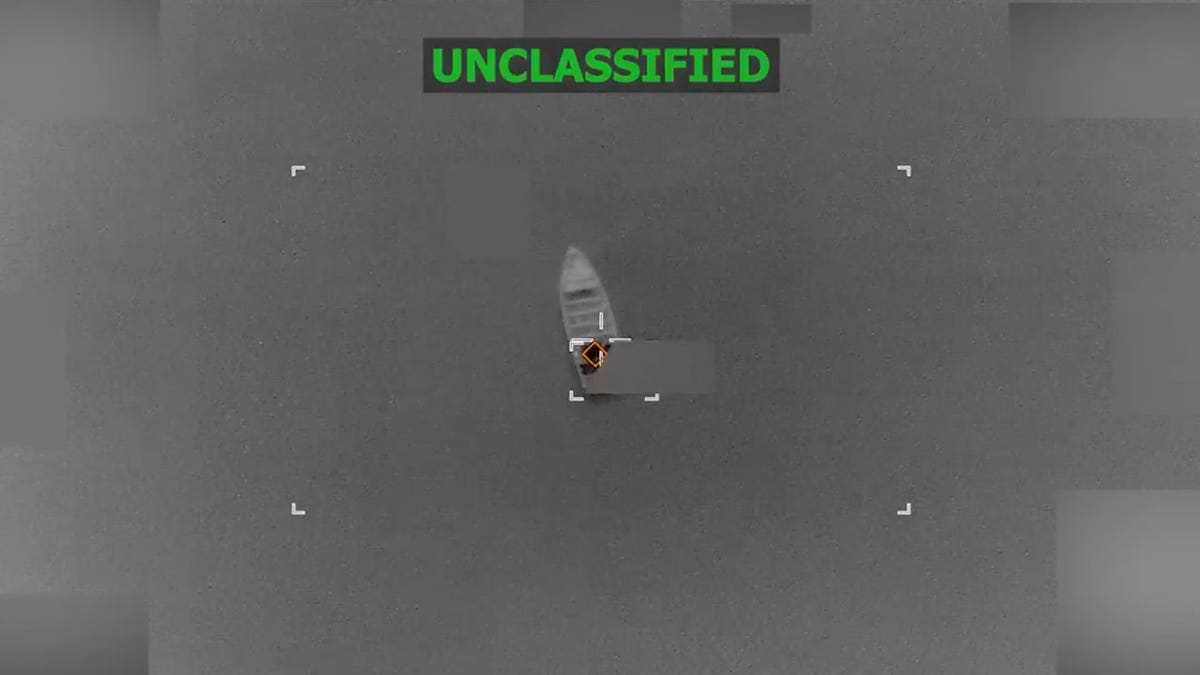
A vessel erupts into flames after being targeted by a U.S. military strike in the eastern Pacific that killed five people, according to SOUTHCOM. (U.S. Southern Command)
During the broader campaign, the military has repeatedly released videos and statements labeling people aboard targeted vessels “narco-terrorists” or claiming they had ties to designated terrorist groups. In many cases, however, officials have not publicly identified those killed or presented evidence that the vessels were carrying drugs.
The operations have drawn criticism from lawmakers, legal scholars and human rights organizations, which have challenged the legal justification for using deadly military force against suspected traffickers beyond a conventional war zone.
SOUTHCOM’s ongoing activity across Latin America and the Caribbean follows comments last month from Secretary of State Marco Rubio, who said the United States was increasingly seeking to conduct counter-narcotics missions alongside regional partners and under their laws.
Rubio told reporters that although the U.S. has “the capacity to act unilaterally,” Washington prefers cooperation with allies because it is “the most effective way to do it.”
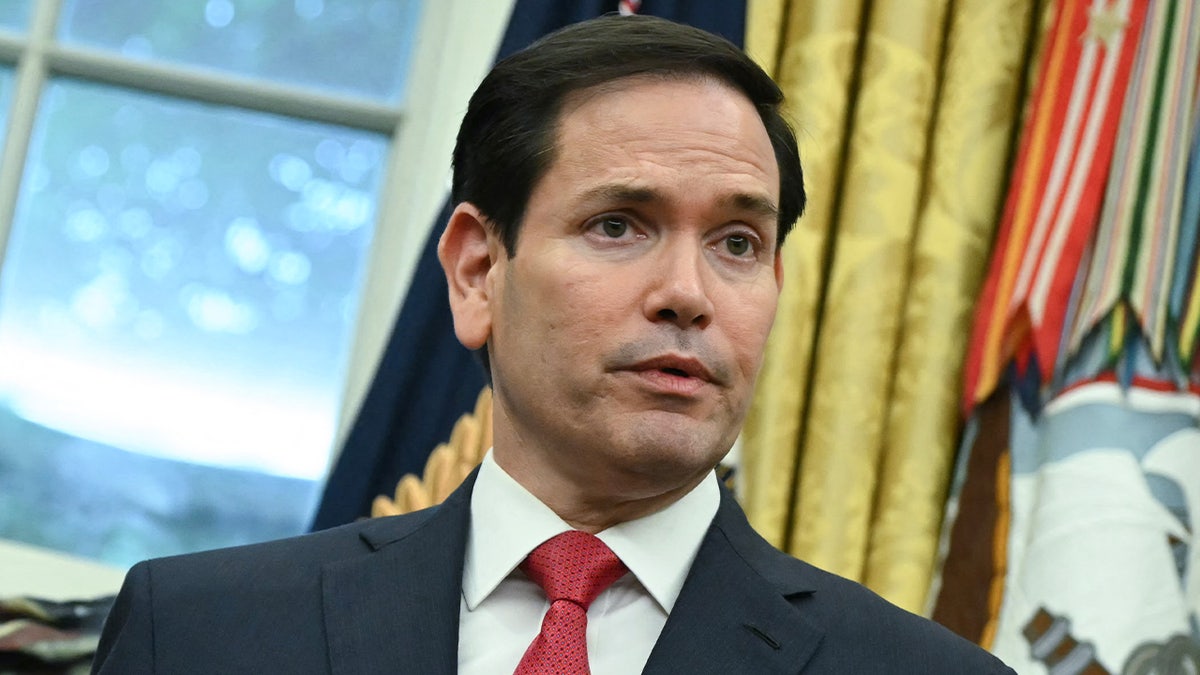
Secretary of State Marco Rubio has said the United States prefers to work with regional allies on counter-narcotics operations while maintaining the ability to act unilaterally. (ANDREW CABALLERO-REYNOLDS/AFP via Getty Images)
At the same time, Rubio said U.S. forces would “still blow up ships if need be,” with decisions determined “on a strike-by-strike or operation-by-operation” basis.
In recent months, SOUTHCOM has also published videos of military teams intercepting and boarding vessels they said were tied to narco-trafficking, removing their crews and later sinking the boats.


