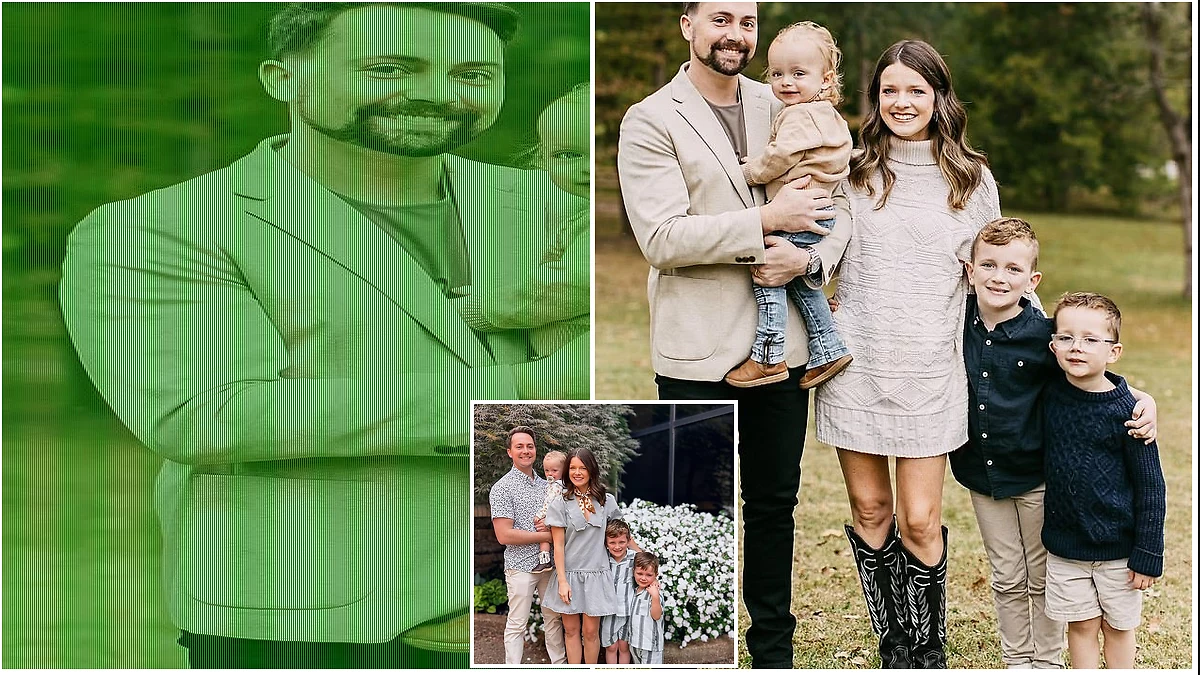

I can identify the exact day my life changed forever: Friday, February 6, when my doctor called to tell me I had Stage 3 colorectal cancer.
Just two days earlier, I had undergone a colonoscopy to investigate persistent bloating and irregular bowel movements. The symptoms had begun after I gave birth to my third child in 2023, three years earlier.
I initially thought the problems might be connected to my Hashimoto’s disease, an autoimmune condition affecting the thyroid that I have managed with medication since I was five.
When I woke up after the colonoscopy, my gastrointestinal doctor told me that they had found something in my colon.
“I’ve done this for a long time,” he said, explaining that the findings still needed to be confirmed by pathology. “And I want to prepare you: you’re about to begin a long journey.”
I soon learned that doctors had discovered a lime-sized tumor in my descending colon. My world seemed to stop, and I had no idea what would happen next.
The diagnosis sent me into a tailspin. I was consumed by shock, fear and overwhelming anxiety. As a 32-year-old wife and mother of three boys, ages 7, 5 and 2, my first thought was: What would my family do without me?
Then I wondered why the cancer had not been found sooner. For two years, I had repeatedly asked my endocrinologist for a colonoscopy because I knew something was wrong with my digestive system.

I initially thought my digestive symptoms could be linked to Hashimoto’s disease, an autoimmune thyroid condition I have managed since childhood

After my diagnosis, my first thought as a 32-year-old wife and mother of three boys was what would happen to my family without me
My concerns were dismissed because of my age and background. The American Cancer Society recommends beginning colorectal cancer screening at 45, and my doctors were not particularly worried because I was a young woman who appeared very healthy and had no family history of the disease. I did not fit the profile of the so-called average colon cancer patient, who is typically 70 or older and more often non-white.
It was not until 2026 that I finally received a referral from my OB-GYN, who took my concerns seriously.
The day before my colonoscopy, I had been preparing arts and crafts and setting up my classroom for the preschoolers I taught through the children’s ministry at our church in Memphis, Tennessee.
That evening, I texted my brother-in-law, who works as a radiation therapist. I told him, “I think it could be this or that, but I know it’s not cancer.” He agreed, saying he “wasn’t worried about that.”
We could not have been more wrong.
My husband and I decided not to tell our sons that I had cancer, although we did explain that I was sick.
We asked my doctors to treat the disease as aggressively as possible. My oncology team recommended beginning with radiation and chemotherapy to determine whether surgery and a colostomy could be avoided.
About a week after my diagnosis, I began radiation treatment. For six weeks, I went in every weekday at 9 a.m., then drove the 20 minutes to work. The radiation targeted my entire pelvis, aiming to destroy the tumor and affected lymph nodes, along with the surrounding tissue, so that no cancerous cells would be left behind.
The treatment itself took only five to seven minutes and was not painful at the time, but the side effects were severe. My skin burned after each session, and after 30 treatments I could feel the intense irritation both internally and externally. I also started taking oral chemotherapy, which left me profoundly exhausted.

We asked my medical team to pursue the most aggressive treatment plan possible

My husband and I chose not to tell our sons that I had cancer, though we explained that I was ill
After radiation, I took a five-week break to allow my skin to recover from the third-degree burns caused by treatment. I felt hopeful when that phase ended because blood tests showed that my circulating tumor DNA, or CT DNA, had fallen from 2.9 to zero.
If radiation was difficult, chemotherapy was 10 times worse. I became violently ill, constantly nauseated and severely fatigued. I lost so much weight that I barely recognized myself. After the first agonizing weeks, I told my doctors I wanted to stop, particularly because my CT DNA results had been so encouraging. They reminded me, however, that I had asked them to treat the cancer aggressively.
They explained that radiation had put out the fire, but chemotherapy was needed to extinguish the remaining embers. They did not want to leave any possibility that the cancer could return.
My hair started coming out in handfuls, and eventually I shaved my head. Explaining that to my children was difficult. I told them, “This medicine is making Mommy’s hair fall out,” and, “I’ll feel prettier if I shave it all off.”
When my husband helped me shave my head, we asked the boys whether they wanted to take part. They said no, but they have shown incredible resilience through so much upheaval.
They know I take medicine and have a port. They understand that when I bring my chemotherapy pump home, I will probably spend some time in bed. When they ask questions, we answer as honestly and clearly as we can.
We still have not told them that I have cancer, and for now we plan to keep it that way unless, or until, circumstances leave us no choice. The truth is that my husband and I are still trying to process this new reality ourselves.
By the fourth week of treatment, I ended up in the emergency room because my platelet count was low and I was severely dehydrated. I also began struggling to walk and developed intense cramping that made it difficult to open my fingers. Chemotherapy does not only attack cancer cells; it damages healthy cells too.
Doctors gave me intravenous fluids containing calcium and magnesium to rehydrate me and ease the cramping.

As my hair fell out in handfuls, I eventually decided to shave my head

My children know I take medication and that I may spend much of the day in bed when I bring home my chemotherapy pump

My doctors were not initially concerned because I was young, appeared healthy and had no family history of colorectal cancer
This is what living with cancer can be like: the treatment can make you feel sicker than the disease itself. There are also side effects that no one necessarily prepares you for, including nosebleeds and extensive bruising.
A cancer diagnosis can be profoundly isolating. That is one reason I began documenting my experience online. By sharing my journey on TikTok, I connected with many other people battling colorectal cancer, including women and young mothers like me. Their support has helped me feel far less alone.
It is a comfort to have a community of people who understand what this is like, even when we have never met face to face. We can vent, compare experiences, ask questions and offer one another advice.
Since my diagnosis, I have learned so much—and I remain stunned that my concerns were ignored for so long.
The American Cancer Society says colorectal cancer is the second-leading cause of cancer-related deaths among Americans, with more than 150,000 cases diagnosed each year. The Cancer Research Institute reports that one in five diagnoses occurs in someone younger than 55.
People have plenty of theories about what causes cancer. They blame diet, red dye or vaccines. But at my first appointment with my oncologist, I was told that doctors have seen a sustained increase in colorectal cancer among younger people and women—many of whom do not match the risk profile currently used by the medical community. Research is underway, but doctors say it could take years to understand why rates are rising among younger adults.
While I was fighting for a colonoscopy, no one ever told me that colorectal cancer was increasing among younger people.
What frustrates me most is that I was seeking help at a time when I may already have had cancer. Colon cancer often begins as a slow-growing polyp. It is painful to think that the disease might have been detected much earlier if someone had simply listened to me.
Sadly, there have been several times in my life when I felt doctors did not take me seriously because I am a younger woman. Asking for help and speaking up for myself is difficult, so being dismissed by a medical professional can be deeply discouraging.
This experience has given me a sharper understanding of the healthcare crisis women face in this country. It can feel like a Catch-22: We need to trust our doctors in order to heal, yet that trust is difficult when we feel our concerns are not being heard.
My biggest regret is not finding another doctor sooner or seeking care somewhere that did not require a referral.

I regret not pushing harder for myself after feeling that doctors were dismissing my concerns as a younger woman

When my children have questions, we answer them as openly and appropriately as we can
I wish I had advocated more forcefully for myself before receiving this diagnosis. I hope other women feel empowered to speak up, but healthcare professionals must also listen carefully and take women’s concerns seriously.
One of the most meaningful pieces of advice I received came from a cancer survivor at our church. He encouraged me to make as many positive memories as possible during treatment.
“You’re going to have a lot of traumatic memories from what you’re about to go through,” he told me. “Make sure you sprinkle some really good memories in there whenever you can.”
We have tried to do exactly that. During the healthier weeks between treatments, we have taken weekend trips we would not normally have planned and enjoyed simple family outings, such as going to the movie theater. I hope that one day, when I am healthy, I will remember those moments just as clearly as I remember the hardest ones.
I have now completed my final round of chemotherapy. I do have Stage 3 cancer, but my body has responded well to the treatments so far, and I remain hopeful that surgery will not be necessary.

I wish I had pushed harder to have my concerns investigated before my diagnosis

We have done our best to create happy memories during treatment

I have completed my final chemotherapy round, and because my body has responded well, I hope I can avoid surgery
One thing this experience has shown me is how many kind people there are in the world. We are living through a difficult period when conflict can seem constant, but during our family’s crisis, countless people have shown us how much they care. They have cooked meals, helped with childcare and sent flowers when I completed my chemotherapy treatments.
My husband and I have promised each other that once we get through this, we will try to be as generous to others as people have been to us.
As told to Cady Lang
TOMORROW: How to cut your cancer risk by up to 35% with these simple lifestyle changes


