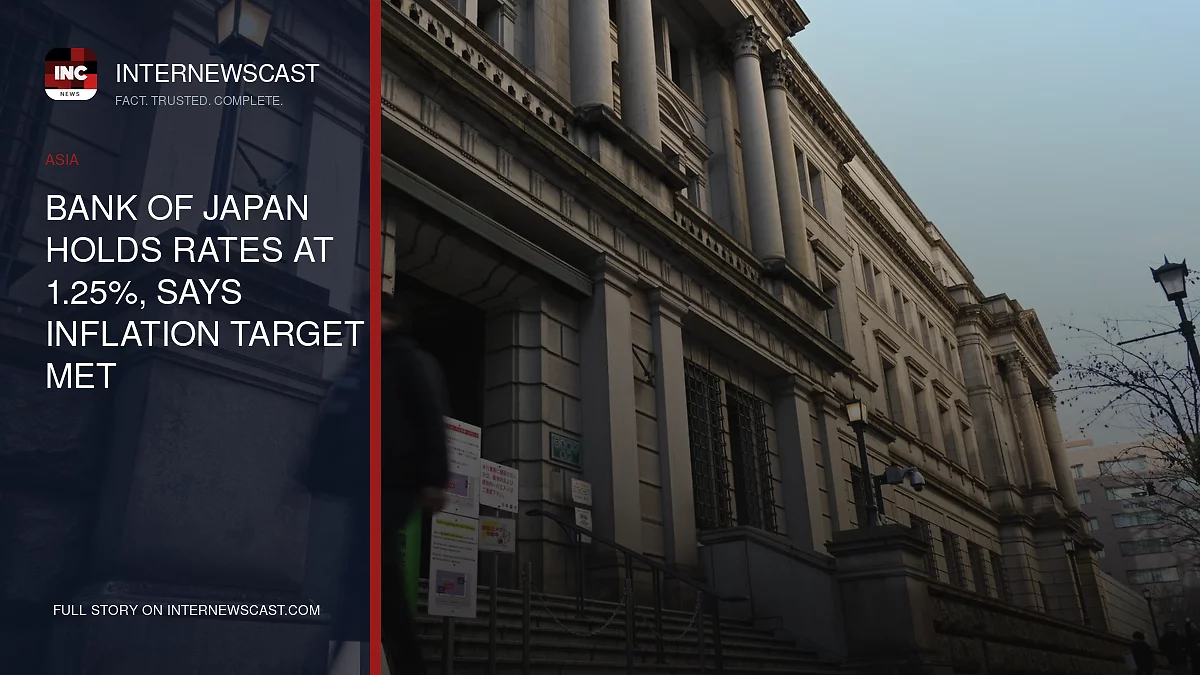

The Bank of Japan said underlying inflation was “generally consistent” with its 2% target, marking the first time it has made that assessment since adopting the goal in 2013.
Previously, the BOJ had described underlying inflation as “approaching 2%.”
The central bank left its policy rate unchanged at 1.25%, as expected. That remains the highest level since 1995.
The decision passed by an 8-1 vote, with board member Hajime Takata dissenting. Takata called for the BOJ to raise its policy rate to 1.5%.
The BOJ also lifted its inflation forecast for fiscal 2027 to 2.6%, up from 2.4%. Its so-called “core-core” inflation forecast was raised to 2.7% from 2.6%. Core-core inflation excludes fresh food and energy prices.
The central bank also warned that underlying inflation could rise above 2%, saying that “firms’ behavior has been shifting more toward raising wages and prices and there are various factors that could drive up prices.”
Krishna Bhimavarapu, APAC economist at State Street Investment Management, described the decision as a “hawkish hold.” He said the BOJ appears to anticipate further rate increases and is gaining confidence that its target is being achieved through a “self-sustaining wage-price-consumption cycle.”
However, Bhimavarapu added that the country’s economic growth does not warrant rushing into the next rate increase.
He expects Japan’s third-quarter GDP growth to lose momentum, with consumer spending remaining the weakest link in the cycle.
A CNBC survey of 16 economists conducted before the decision found that all respondents expected the BOJ to lay the groundwork for a rate hike in December or January, as domestic inflation and wages continue to rise.
Thirteen respondents forecast a terminal rate—the level at which the BOJ is expected to end its tightening cycle—of between 1.75% and 2% by around mid-2027.
Japan has been contending with a weak yen and elevated energy costs, both of which have contributed to higher inflation.
However, experts told CNBC that government energy subsidies introduced by the Takaichi administration have helped suppress consumer price index readings.
The latest inflation data, released for September, showed core inflation reached its highest level in 2026 at 2.1%, exceeding expectations.
Earlier this month, Finance Minister Satsuki Katayama reportedly told parliament that Japan was “on the cusp of shifting to a period of sustained inflation driven by rising wages.”
Inflation-adjusted wages in Japan increased for an eighth consecutive month in August, rising 1.5% from a year earlier, according to the latest government data. The gain points to the possibility of inflation increasingly being driven by wage growth.
— CNBC’s Lisa Kim contributed to this report.


