
The products featured in this article were selected independently by This is Money’s specialist journalists. If you open an account through a link marked with an asterisk, This is Money may receive an affiliate commission. This does not influence our editorial independence.
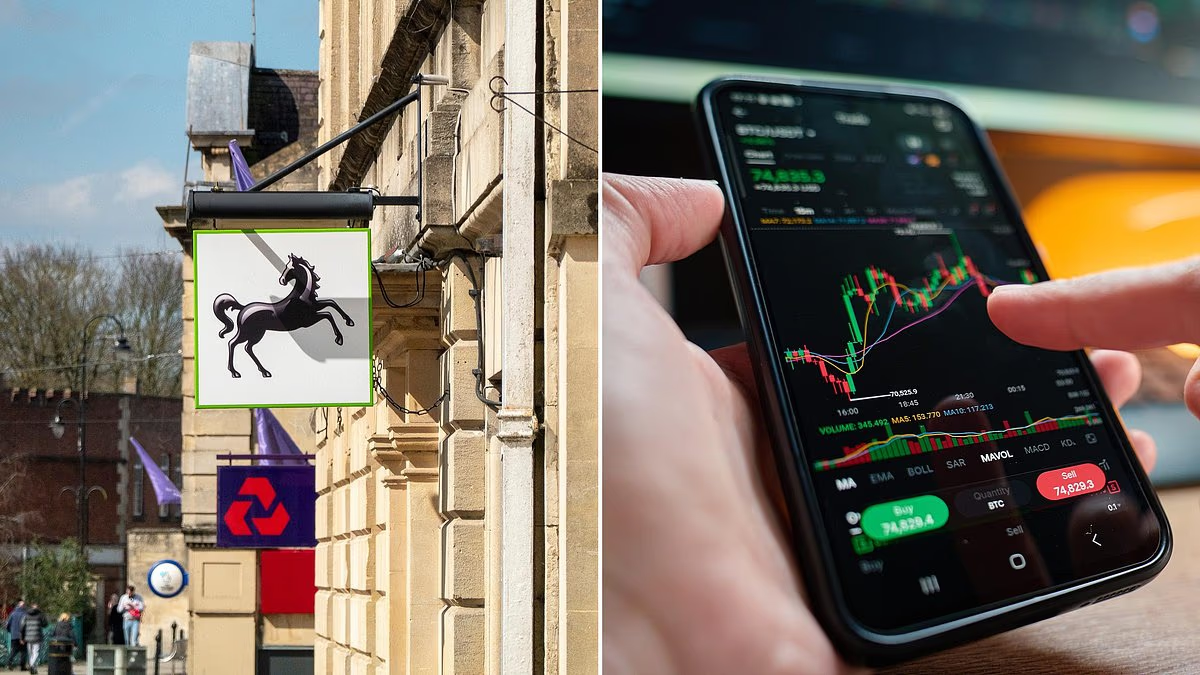
Investing through the company that provides your current account may appear to be the simplest route. You already know the bank and have an established relationship with it.
However, half of savers say they would rather invest through their bank than use a specialist provider, according to research by financial website Boring Money.
But is your high street bank really the best place to manage savings and investments, or could an investment platform offer better value and more choice?
Doing your research before opening a stocks and shares Isa is essential if you want to avoid paying more than necessary in fees.

Barclays improved the value of its investing platform earlier this year
What do banks offer investors?
High street banks have traditionally been criticised for charging more and providing a narrower choice of investments than specialist platforms, although several have become more competitive in recent years.
HSBC charges £5 per trade through its Global Investment Centre, as well as a £10.50 quarterly account fee for shares and exchange-traded funds (ETFs). Lloyds Bank charges £9.50 per trade for shares and ETFs, making both relatively expensive compared with some competitors.
Some banks do not offer share dealing at all. NatWest, for example, provides five ready-made portfolios rather than allowing customers to choose individual shares. This approach may suit beginners looking for a straightforward, all-in-one investment option.
The leading high street options
Two bank-linked services stand out for their investment offering.
Barclays Direct Investing
Barclays became considerably more competitive in June after abolishing its 0.25 per cent account fee. There is no charge to buy or sell funds, while trades involving shares, ETFs, bonds and investment trusts cost £6. You can avoid that charge when setting up regular investments, although a fee applies when you eventually sell.
With more than 8,000 investments available and this fee structure, Barclays compares favourably with newer platforms such as Freetrade* and Trading 212*, which also do not charge account or dealing fees.
By contrast, established providers AJ Bell* and Hargreaves Lansdown* charge annual platform fees of 0.25 per cent and 0.35 per cent respectively, based on the value of your investments.
Barclays also offers five ready-made portfolios. These have no account or dealing charges, although the underlying investments carry an ongoing fee of 0.45 per cent a year.
Barclays does not offer a self-invested personal pension, or Sipp.
It may suit investors who expect to hold mainly funds or prefer a ready-made portfolio. The platform could also appeal to anyone wanting to make regular investments in shares and ETFs without paying dealing fees.
Scottish Widows Share Dealing
Scottish Widows, which is part of Lloyds Bank, charges no annual fee for a stocks and shares Isa or general investment account. Its Sipp, which Barclays does not offer, carries an annual charge of 0.25 per cent, capped at £16.50 a month.
Its £5 dealing fee for shares is slightly lower than Barclays’ charge, but the same fee also applies to funds. That is more expensive than many specialist platforms: Hargreaves Lansdown charges £1.95 for one-off fund trades, while Fidelity offers them free of charge.
Regular investments are free at Scottish Widows, meaning investors can avoid the dealing charge and invest at a comparatively low cost.
Other charges should also be considered. Reinvesting dividends costs 2 per cent of the value at Scottish Widows, capped at £5. Ready-made portfolios are available too, with a standard account fee of £3 a month.
Scottish Widows may be the better option if you plan to trade shares and ETFs occasionally, as its dealing fee is slightly cheaper than Barclays’.
Would an investment platform be better?
Holly Mackay of Boring Money says: ‘Banks now offer stocks and shares Isas through their apps, so the administrative burden has been reduced significantly.’
Whichever provider you choose, opening an investment account is generally straightforward.
The better choice is usually the provider that offers the most suitable combination of fees, customer service, research tools and features.
Hargreaves Lansdown* and Interactive Investor*, for example, employ analyst teams that produce research and provide tools for examining investment performance in greater detail.
Newer services such as Trading 212* combine fee-free investing with mobile apps designed to be simple to use.
Some investment platforms also provide fractional shares, allowing customers to buy a smaller portion of expensive US stocks. Traditional providers often require investors to purchase whole shares.
Compare the leading DIY investment platforms
Online investing can be carried out easily and at relatively low cost from a computer, tablet or phone, whenever and wherever it suits you.
Choosing a DIY investment platform for a stocks and shares Isa, self-invested personal pension or general investment account can be daunting because of the number of providers available.
> This is Money’s complete guide to the best investment platforms
Each provider has a different pricing structure and investment range. Some charge more to trade or hold investments, while others offer access to different selections of shares, funds and investment trusts.
When comparing platforms, consider the service provided as well as administration fees, dealing charges and any other additional costs.
The table below outlines the main providers, but you should carry out your own research and read our full guide to the best investment accounts before making a decision.
The platforms listed below were selected independently by This is Money’s specialist journalists. If you open an account through a link marked with an asterisk, This is Money may receive an affiliate commission. This does not affect our editorial independence.
| Administration fee | Fee notes | Fund dealing | Share, trust and ETF dealing | Regular investing | Dividend reinvestment | ||
|---|---|---|---|---|---|---|---|
| AJ Bell* | 0.25% | Maximum £3.50 per month for shares, trusts and ETFs (£10 cap in a Sipp). | £1.50 | £5 | Free | £1.50 per deal | More details |
| Bestinvest | 0.40% (0.2% for ready-made portfolios) | Account fee reduced to 0.2% for ready-made investments. | Free | £4.95 | Free for funds | Free for income funds | More details |
| Charles Stanley Direct* | 0.30% | Minimum platform fee of £60 and maximum of £600. £100 returned in free trades each year. | £4 | £10 | Free for funds | n/a | More details |
| Etoro* | Free | Stocks, investment trusts and ETFs. Limited Isa, no Sipp. | Not available | Free | n/a | n/a | More details |
| Fidelity* | 0.35% on funds | £7.50 per month up to £25,000 or 0.35% with a regular savings plan. | Free | £7.50 | Free for funds; £1.50 for shares and trusts and ETFs | £1.50 | More details |
| Freetrade* | Free (paid plans offer improved rates and features) | Stocks, funds, investment trusts and ETFs. | Free | Free | n/a | n/a | More details |
| Hargreaves Lansdown* | 0.35% | Capped at £150 a year for shares, trusts and ETFs in an Isa. | £1.95 | £6.95 | Free | Free | More details |
| Interactive Investor* | £5.99 per month below £100k (Core); £14.99 above (Plus) | One free monthly trade on the Plus plan. | £3.99 (Core); £1.49 (Plus) | £3.99 | Free | £0.99 | More details |
| InvestEngine | Free | ETFs only. Managed service costs 0.25%. | Not available | Free | Free | Free | More details |
| Prosper* | Free | Fees refunded on 30 ETFs. No shares. | Free | Free | Free | Free | More details |
| Scottish Widows | Free | £5 | £5 | n/a | 2%, maximum £5 | More details | |
| Trading 212* | Free | Stocks, investment trusts and ETFs. | Not available | Free | n/a | Free | More details |
| Vanguard Only Vanguard’s own products | 0.15% | Vanguard funds only | Free | Free for Vanguard ETFs only | Free | n/a | More details |
| (Source: ThisisMoney.co.uk June 2026. The administration percentage charge may be applied monthly or quarterly.) | |||||||


