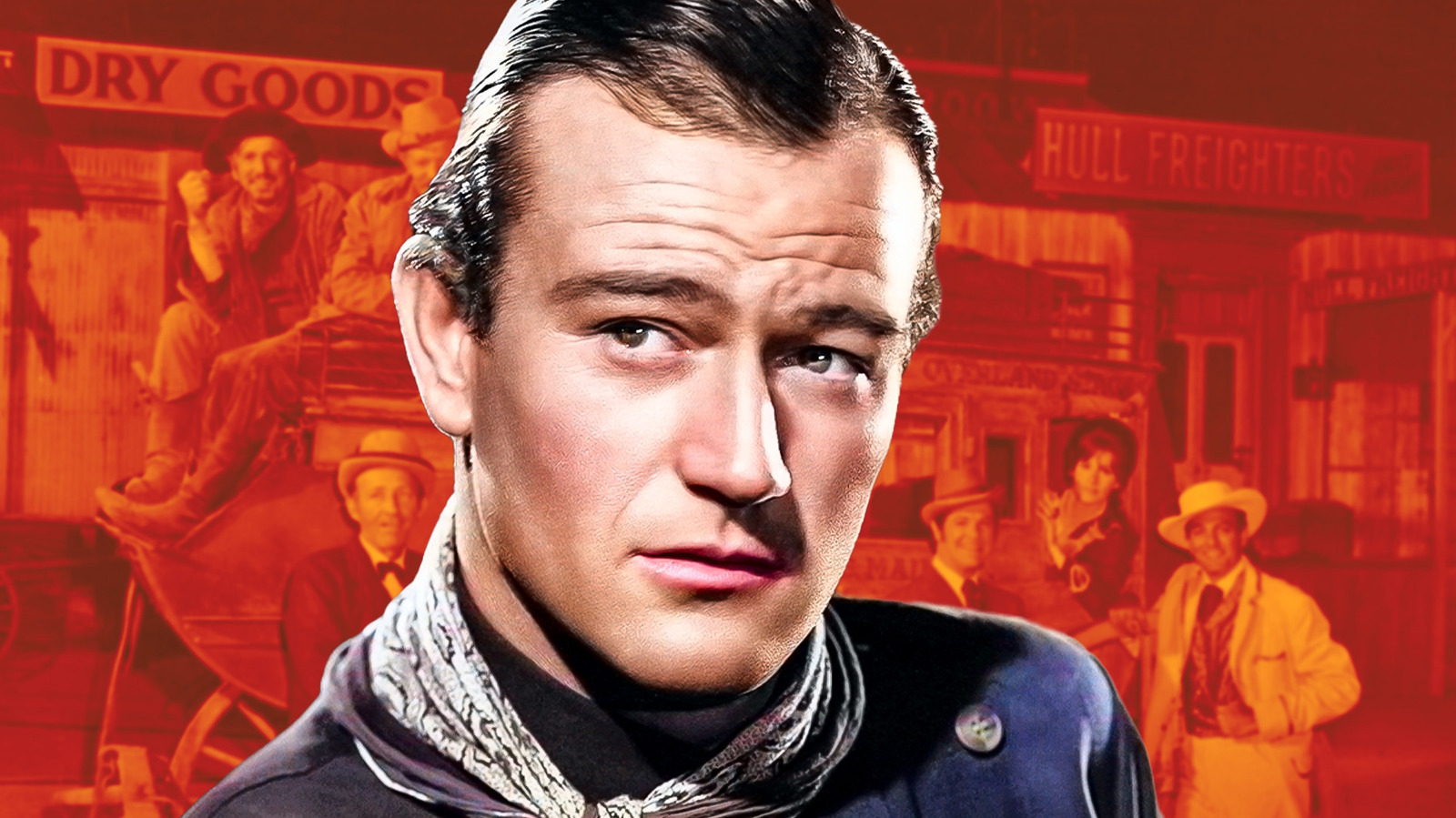


Hollywood remakes are often treated as a distinctly modern habit, but the industry has been revisiting familiar stories for generations. John Wayne’s filmography offers a clear example, particularly when it comes to the Western genre.
The Duke appeared in several of the most celebrated Westerns ever made, making it inevitable that some would eventually be reimagined — in certain cases, more than once. These updated versions generally have not surpassed Wayne’s originals, although that does not necessarily make them failures. Several are entertaining films in their own right, even without Wayne’s commanding presence at the center.
This collection includes remakes of Wayne’s most recognizable movies, along with new versions of a few titles that have received less attention over the years. Here are five John Wayne Western remakes that may have slipped under your radar.
Stagecoach
John Wayne’s “Stagecoach” remains one of the defining films of his career and helped establish him as a major star. Directed by John Ford, the 1939 Western follows a diverse group of passengers traveling through Apache territory. Wayne plays the Ringo Kid, an escaped convict determined to settle an old score.
The first theatrical remake arrived in 1966, when director Gordon Douglas offered his own interpretation of Ford’s classic. This version follows another uneasy collection of stagecoach passengers as they attempt to survive pursuit by a Sioux war party. While it falls short of the original, the remake earned respectable notices, particularly for its action sequences. As The New York Times observed, “The action, also altered somewhat, is still muscular, sometimes blood-curdling stuff.”
“Stagecoach” was revisited again for television in 1986. The cast included country legends Willie Nelson, Kris Kristofferson, Johnny Cash, and Waylon Jennings, making this version an especially tempting discovery for fans of Westerns and country music.
Red River
Although John Wayne became one of Hollywood’s biggest box-office draws, discussions of his acting range are sometimes overshadowed by his celebrity. Howard Hawks’ “Red River” makes a strong case for his dramatic abilities. In the film, Wayne portrays Thomas Dunson, an aging rancher who raises an adopted son before their relationship deteriorates. Dunson is no straightforward hero; he is an authoritarian figure whose choices occupy an increasingly troubling moral space.
Hawks’ 1948 Western is widely known and was selected for preservation in the United States National Film Registry in 1990. The 1988 television remake, however, has largely faded from public memory. James Arness takes over Wayne’s role, and the production follows much of the original story while adding Jack Byrd, played by Stan Shaw, a Black cowboy who becomes part of Dunson’s cattle drive.
The remake drew generally favorable reactions, with critics highlighting its performances and direction. Hawks’ film remains the essential choice, but the television version is still an accessible and enjoyable Western. Its biggest limitation is that it adds relatively few fresh ideas to the material.
Four Brothers
Wayne was famously hard on his performance in the 1965 Western “The Sons of Katie Elder.” The Duke was recovering from surgery for lung cancer, a procedure that resulted in the removal of one lung, and he later said the physical strain was noticeable. “I thought I could hear myself breathing all the time,” Wayne told Roger Ebert. Despite his reservations, the movie became the basis for “Four Brothers,” a 2005 crime drama that transfers the original’s revenge story from the frontier to modern Detroit.
Directed by John Singleton, “Four Brothers” features Tyrese Gibson, Andre 3000, Garrett Hedlund, and Mark Wahlberg as four siblings investigating their mother’s murder. Their search leads into a Detroit neighborhood ruled by Victor Sweet, played by Chiwetel Ejiofor, a gangster who may be connected to the killing. What follows is a volatile mix of family loyalty, street politics, and escalating violence.
Rather than imitate the 1960s Western directly, “Four Brothers” reshapes its central premise for a contemporary urban setting. The film carries the energy and visual flair of Blaxploitation-inspired action movies, while the strong chemistry among its leads gives the story much of its appeal. It is a stylish, energetic update with plenty of attitude and firepower.
True Grit
“True Grit” earned Wayne the only Academy Award of his career. In the 1969 film, his hard-drinking U.S. Marshal, Rooster Cogburn, helps a determined teenage girl track down the man responsible for killing her father. It became a signature Wayne performance, which left the Coen brothers with a difficult legacy to follow when they made their 2010 version.
The Coens’ adaptation tells the same fundamental story as the original, which was based on Charles Portis’ novel. At the same time, it brings a more restrained, modern sensibility to the material without losing the atmosphere of a classic frontier adventure. The result feels both contemporary and deeply respectful of old-fashioned Western filmmaking.
Whether the movie belongs among the Coen brothers’ very best remains open to debate, especially given the strength of their filmography. Still, it is an excellent Western anchored by Jeff Bridges’ memorable performance as Cogburn. Hailee Steinfeld, Matt Damon, and Josh Brolin also feature, while J.K. Simmons contributes a voiceover cameo. Together, the cast gives this remake considerable weight.
Angel and the Badman
Wayne’s Westerns continue to inspire new versions, including one of his most unusual romantic stories. In 2026, director Julio Quintana joined Zachary Levi, Neal McDonough, and Tommy Lee Jones for “Angel and the Badman,” the second remake of the 1947 film.
The original stars Wayne as Quirt Evans, a feared gunfighter whose violent past begins to lose its grip after a Quaker family shelters him. As he recovers, he falls for the family’s adult daughter, who helps nurse him back to health and challenges his way of life. Levi takes on Wayne’s role in the new version, which critics criticized as predictable and unnecessary, even with several changes to the source material. General audiences were more receptive, however, as its Rotten Tomatoes audience score suggests. Western viewers willing to give it a chance may still find a few worthwhile elements.
A 2009 television adaptation starring Luke Perry and Lou Diamond Phillips also received a lukewarm critical response. For now, the 1947 film written by James Edward Grant remains the strongest version of the story — and a solid recommendation for Western fans who enjoy their frontier adventure with a romantic streak.


