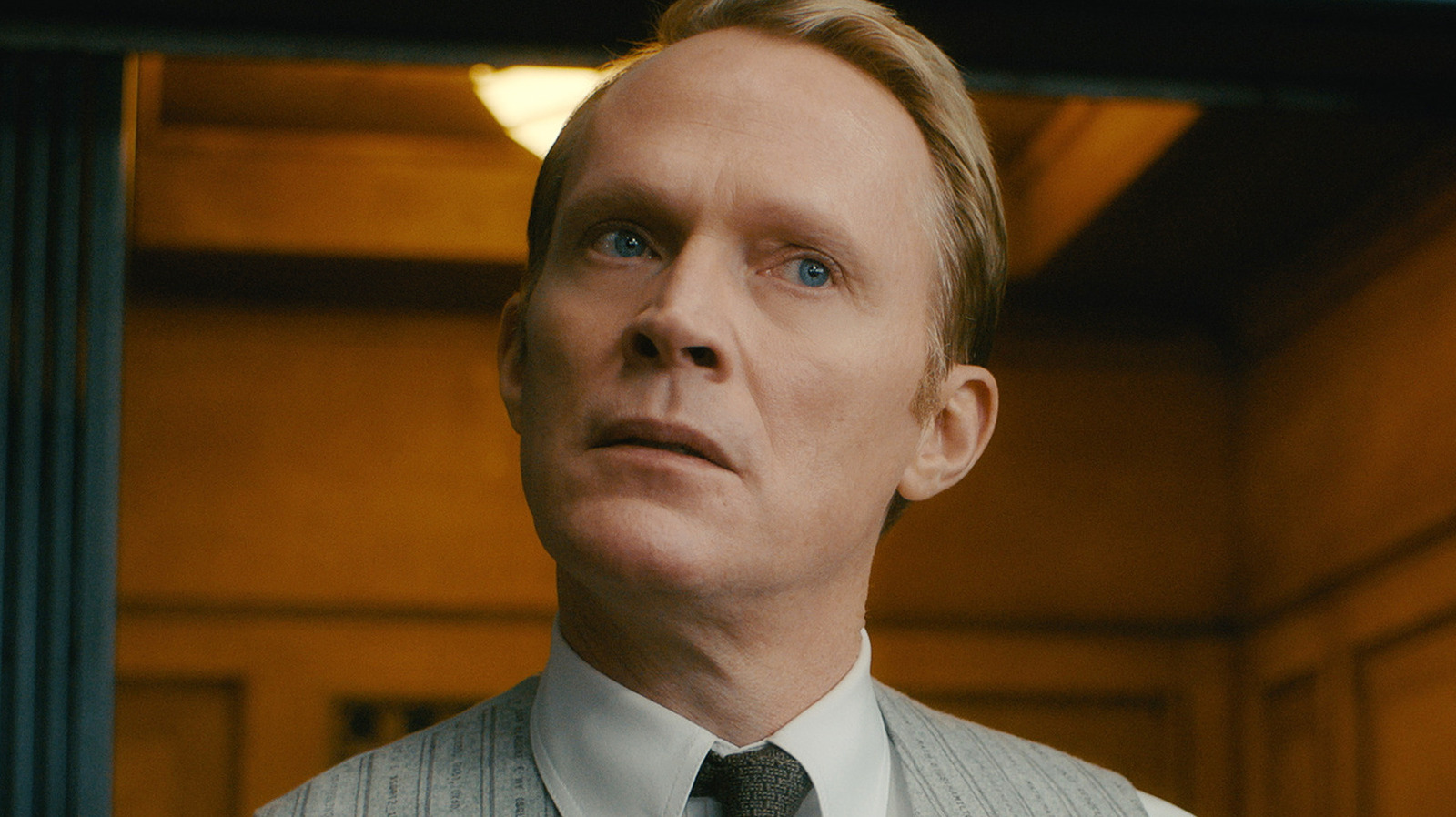


Spoilers ahead for Season 1, Episode 8 of “VisionQuest,” titled “Forever”
The Disney+ branch of the Marvel Cinematic Universe launched in 2021 with “WandaVision,” and its two spin-offs have continued the groundbreaking series’ distinctive style in very different ways. The original show follows Wanda Maximoff (Elizabeth Olsen) and Vision (Paul Bettany) as they inhabit sitcom-inspired worlds spanning several decades, with the tragic explanation for their reality emerging over time. “Agatha All Along” takes a separate path through the Witches’ Road, but it still honors its predecessor. Its premiere plays with television genres, while each new trial created for Agatha Harkness (Kathryn Hahn) and her improvised coven carries its own shifting tone and theme.
“VisionQuest,” meanwhile, revisits one of “WandaVision’s” most unsettling ideas. It introduces the Mindspace, a Hex-like prison for artificial intelligences that Vision can reshape at will. The series also features extensive flashbacks to “WandaVision,” many of which are explained in Episode 7, “Immolation.” Then, with its finale, “Forever,” the show returns the trilogy to the sitcom-inspired foundation that started it all.
When Ultron (James Spader) launches a plan to wipe out humanity using his newly acquired nanobots, Vision places him inside a freshly created sitcom called “UltraVision.” The strange experiment is designed to make Ultron recognize the consequences of his actions. It is an ideal callback and a fitting conclusion for a series whose existence depends so heavily on “WandaVision” and its trailblazing format.
UltraVision brings WandaVision’s sitcom formula full circle
For the climactic confrontation with Ultron, who controls the nanobots, Vision and E.D.I.T.H. (Emily Hampshire) place him inside a sitcom modeled after “WandaVision” called “UltraVision.” The setting also exists in quantum time, giving them an enormous amount of time to keep Ultron occupied as his nanobots move toward their initial targets.
The strategy, however, is far from foolproof. Much like Agatha Harkness did in “WandaVision,” Ultron learns how to interfere with the sitcom’s artificial reality. After hundreds of “UltraVision” episodes, he becomes skilled enough to manipulate the story, introducing several nanobot-infected lead characters as grotesque versions of themselves. He peppers the series with profanity and self-aware mischief, shows an unmistakable command of genre conventions, and even has the studio audience killed offscreen, accompanied by suitably disturbing sound effects.
Vision’s plan eventually works, but “UltraVision” proves every bit as disturbing as the darkest sitcom sequences in “WandaVision.” The story turns the original series’ ideas into a bleak reflection — no small accomplishment given that “WandaVision” remains among the MCU’s creepiest projects. For that reason, bringing the sitcom format back in the finale is a remarkably fitting way to close the “WandaVision” trilogy.


