
The old saying suggests that the wealthy live by a different set of rules. Russell Brand’s extraordinary legal saga involving his former partner Jemima Goldsmith, a Hungarian massage therapist and a white Alsatian named Brian may offer a striking example.
The events unfolded in 2014 and 2015, but returned to public attention this week as questions intensified over Brand’s use of costly legal representation to keep damaging allegations away from the press.
In light of what has since emerged, parts of the case are now being examined with renewed concern.
At its centre is a therapist described in advertisements as a “full-figured, curvy BBW [Big Beautiful Woman]”. She travelled for two hours from Wimbledon, south-west London, to Goldsmith’s Cotswolds home, reportedly to give Brand a birthday massage. A brief but contentious confrontation followed, involving disagreements over money, allegations of physical abuse and counterclaims of racial harassment.
Years of litigation followed. They culminated in a sweeping High Court injunction that prevented the therapist, who said Brand had assaulted her, from discussing her account again — even with police investigators.

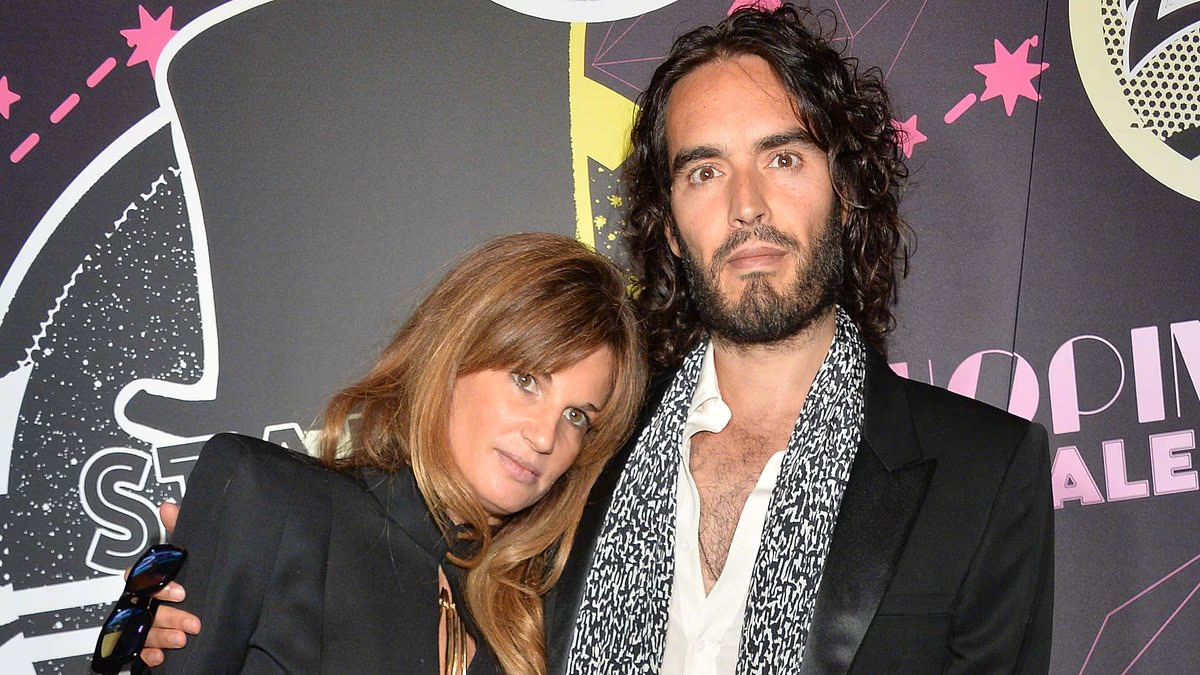
Russell Brand and Jemima Goldsmith, who were together from 2013 to 2014, attend a 2014 London charity event supporting Palestinian refugees

Brand and Goldsmith have consistently rejected Hungarian masseuse Szilvia Berki’s account of a confrontation involving their white Alsatian, Brian
The dispute might have faded from view had Brand not suffered a dramatic fall from public favour, ending with his conviction last week for raping one woman and sexually assaulting three others during the 2000s.
On Monday, the day the comedian was sentenced to ten years and six months in prison, Goldsmith published a 1,534-word social-media statement. The heiress and daughter of Right-wing businessman Sir James Goldsmith said she wanted to correct what she called “misleading reports and speculation” about her role in the case.
What happened that weekend? How did a birthday present become a legal battle — and where did responsibility lie?
The story began on Friday, June 6, 2014, when Szilvia Berki received an email from Goldsmith asking whether she could travel to Oxfordshire the next evening to treat a male client.
At the time, Berki promoted her services online through sites including Gumtree, the beauty directory Wahanda and a basic personal website. There, she described herself as “a full-figured, curvy BBW lady in my late 20ies [sic]”. She accepted the booking, and the two women agreed on a £500 fee.
Goldsmith, then 40, arranged for a car and driver to collect Berki from south London and return her home after the appointment.

Goldsmith, pictured at the 2023 Baftas, says she is prepared to seek changes to the injunction so Berki can discuss her account with police and possibly the media
The apparent intention was to give Brand, who had turned 39 that week, a massage as a birthday gift.
A local therapist would probably have charged far less for a similar appointment, but no one nearby was available. “She ended up Googling for an outcall local massage and Ms Berki came up, even though she was based in London,” an informed source said.
There is no suggestion that either Goldsmith or Berki expected the booking to involve anything other than a conventional massage.
In a later interview, Berki strongly denied that she worked in the sex industry. “People call up and they say, ‘I want to have a full service, I want to have a happy ending, I want to have this and that.’ And this is usually when I hang up the phone on that client,” she said.
The following evening, Saturday, June 7, Berki arrived at Kiddington Hall, a nine-bedroom, 17th-century Cotswold-stone mansion surrounded by formal gardens.
She recalled Goldsmith coming down the drive to greet her. “She came to the car. She was wearing a summer dress, white, with some kind of colour on it. She asked me if I was German because of my accent. She was really very nice, very, very nice.”
The atmosphere changed when Berki was introduced to Brand. According to her account, he quickly asked her to leave, a reaction she found insulting.
Both sides agree that an uncomfortable exchange took place, although their descriptions of what happened next are sharply different.
Berki later alleged that Brand pushed her in the back as she walked down a staircase. She also claimed that Brian, the Alsatian, “attacked” her, saying the dog licked her face. “There is CCTV evidence showing that the dog attacked me,” she said.
Brand and Goldsmith have always denied any physical contact, saying that Brand simply told Berki to leave. “I was present the whole time he [Brand] was with her, and I did not see anything untoward,” Goldsmith said this week. She added that CCTV supplied to police showed only her “overly exuberant but totally unaggressive dog jumping up”.
Whatever occurred, it is accepted that the driver took Berki home approximately 30 minutes after her arrival. Berki later said Goldsmith sent an email offering a polite apology for any misunderstanding.
The £500 payment was transferred the following Monday, but Berki remained distressed and eventually contacted the Metropolitan Police to report an alleged assault. The complaint was passed to Thames Valley Police, who opened an investigation into “an alleged assault near Woodstock on June 7”.
Before then, Berki had contacted several newspapers in an effort to publicise her allegations. She also wrote to Unicef, where Goldsmith served as a UK ambassador, making several claims, including allegations of serious criminal wrongdoing.
Brand responded by instructing solicitors to demand an apology, damages and legal costs from Berki over alleged defamation.
He and Goldsmith also hired Archerfield Partners to prevent the allegations from being published. Several newspapers, including Our News Outlet, received a succession of legal warning letters.
The police investigation ended on July 25, when detectives decided to take no further action. Berki reacted by filing a professional-standards complaint accusing the force of corruption, a complaint later dismissed. She continued approaching newspapers, and published a Change.org petition containing insults directed at Brand and Goldsmith.
In early August 2014, The Daily Telegraph reported that Berki’s assault allegations had led to a police investigation. More legal letters followed from Brand and Goldsmith’s representatives.
One letter, dated August 2, argued that there was “no public interest” in reporting what it called Berki’s “inaccurate and defamatory” allegations. It accused her of pursuing a campaign intended to harass the couple and making statements that were untrue and defamatory.
ALSO READ: Israel’s Former PM Emerges as Kingmaker as Coalition Deadline Nears
On August 12, Brand and Goldsmith obtained an emergency injunction against Berki in the High Court. The application cited harassment involving “extremely private and sensitive matters”. Berki has been barred from speaking publicly about the case ever since. The order was extended the following month and made permanent in October 2015.
The final ruling was delivered by summary judgment, so the matter never proceeded to a full trial. The judge found that Berki, who represented herself, had harassed the couple, made claims that were “inconsistent” and issued “extremely unsavoury threats”.
The court concluded that she would have had no realistic prospect of successfully defending the case at trial.
Berki was ordered to pay £50,000 in legal costs and warned that bankruptcy proceedings could be brought against her if she failed to pay.
The scope of the October 2015 injunction was unusually broad. Berki was not merely prohibited from contacting Brand and Goldsmith; she was also forbidden from discussing what happened at their home with anyone except specified medical professionals and lawyers connected to the case.
The order also prohibited her from making “any allegation or insinuation” that Brand or Goldsmith had committed a criminal offence against her or behaved in a way that could amount to one.
Eleven years later, critics say the order raises serious questions. Campaigner Dan Neidle argued in a widely shared blog post that it effectively prevented Berki from making further police complaints or even discussing the incident privately with friends and relatives for the rest of her life.
“None of this seems necessary or proportionate to a harassment injunction,” he wrote. “The police are asking more of Mr Brand’s victims to come forward, but Ms Berki can’t: if she even answered the phone, she’d be prohibited from speaking to them.”
Media lawyer Mark Stephens described the order as a “gross breach of freedom of expression”.
Berki, represented by a barrister on this occasion, sought permission to appeal earlier this year. A Court of Appeal judge rejected her application.
On Monday, amid renewed criticism and calls for MPs to invite Berki to give evidence to a select committee — where she would have parliamentary privilege — Goldsmith published her account of what she described as “some painful and personal things in relation to Russell Brand”.
Her statement offered new details about her year-long relationship with Brand. The romance became public in late 2013 after the pair were reportedly seen “make out on a sofa in full view of the whole room” at a GQ party hosted by public-relations executive Matthew Freud. One witness said Freud told them to “break it up and get a room”.
The relationship was reportedly unpopular with Goldsmith’s friends and relatives. Her half-brother Robin Birley, owner of the Mayfair club 5 Hertford Street, even barred Brand from the premises.
The couple were previously believed to have separated amicably in September 2014. Goldsmith’s post gave a very different account, saying she had “to call the police to have him removed from my house in 2014 during a violent incident”. She said she chose not to press charges or speak publicly because she feared press coverage would affect her teenage children.
Goldsmith also said she helped journalists who later investigated allegations about Brand’s behaviour. She claimed she agreed to testify about his alleged abusiveness if the newspaper publishing accounts from alleged victims were sued.
Dorothy Byrne, who oversaw the 2023 Dispatches documentary about allegations against Brand, subsequently confirmed Goldsmith’s account.
“It was Jemima who alerted me to Russell Brand when I was head of news and current affairs at Channel 4 because she believed, based on her own experience, he was a danger to other women and must be exposed,” Byrne said on Tuesday.
Goldsmith’s statement also included alleged messages from Berki following the incident, offering further insight into the hostile exchanges that followed.
Some messages appeared to allude to death, including one that read: “Happy birthday (Jemima). I hope you have more. In other words I hope you don’t die this year.” Others contained antisemitic abuse directed at Goldsmith, who is Jewish.
One message read: “What is going on in Britain is a dictatory of J evils. English Jewish Evil dictatory.”
Another said: “Would like to see justice, and I do not think that I should do it myself but what can I do when every organisation is scared of Jevils!”
Friends of Goldsmith said the messages provided important context. “Jemima was on the end of some horrific abuse, much of it racist and highly aggressive, and was understandably concerned about her safety. Her only motivation was to try and get that harassment to end,” one friend said.
Even so, parts of Goldsmith’s statement appear difficult to reconcile with the court record.
At one point, she wrote: “According to the police, at no time did Ms Berki ever state to them that she had been assaulted, threatened or falsely imprisoned.”
That appears to differ from the judgment in the harassment proceedings, which stated: “According to the police disclosure notice, the Defendant reported to the police that the First Claimant had assaulted her during her visit.”
Goldsmith also said that, by the time the injunction was sought, she was no longer in contact with Brand and had simply agreed to his lawyer’s proposal for a harassment order.
That account appears to sit uneasily alongside a judgment issued the day after a September 2014 hearing, which said the pair “have at all material times been in a personal relationship together”.
Despite those apparent inconsistencies, Goldsmith’s statement has presented her involvement in the Russell Brand legal saga in a far more sympathetic light than earlier accounts suggested.
As for Berki, the therapist she hired to travel from London to the Cotswolds and massage her former partner, Goldsmith — who married Irish-Australian financier Cameron O’Reilly in September — now says she is willing to support changes to the injunction. That could allow Berki to speak to police and potentially the media about what happened.
“In fact,” a friend of Goldsmith said, “she’s been trying for almost a year to get the terms of the injunction altered. Unfortunately, Brand needs to agree, but so far there has been no response from his lawyers.”
For now, the dispute remains unresolved. Whether Berki, who was paid £500 to travel to the Cotswolds for Brand’s birthday massage, will ever be free to discuss her version of events remains uncertain.