
Two Iranian nationals were convicted in Britain on Thursday of spying on journalists and critics of Tehran, adding to growing concern over Iran’s alleged operations beyond the Middle East. The verdict came as France blamed the Islamic Revolutionary Guard Corps for an unprecedented cyberattack and a senior UAE official warned of Iranian sleeper cells operating overseas.
The cases are unfolding as the Trump administration maintains its campaign of economic pressure on Tehran while signaling that diplomatic talks remain possible. That combination has raised fresh questions about whether Iran’s foreign intelligence networks and alleged covert activities could become part of any future negotiations.
A jury at Woolwich Crown Court in London found Mostafa Sepahvand, 41, and Farhad Javadi Manesh, 46, guilty of conduct likely to assist a foreign intelligence service. Prosecutors said the men monitored journalists and other people who have criticized the Iranian government, Reuters reported.
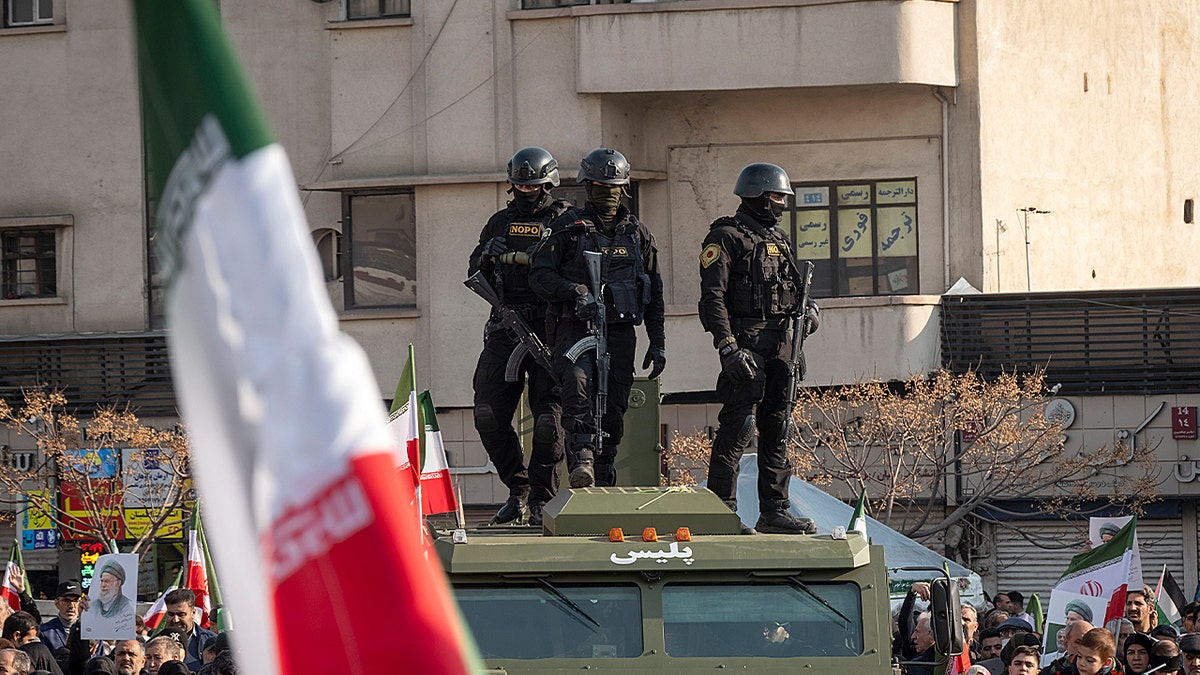
The EU designates Iran’s Islamic Revolutionary Guard Corps as a terrorist organization, while Ursula von der Leyen promises swift implementation after a violent crackdown. (Morteza Nikoubazl/NurPhoto via Getty Images)
Those monitored included journalists with Iran International, a London-based Persian-language outlet known for its criticism of Tehran, as well as a prominent individual linked to UK Lawyers for Israel.
Prosecutors said the surveillance occurred from August 2024 through March 2025. The alleged activity included visiting locations connected to the targets, taking photographs and videos, and conducting online research.
Sepahvand was separately convicted of preparatory conduct intended to facilitate serious violence against someone in Britain. Manesh was acquitted of that charge, while a third defendant was cleared of every count.
British officials called the verdicts the first convictions of Iranian nationals under the National Security Act of 2023. They said the case demonstrated that Iranian intelligence activity remained an active threat. Tehran has denied involvement.
The United States has raised similar concerns. Two days before the British convictions, the Justice Department announced terrorism charges against three alleged Iranian-backed operatives accused of participating in or attempting nearly 20 attacks in Europe and the United States.
According to an indictment dated Nov. 10, the men allegedly supported Iran’s Islamic Revolutionary Guard Corps and Kata’ib Hezbollah. Their targets reportedly included Jewish communities, and prosecutors said they plotted an attack on RAF Fairford, a British air base that houses American military personnel. They also allege that Mohammad Baqer Saad Dawood al-Saadi continued directing terrorist activity through coded messages while jailed in New York. The network was further accused of planning an attack on a Manhattan synagogue.

Mohammad Ali Al-Hassani, left, and Mohsen Mohajeri appear in an April 2026 video that prosecutors say shows them discussing plans for terrorist attacks. (Department of Justice)
French authorities, meanwhile, accused Iran’s IRGC on Monday of carrying out a major cyberattack against infrastructure tied to the country’s food supply.
A Nov. 9 report from France’s Cyber Crisis Coordination Centre said hackers linked to Iran targeted refrigeration controllers at roughly 700 retail sites across France on Oct. 11 and 12.
Investigators said the attackers remotely changed defrost settings, pushing refrigeration units to unusually high temperatures. The disruption spoiled large amounts of food and was linked to at least 15 reported fires.
The affected businesses included major supermarket chains such as Carrefour, Leclerc and Intermarché, along with other companies in the food sector.
French investigators attributed the attack to Shahid Kaveh, a cyber-offensive unit operating within the IRGC’s electronic and cyber command.
Foreign Minister Jean-Noël Barrot called the incident unprecedented in both scale and aggression. French officials said they intended to seek European sanctions against those responsible.
Iran’s Foreign Ministry rejected the accusations as baseless and malicious. In a statement Tuesday, it condemned what it called the “persistent practice” of directing allegations at Tehran.
FIND OUT MORE: Debra Todd, Wife of Former Jets QB Richard Todd, Arrested After Allegedly Striking Him With Pliers

A woman passes empty fresh-food refrigerators at an Intermarché supermarket in Névez, western France, on Oct. 12, 2026, after a cyberattack caused the stores’ refrigeration units to defrost. About 150 to 200 Intermarché locations were targeted, along with nearly 100 Coopérative U stores. (Fred Tanneau/AFP via Getty Images)
The developments in Europe mirror warnings from Gulf officials, who say Iran’s activities in the region extend beyond missiles, drones and armed proxy forces.
Dr. Ali Rashid Al Nuaimi, chairman of the Defense, Interior and Foreign Affairs Committee of the UAE’s Federal National Council, told News Outlet in an exclusive interview that Iranian-linked sleeper cells were active both in the region and farther afield.
“They created these sleeping cells in the region and also in other places,” Al Nuaimi said. “We were fortunate to find out about these cells, to act and to implement the law, our law, the UAE law, against them.”
During an Oct. 15 briefing, Al Nuaimi said hundreds of suspected Iranian sleeper-cell members had been arrested in the UAE. He said some had helped coordinate Iranian missile and drone attacks against the country.
In a separate interview with News Outlet, Al Nuaimi said any negotiations with Tehran should cover more than Iran’s nuclear program and its regional proxies. He argued that covert networks operating in other countries must also be addressed.
“This is where it should be part of the negotiation with the Iranians: you have to stop not only the proxies that we know, but also using these sleeping cells in other countries,” he said.
The alleged activity has also taken a personal toll, according to Iranian-American journalist and foreign policy analyst Lisa Daftari. In an earlier interview with News Outlet, Daftari said she had been followed in Los Angeles and New York, repeatedly hacked and approached directly. She said the FBI told her she was on a list of potential Iranian regime targets after hackers accessed her accounts. “The message they want to send is very clear, that we know where you are, we can reach you,” she said.

A 2024 Justice Department photo shows Mohammad Baqer Saad Dawood Al-Saadi in a conference room alongside weapons and a map of the United States. (Department of Justice)
In a joint declaration issued Wednesday after a meeting in Paris, G7 foreign ministers said they were deeply concerned about Iran’s alleged involvement in violent plots targeting people and territory in their countries.
Secretary of State Marco Rubio, speaking to reporters after Tuesday’s G7 meeting, accused Tehran of fueling much of the instability across the Middle East.
“They are behind all the instability in the region; they are the source of instability in the region,” Rubio said, citing Iran’s support for armed groups such as Hezbollah, Hamas and the Houthis.
Rubio said the Trump administration’s economic pressure campaign was weakening Iran’s government and limiting its ability to fund overseas activities, including terrorism and cyber operations.
He added that Washington remained willing to pursue diplomacy but would reject demands he characterized as unrealistic.
The G7 declaration also committed member nations to continued coordination on economic and political measures intended to restrict Tehran’s ability to destabilize countries inside and outside the Middle East.
The British espionage convictions, France’s cyberattack findings and the UAE’s sleeper-cell allegations involve separate forms of activity. There is no evidence that they were components of one coordinated operation.

G7 foreign ministers and officials pose for a photograph at the opening of their summit in Paris on Nov. 9, 2026. The meeting focused on support for Ukraine and efforts to stabilize the Middle East. (Christophe Petit Tesson/Pool/AFP via Getty Images)
Viewed together, however, the cases highlight the broad range of threats Western and Gulf authorities associate with Iran — from surveillance of dissidents and alleged sleeper-cell networks to attacks on civilian infrastructure — as diplomats work to prevent another cycle of military escalation.