
WASHINGTON – Rep. Richard Hudson expected to return to Capitol Hill this week after helping Republicans secure another majority. Instead, the North Carolina Republican is confronting the reality that he and dozens of his colleagues will soon be vacating their offices.
“It was really people coming out to send a message,” Hudson, who leads the House GOP’s campaign arm, said in a brief interview. “They, rightly so, felt gas was too high, things were too expensive.”
“The mistake Republicans made,” he said, “is we didn’t convey to them that we cared about that and cared about them.”
Republicans returned to Washington this week for the first time since the party’s sweeping midterm losses, appearing stunned by the results. Yet even as they acknowledged the scale of the defeat, few showed interest in making a wholesale break with President Donald Trump.
Instead, lawmakers met privately to examine what went wrong and studied the congressional calendar for ways to advance as much of their agenda as possible before Democrats take control of the House and Senate in January.
There’s little appetite for a full break with Trump
Frustration was widespread among Republicans who, just two years earlier, had won control of the White House and Congress but now faced accusations that they had lost touch with voters.
“You cut rural healthcare spending, when you abandon pro-lifers, when you abandon the poor, when you abandon the needy, when you abandon working people, you’re gonna get your butt kicked,” said Sen. Josh Hawley, R-Mo., who unsuccessfully tried to postpone his party’s Senate leadership elections. “And you’re gonna deserve it.”
“We collectively failed,” said Rep. Lauren Boebert, R-Colo., who is trailing her Democratic challenger in a district Republicans carried by more than 18 percentage points in 2024.
“It’s very clear,” she said. “The American people let us know we have failed in this governing experience for this Congress.”
The anger was intensified by the confidence Republican leaders displayed before the election. Rep. Virginia Foxx, R-N.C., who is also trailing a Democratic opponent, said people repeatedly assured her she could not lose. She had a different view.
“I couldn’t get anybody to listen to me,” she said. “People just didn’t think it could happen, but we knew it could.”
House Speaker Mike Johnson spent the closing weeks of the campaign dismissing the historic headwinds that often confront a president’s party in a midterm election. He traveled across the country, argued that the polls were wrong and predicted Republicans would keep their majority, even as some incumbents expressed doubts.
Back on Capitol Hill, Johnson said voters had made the “wrong choice” after Democrats flipped more than 40 Republican-held seats. The result puts Democrats on course to hold their strongest majority since the early years of Barack Obama’s presidency.
The House and the Senate take different approaches
Republicans are now debating how to respond, weighing calls for moderation against pressure to embrace hard-line positions that could energize the party’s base. The two chambers followed notably different paths, offering an early glimpse of divisions ahead.
In the House, the Republicans returning next year largely represent deeply conservative districts where Trump remains popular. Their decision to select Ohio Rep. Jim Jordan as their next leader underscored the conference’s combative direction.
Jordan helped found the conservative House Freedom Caucus, currently chairs the Judiciary Committee and previously led the Oversight Committee. From those posts, he has waged fierce battles with Democrats and emerged as one of Trump’s leading allies.
“The way that Jim fights says a lot about where this conference is,” said Rep. Brian Mast, R-Fla.
In the Senate, the appetite for confrontation was less pronounced.
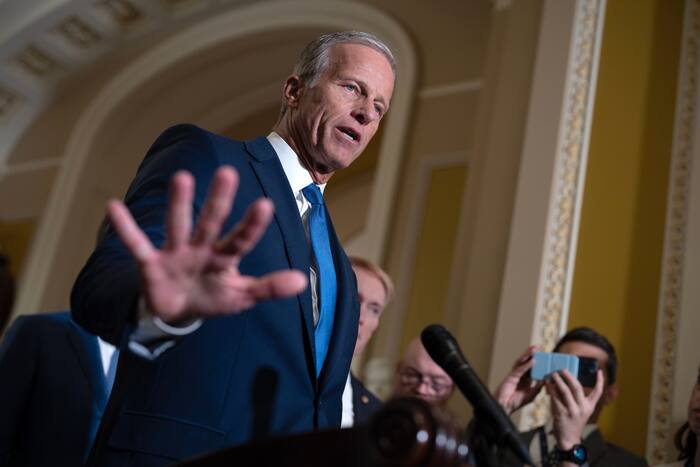
The central question was not whether Republicans would retain John Thune of South Dakota as their leader, but when they would make that decision. Hawley and a small group of conservatives spent hours meeting with Republicans in the Old Senate Chamber, arguing that leadership elections should be delayed so the party could consider other candidates.
The effort faltered because no one stepped forward to challenge Thune. He has drawn criticism from Trump at times for refusing to set aside Senate rules that would make it easier to pass conservative legislation.
“It’s a bad job,” Hawley said.
After hours of discussion, Republicans ultimately endorsed Thune without even holding a voice vote.
“We’re going to let our leader be the leader,” said Sen. Bernie Moreno, R-Ohio, who was also elected to lead the party’s effort to win back seats in the 2028 election.
GOP unites to protect Hegseth
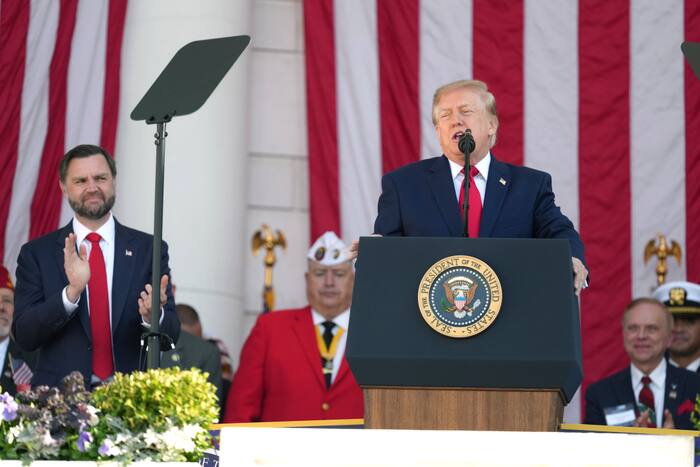
Perhaps the biggest challenge ahead is determining how Republicans will manage their relationship with Trump. His trade policies and handling of the war in Iran contributed to the party’s losses, while the fact that he is entering the final two years of his second term has raised serious questions about the staying power of his Make America Great Again movement.
Still, House Republicans showed no urgency to distance themselves from the president. Even lawmakers who have criticized his administration overwhelmingly blocked an effort to impeach Defense Secretary Pete Hegseth.
Only Kentucky Rep. Thomas Massie, who joined Democrats in leading the effort, broke with his party.
“What I found out tonight is they still haven’t broken from the spell of Donald Trump,” Massie said after the vote. “He still controls this conference.”
Asked whether the election amounted to a referendum on Trump, Thune said the outcome reflected “a combination of things,” declining to directly assign blame to the president for the party’s difficulties.
Signs of Trump’s influence
There were also indications that Trump’s influence has limits.
Few Republicans echoed his claim in a social media post this week that there had been problems with the election. After conceding a closely contested Senate race in Mississippi, Republican Sen. Cindy Hyde-Smith said she would “respect the decision” of voters.
Several Republicans, including Sens. Joni Ernst of Iowa, Tim Scott of South Carolina and John Cornyn of Texas, as well as Rep. Mike Lawler of New York, posted photographs of Democrats who will either succeed them or soon represent their states—an echo of an earlier era of postelection unity.
Rep. James Comer of Kentucky also rejected White House warnings that congressional Democrats’ planned investigations of the Trump administration could amount to “blatant criminality.” Comer, who led extensive investigations into Democratic President Joe Biden and his family as chairman of the House Oversight Committee, said lawmakers have a duty to hold any administration accountable.
“Regardless of who is in the White House, there’s always going to be a strong desire for the Oversight Committee to be a check and balance on the executive branch, regardless of the political scenario,” Comer said.
___
Associated Press writer Kevin Freking contributed.


