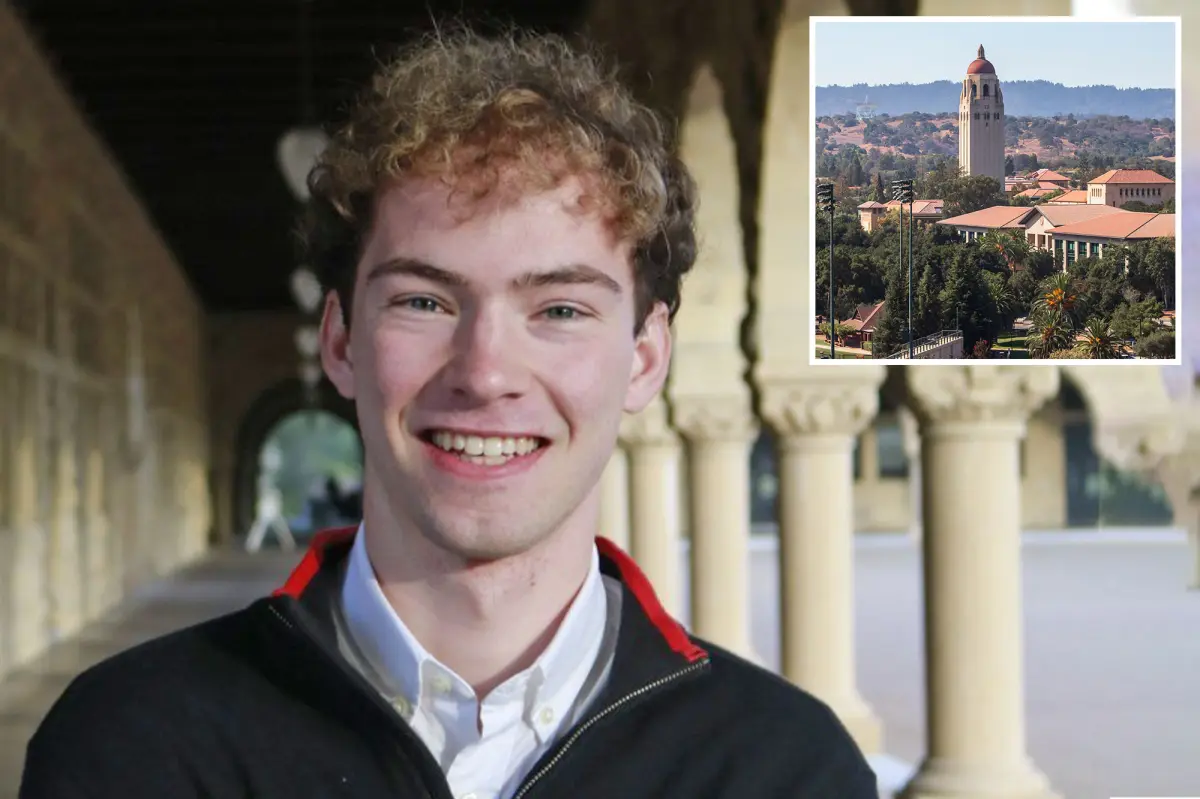

A Stanford student accused of raping an intoxicated sophomore in her dorm room after escorting her home from a campus party had previously served as a designated sobriety monitor at university social events. He had also criticized administrators for making student gatherings unnecessarily difficult to organize.
Leo Rossitter, 24, an economics and data science student, allegedly raped the student after repeatedly attempting to kiss her and getting into her bed, according to criminal allegations outlined in court filings.
Rossitter is expected to stand trial in Santa Clara County. A hearing to set the trial date is scheduled for December, The Stanford Daily reported.
As a sobriety monitor, Rossitter was expected to avoid alcohol and drugs while supervising parties, responding to emergencies and watching for students who had become intoxicated.
The role, which was often filled by fraternity members, could also involve checking guests at the entrance to confirm that anyone drinking was of legal age.
Monitors were generally expected to remain at events until they ended and arrange cabs for guests who were too intoxicated to travel safely.
Before the alleged assault, Rossitter had voiced frustration with the university’s limits on student social activities.
In an October 2022 article in The Stanford Daily about campus partying, Rossitter criticized the administration’s policies governing student events.
“Social definitely has a lot more headaches now. The University is putting up barriers [that] are unnecessary,” he said.
When asked to explain the restrictions, Rossitter declined to provide details, saying he “[couldn’t] speak to that.”
The Santa Clara County District Attorney’s Office charged Rossitter in October 2024 with rape of an intoxicated person, oral copulation of an intoxicated person and penetration by force.
Stanford was aware of the alleged assault and suspended Rossitter, a member of the class of 2025, for two years following an internal Title IX investigation.
Rossitter became eligible to return to Stanford classes this quarter, according to The Stanford Daily.
His attorney, Daniel Barton, told the outlet that his client “is not guilty of the horrible things that he is accused of.”