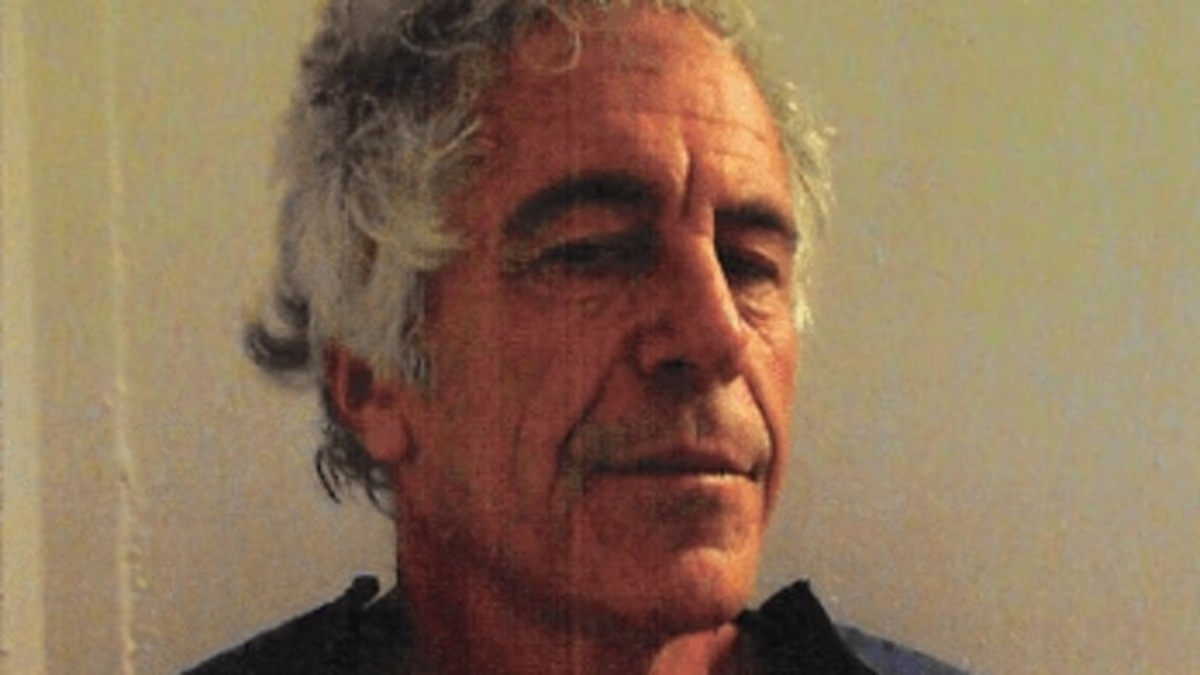

Seven years after Jeffrey Epstein’s death was officially declared a suicide, a prominent forensic scientist is disputing that conclusion.
The circumstances surrounding Epstein’s death have fueled years of unanswered questions and conspiracy theories.
The New York City Office of Chief Medical Examiner, the FBI and the Department of Justice have said Epstein hanged himself in his federal detention cell in 2019 while awaiting trial on charges of sexually trafficking minors.
Dr Michael Freeman, a forensic scientist with doctorates in epidemiology and forensic medicine, spent a year reviewing Epstein’s autopsy records at the request of his brother, Mark Epstein. Freeman now argues that Epstein was killed rather than taking his own life.
Speaking to the New York Times, Freeman said his first reaction to photographs of Epstein’s injuries was: “Wait a minute, that doesn’t look like a hanging mark.”
He said injuries typically associated with hanging feature a smooth, continuous mark that rises to a point on the neck. Epstein’s bruise, by contrast, appeared deep, uneven and branched into a Y-shape on one side, according to Freeman.
In Freeman’s assessment, the pattern is more compatible with homicidal strangulation than with hanging.
The conclusion echoes the public claims of Epstein’s brother, Mark, who has repeatedly said the disgraced financier was murdered.

Seven years after Jeffrey Epstein’s death was officially ruled a suicide, a leading forensic scientist is challenging that finding

Authorities say Epstein hanged himself in a federal jail cell in 2019 while awaiting trial on charges of trafficking minors. His cell is pictured after his body was found

Dr Michael Freeman, a prominent forensic scientist who spent a year reviewing Epstein’s autopsy records, says Epstein did not die by suicide.
YOU MAY ALSO READ: JFK Jr. Plane Crash Injuries Were So Horrific They Were Redacted From Report
Mark Epstein provided Freeman with access to the autopsy file, which had been unavailable for years to independent investigators, forensic scientists and pathologists.
As Epstein’s next of kin, Mark was among the few people able to obtain the records. He handed them to Freeman in November 2025, after which the forensic scientist began an extensive review.
Freeman’s assessment was developed with assistance from cognitive neuroscientist Itiel Dror and forensic pathologist Anders Eriksson.
The three researchers have been seeking a peer-reviewed journal willing to publish their conclusion that Epstein did not take his own life.
Freeman’s claims are likely to intensify skepticism surrounding the official account of Epstein’s death, which has remained clouded by a series of unusual and troubling circumstances.
The two guards assigned to monitor Epstein—following an earlier reported suicide attempt—allegedly fell asleep and failed to check on him for roughly three hours.
Meanwhile, cameras positioned outside his cell malfunctioned. The footage that was captured showed a flash of orange moving toward Epstein’s cell shortly before his death.
Prisoners were issued orange clothing and bedding, but the movement was recorded at 10.39pm, when inmates were expected to be locked in for the night. Fewer than eight hours later, Epstein’s body was found inside his cell.
After the discovery, evidence was reportedly catalogued improperly, and the medical examiner was not permitted to examine the cell.
In 2023, the Department of Justice cited “job performance failures” by prison officials but continued to conclude that Epstein had died by suicide.
This is a breaking news story. More to follow.


