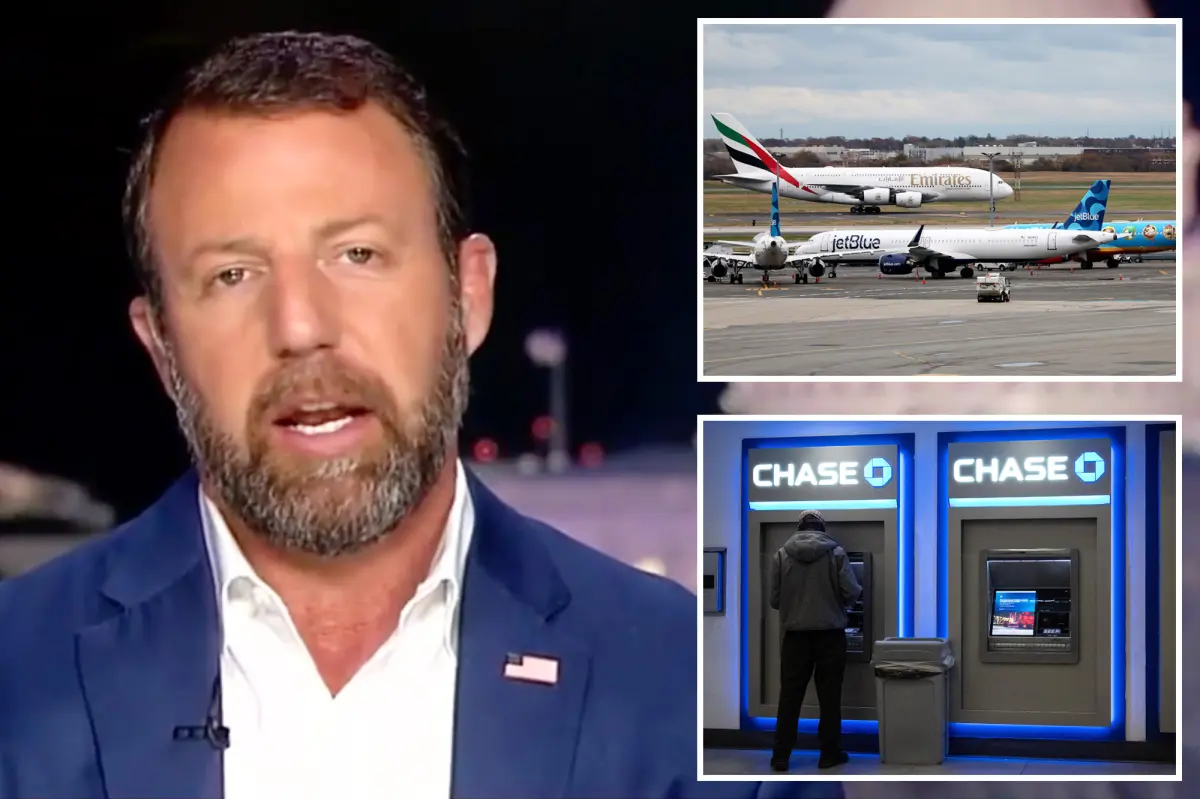

Homeland Security Secretary Markwayne Mullin sought to reassure Americans Monday, saying the country remains “secure” after a series of disruptions affected air travel, technology services and major banks.
“Breathe,” Mullin told Fox News host Sean Hannity during an interview.
“The homeland is secure. Our banking system is secure,” the DHS secretary said, adding that officials can respond quickly when unexpected failures occur.
Mullin was discussing the communications and radar problems that led the Federal Aviation Administration to impose an unusual nationwide ground stop Friday.
He credited President Trump and Transportation Secretary Sean Duffy with helping restore operations and reopen the nation’s airspace within about five hours.
Duffy has attributed the aviation disruption to the country’s aging infrastructure. The incident followed more than a day of technology problems at Microsoft that disrupted online communications for government agencies and private companies.
As concerns mounted, customers at several of the nation’s largest banks—including Chase, Bank of America, Capital One and Wells Fargo—also reported service interruptions across the country Monday.
Mullin said the banks requested government assistance and that officials helped them work through some of the affected systems before service was restored relatively quickly.
READ MORE: America’s Wealthiest Parents Fear Their Children Will Struggle to Find Jobs
The DHS chief repeated that the United States is “very secure,” saying he remains “very comfortable about where we’re at” despite the string of outages.
He also said the Cybersecurity and Infrastructure Security Agency, which operates within the Department of Homeland Security, has found no indication that the incidents were malicious or related to one another.
“I can tell you with 98% certainty we’re not seeing a cyber attack,” Mullin said. He noted that no group has claimed responsibility and that investigators have not detected the digital activity or other signs typically associated with an attack.
After receiving a briefing from an unnamed technology industry expert, Mullin said he believes the disruptions could be linked to the way artificial intelligence is being added to older computer systems.
The expert reportedly told Mullin, “I believe that it’s the SI,” using the Trump administration’s preferred term for artificial intelligence, or “super intelligence.”
According to Mullin, the expert explained that many legacy systems used by businesses and government agencies were not built to operate at the speed of advanced AI. The systems may be unable to keep pace with AI-driven code changes and automated fixes, potentially creating a ripple effect that overwhelms connected networks.
“That kind of makes sense to me,” Mullin said.


