
Iran’s Islamic Revolutionary Guard Corps (IRGC) issued a stark warning Wednesday to Bahrain’s ruling monarchy as Iranian drones and missiles targeted U.S. military facilities in the Gulf nation.
The threat came as Bahrain faced another wave of attacks. The island hosts the U.S. Navy’s Fifth Fleet, and one regional analyst said Tehran has spent decades attempting to destabilize the country while maintaining territorial claims over it.
“This is a regime that has sought to inflame tensions there for literally several decades, and it also maintains claims to the island nation,” Behnam Ben Taleblu, a senior fellow at the Foundation for Defense of Democracies (FDD), told News Outlet.

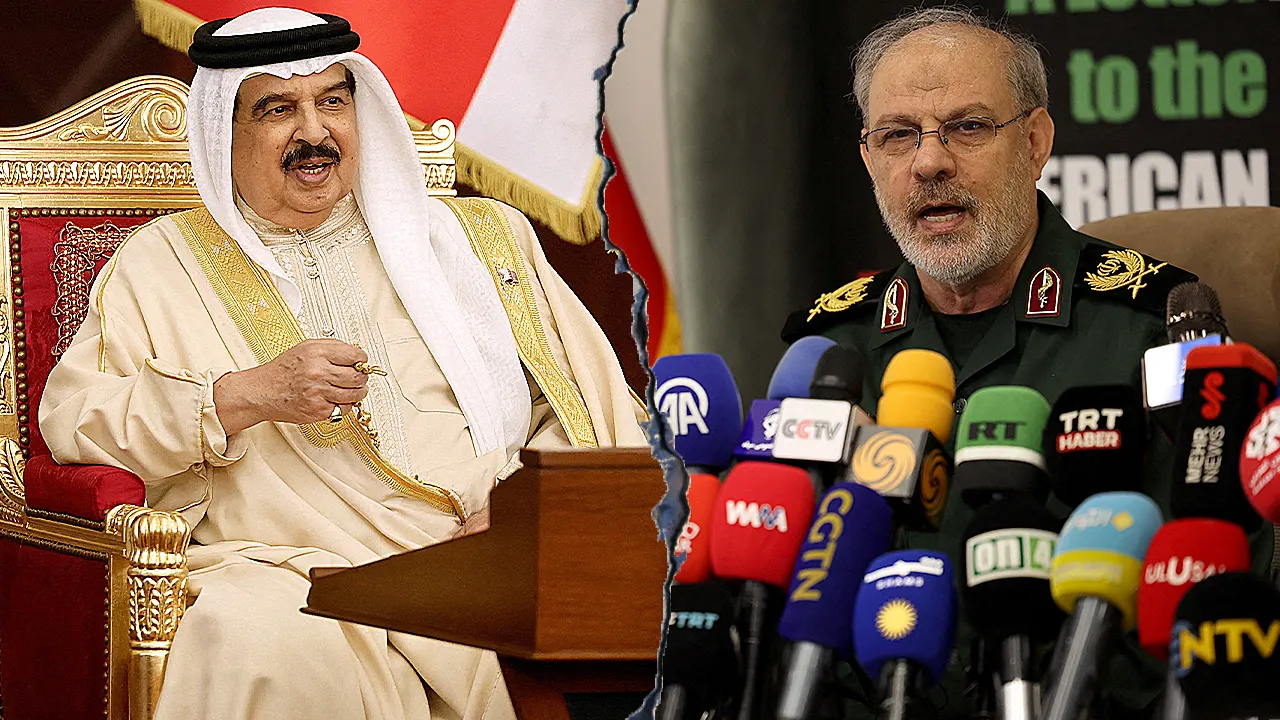
Bahrain’s King Hamad bin Isa Al Khalifa (Benoit Tessier/Pool/AFP via Getty Images)
“The Islamic Republic is also using military pressure in an effort to push the United States out of the region,” he said.
Addressing Bahrain’s ruling Al Khalifa family, IRGC Brig. Gen. Hossein Mohebbi accused the monarchy of supporting military operations against Iran, sheltering under American security guarantees and challenging Shiite religious authority.
“Cooperating in the aggression against Islamic Iran, living under the American security umbrella and violating the authority of Shiite religious leadership are three fundamental mistakes committed by the Al Khalifa regime,” Mohebbi wrote on X.

Islamic Revolutionary Guard Corps (IRGC) spokesperson Hossein Mohebbi, left, and President Donald Trump. (Majid Asgaripour/WANA/Reuters; Bonnie Cash/Pool/Sipa USA/Reuters)
“If it continues down this path, its survival under the region’s emerging security order will be uncertain,” he warned.
“A warning to the wise should be sufficient.”
Mohebbi’s comments came shortly after Bahrain intensified a crackdown on Shiite religious figures.
On Monday, a criminal court handed life sentences to dozens of Shiite clerics convicted on terrorism-related charges. Prosecutors accused them of working with Iran and conspiring to weaken the government.
Bahrain’s Public Prosecution said investigators found communications between several defendants and Iranian officials, including members of the IRGC. The clerics were accused of backing terrorism and sabotage intended to topple the monarchy.
“The Islamic Republic has a broad range of grievances with Bahrain and its ruling royal family,” Taleblu said.
“Some are sectarian, others political or strategic, while still others relate to the presence of U.S. forces in the region,” he added.
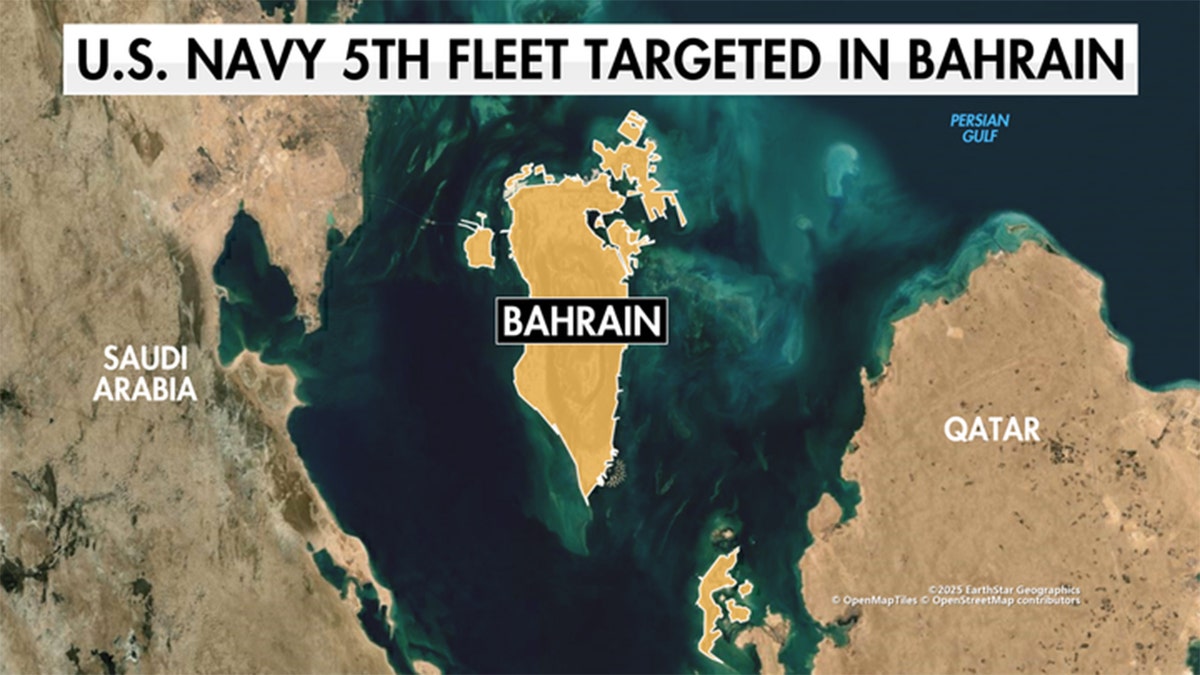
Fox News’ Jennifer Griffin reported that Iran appeared to hit the U.S. Navy’s Fifth Fleet, but no casualties were reported. (Fox News)
Bahrain is home to the U.S. Navy’s Fifth Fleet headquarters, a key center for American maritime operations throughout the Persian Gulf, the Strait of Hormuz and nearby waters.
The latest escalation followed a series of Iranian drone strikes aimed at U.S. military assets in Bahrain. Tehran said it had targeted an American radar facility for the third time in under a week, while U.S. Central Command (CENTCOM) reported that the attacks had been intercepted.
Bahraini authorities also said they intercepted Iranian attacks early Wednesday, one day after the IRGC claimed to have hit a base used by American forces.
“The regime is searching for sites near its own territory where it can strike the United States, as well as the regional order that has enabled the U.S. presence for so long, while keeping the cost relatively low,” Taleblu said.
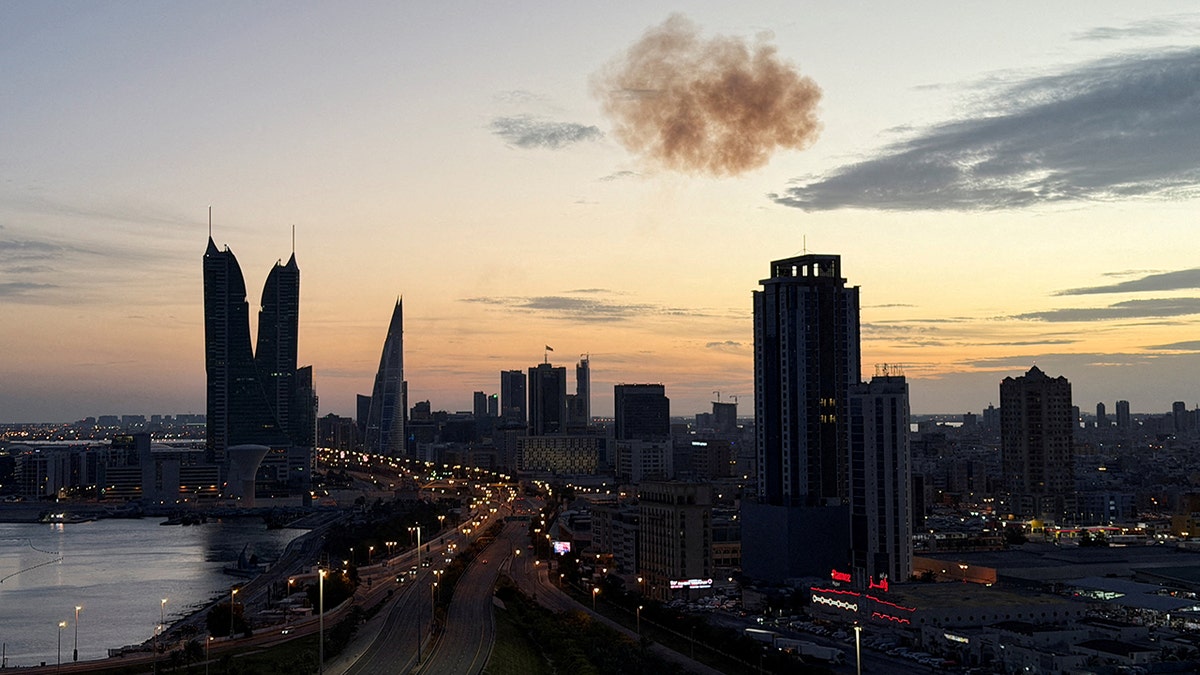
Smoke rises after an Iranian drone was intercepted over the Bahrain Financial Harbour towers, which houses the Israeli embassy, amid the U.S.-Israeli conflict with Iran, in Manama, Bahrain, March 6, 2026. Picture taken on a mobile phone. (Stringer/Reuters)
“They are seeking to inflict broader pain on the United States across the region, particularly in locations that have already come under attack.”
Taleblu said Iran’s campaign is aimed not only at American military infrastructure but also at increasing pressure on Bahrain’s monarchy to reconsider its decision to host U.S. forces.
“They are trying to narrow the space in which the U.S. can operate from the region and create greater political difficulties for Bahrain’s rulers as they attempt to maintain the American military presence there.”
He said the expanding threat from Iranian missiles and drones could ultimately prompt Washington to reconsider its long-term military posture in the Persian Gulf.
“Now that the conflict has moved out of the shadows and missiles and drones are being used, the future of the U.S. presence in the region will depend on whether America can afford to build and protect bases located so close to an adversary’s territory while under attack,” Taleblu said.
“What the United States decides to do with the Fifth Fleet in Bahrain and with the radar systems there could become an early indicator of what the American footprint across the CENTCOM area of responsibility—and especially in the Persian Gulf—will look like after the war with Iran,” he added.