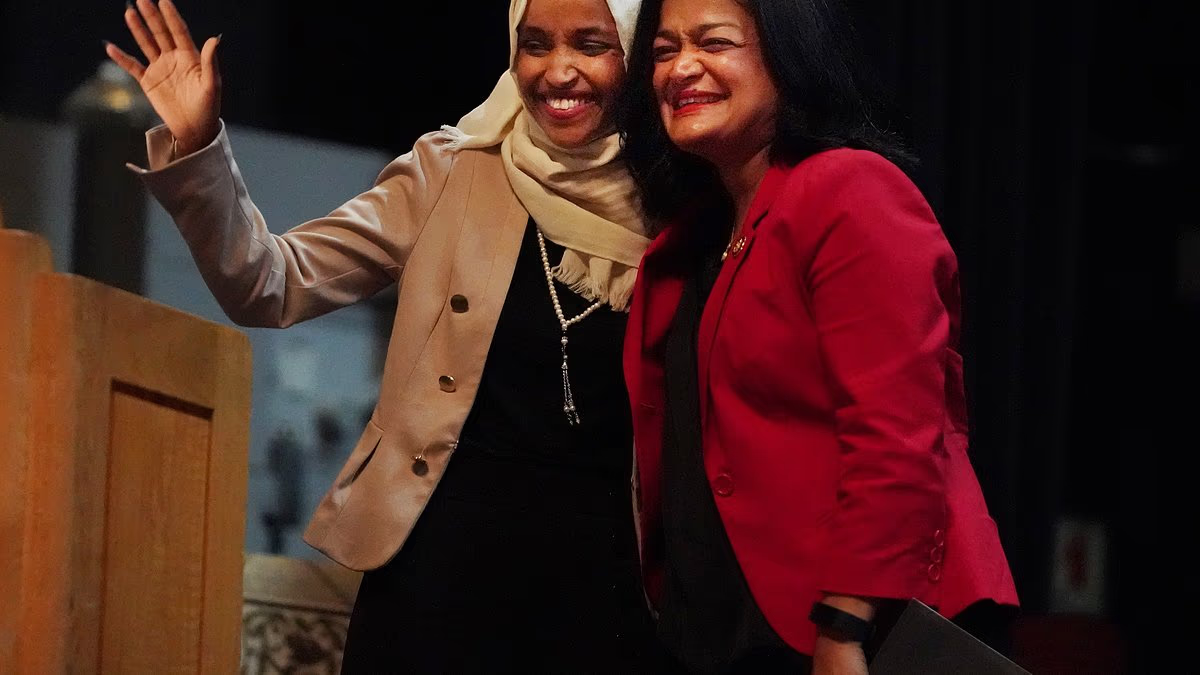

Progressive “Squad” member Pramila Jayapal has faced accusations of racism after warning House Democratic leader Hakeem Jeffries that he would have only a “short rope” to demonstrate progress to liberals in the new Congress.
The Washington Democrat drew criticism this week during an interview with Talking Points Memo, in which she urged her party to build on its major midterm gains and prove its effectiveness to voters.
Jeffries is virtually certain to become the next House speaker in January. Jayapal cautioned that he would have limited time to show urgency and move beyond what many regard as his cautious leadership style.
“I think he will have a relatively short rope to show that kind of urgency and perhaps abandon some of the caution that everybody notes as one of his qualities,” she said.
“He is cautious, and sometimes that can be good,” Jayapal added.
“But in a moment where you have this kind of anger, and need, demand for bold reform, in order for him to be successful and to hold a speakership, he’s going to have to be able to respond very quickly to that.”
Her comments prompted a backlash from critics who said the phrase “short rope” evoked the history of lynching and racial terror in the United States.
Speaking on CNN on Tuesday, Democratic strategist Paul Begala said he was troubled by the wording because the term “means something in this country with our history.”
Republican commentator Shermichael Singleton said he found the remark “disgusting,” prompting Begala to respond: “It was racist.”

Progressive “Squad” member Pramila Jayapal has faced accusations of racism after warning House Democratic leader Hakeem Jeffries that he would have a “short rope” to show liberals progress in the new Congress.

With Hakeem Jeffries virtually certain to become the next House speaker in January, Jayapal urged Democrats to act on their major midterm gains and win over voters.
Democrats divided over Jayapal’s “short rope” remark
CNN anchor Van Jones also condemned Jayapal’s comments. Sharing a clip of the discussion, he wrote: “Beautiful! Well said! Thanks, Paul and Shermichael, for saying what too many people in my own party are reluctant to admit.
“There is a lot of blatant racism in the way the far left is treating and talking about Hakeem Jeffries. It needs to stop.”
As the criticism intensified, Jayapal turned to X to explain what she meant and reject the suggestion that she was referring to racist imagery.
“When I said, ‘short rope,’ I meant a short window to act,” Jayapal wrote.
“I’m appalled that anyone would twist my words to evoke the very real and horrific history of lynching and racial terror against Black Americans.
“I condemn that violence completely and the use of its imagery to intimidate anyone.”
Although Jayapal had described Jeffries as “cautious,” she voted for him as the Democratic nominee for speaker this week. Jeffries won the party vote by 251-11.
He also survived an internal challenge from the party’s left flank. Seven members-elect—Darializa Avila Chevalier, Adam Hamawy, Frederick Haynes, Melat Kiros, Donavan McKinney, Chris Rabb and Claire Valdez—voted against him.
Jeffries is expected to become the first Black speaker of the House in US history when the new Congress convenes in January.

Jayapal and several fellow progressive “Squad” members, including Representative Ilhan Omar, won re-election to the House in this month’s midterm elections.

Speaking on CNN on Tuesday, Democratic strategist Paul Begala said Jayapal’s wording troubled him because the phrase “short rope” “means something in this country with our history.”


After the backlash, Jayapal used X to explain her comments and said she had not intended to invoke racist imagery.
Jeffries faces pressure from Democratic progressives
Jeffries faced pressure from a new group of progressive lawmakers before securing the Democratic nomination for speaker this week.
The lawmakers called on him to pursue a broad list of left-wing priorities, including Medicare for All, restrictions on Immigration and Customs Enforcement, campaign finance reform and an end to the war in Gaza. They argued that voters had sent them to Congress with a mandate to advance those issues.
If Jeffries wins January’s full House vote, he will become the first Black speaker in history. He would lead a party that has spent years in the minority and now faces the difficult task of turning an election victory into a governing majority.
Jeffries has drawn criticism from progressives who believe he has been too cautious in confronting President Donald Trump. He emerged from the leadership nomination process without a challenger after building support among influential liberals, including New York Representative Alexandria Ocasio-Cortez.
The outcome represents a significant show of strength for Jeffries, who has spent months managing growing progressive frustration with the Trump administration and demands for a clearer break with the Democratic establishment.


