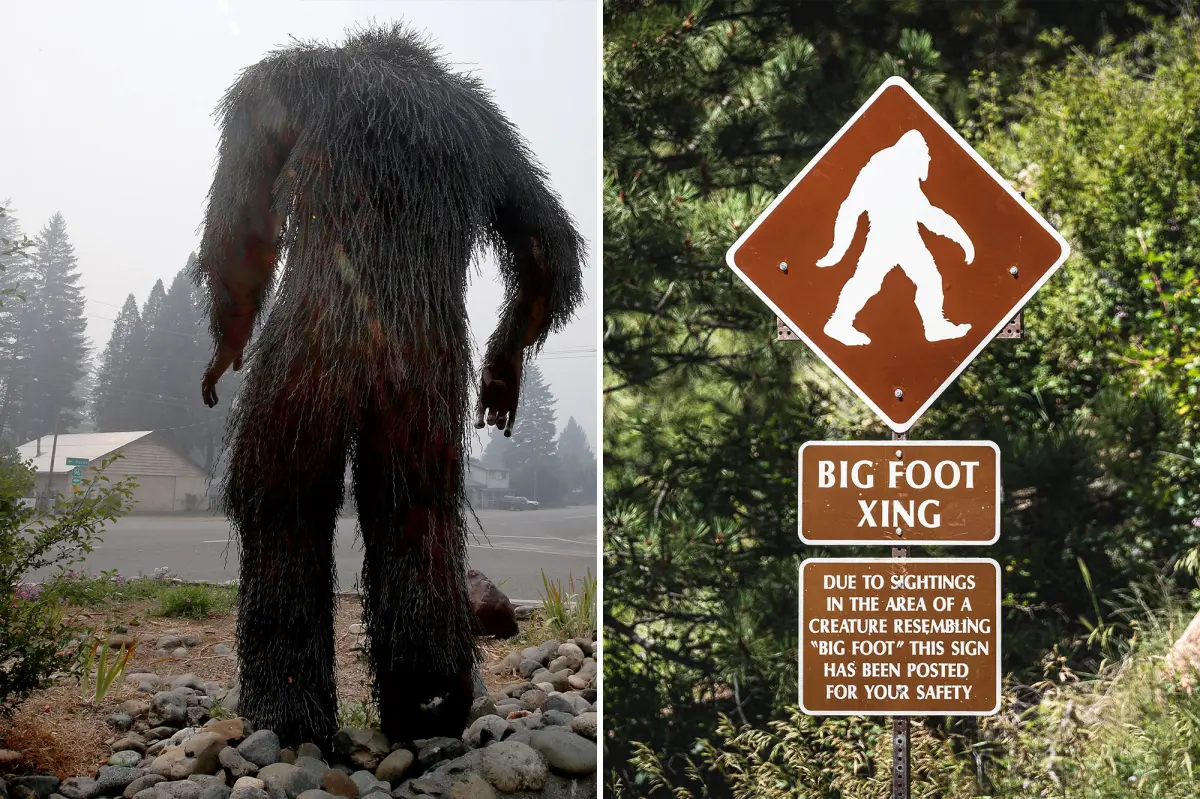

Bigfoot is making an unexpected appearance in newly released government records.
Documents quietly published by the Trump administration last month shed light on a federal investigation into alleged Sasquatch tracks discovered in the Pacific Northwest.
Released online by the US Forest Service on Oct. 15, the three documents come from the agency’s “Bigfoot/Sasquatch Records” collection. Among them is a detailed account of a 1982 government expedition launched after dozens of unusual footprints were reported in a Washington state forest.
As part of the inquiry, the US Department of Agriculture assigned wildlife biologist Rodney L. Johnson to investigate a reported discovery of “Bigfoot” tracks in the Mill Creek Watershed of the Umatilla National Forest.
Johnson later summarized his observations in a six-page memorandum addressed to the USDA, now included in the released files.
The tracks appeared at three muddy locations across the watershed. Each was estimated to measure roughly 15 inches long and 7 inches wide. The trail extended 25 to 40 feet over inclines, down slopes and into dense vegetation, where Johnson observed signs that something had disturbed the brush for an additional 30 to 40 feet.
One of the prints also showed what Johnson described as an unusual “deformation of [the] second toe.”
The report included photographs of several impressions, and investigators created plaster casts of some of the footprints.
Johnson acknowledged that the tracks would have required considerable effort to fake. Some of the markings, he wrote, “would have to be very hard to duplicate” and appeared “very natural.”
MUST READ: Deer Rampages Through NYC Neighborhood, Stuns Onlookers on Video
Even so, the biologist ultimately rejected the idea that the evidence came from the legendary large, hairy, humanlike creature.
“[I]t is my opinion that the tracks observed … were made by something other than a 300 pound plus two footed being,” Johnson wrote in his conclusion.

Johnson cited several clues that led him to suspect an elaborate deception. The stride remained unchanged regardless of the slope, his own boots pressed farther into the mud than the alleged Sasquatch prints, and forest debris around the impressions appeared to have been “brushed aside” before the tracks were made.
A later memo from a US Border Patrol official to the Forest Service office in Walla Walla, Washington, offered an even more pointed assessment. The official believed the tracks represented “a very clever attempt to penetrate a hoax, involving your office or agency, in order to lend authenticity or credibility to the general public.”
The official’s conclusion was that the impressions had been created by a person wearing “some type of soft plaster or rubber coated foot.”
The released Bigfoot records also contain a newspaper clipping from Montana’s Clark Fork Valley Press concerning alleged Sasquatch tracks discovered in 2003. Another document is a letter from Leo Kinney, who recalled finding what he believed were Bigfoot tracks during a hunting trip in Montana in the 1940s.
Kinney said other hunters had reported similar encounters, including a powerful “strong odor” and a grunting sound.
“We were not particularly anxious to catch up to whatever it was, and though we didn’t confess it at this time, in later conversations,” Kinney wrote, “we found out that we all had a very uneasy feeling and could feel chills running up and down our backs.”


