
A car travels along snow-covered streets in Brooklyn after Winter Storm Peggy swept up the East Coast on Sunday, Feb. 7, 2021. The storm threatened to dump as much as a foot of snow on parts of the region, just one week after a powerful nor’easter delivered up to two feet.
Erik Mcgregor | Lightrocket | Getty Images
An unusually early collapse of the stratospheric polar vortex, combined with a record-strength El Niño, has placed energy markets on high alert. Analysts say the rare pairing could have an especially significant impact on Europe this winter.
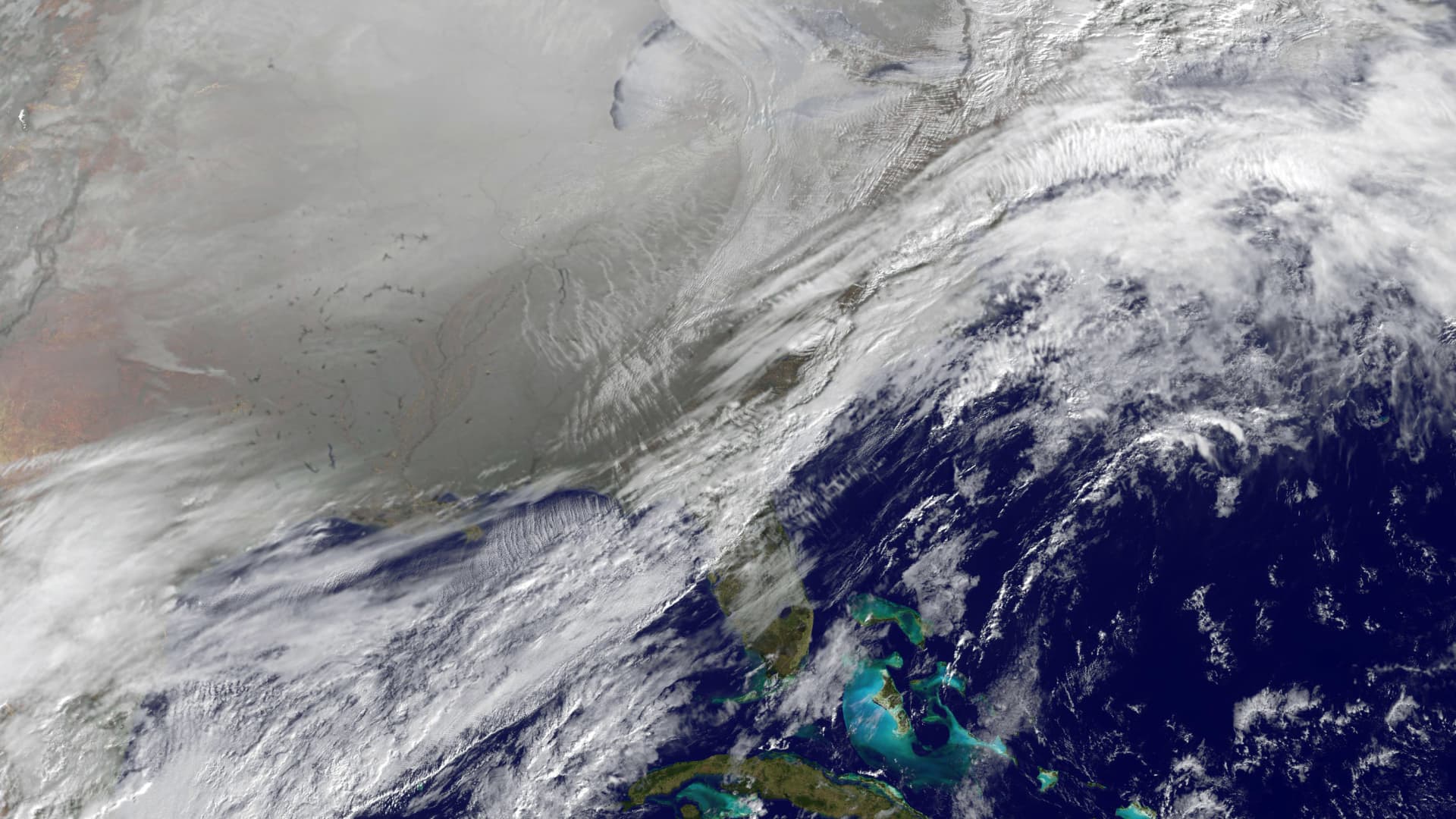
Meteorologists are monitoring an exceptionally early disruption of the polar vortex, a vast ring of powerful winds that normally confines frigid air to the Arctic.
When the vortex changes in strength or shape, it can alter weather patterns far below in the atmosphere, increasing the likelihood of colder conditions across parts of Europe and North America.
This year’s breakdown of the stratospheric polar vortex, or SPV, is occurring alongside an unusually strong El Niño. The climate pattern can drive global temperatures higher while disrupting normal rainfall patterns.
The simultaneous arrival of both events raises the prospect of a prolonged cold spell, potentially driving up heating demand and accelerating withdrawals from Europe’s already depleted gas reserves. That could make the continent more dependent on imported liquefied natural gas (LNG), particularly as supplies from the Middle East face disruption.
Europe’s natural gas storage sites entered the winter at their lowest levels in more than a decade.
The International Energy Agency warned earlier this month that thin European inventories, combined with limited storage capacity in several LNG-importing nations across Asia and South America, could intensify competition for cargoes and push prices higher during periods of peak demand.
We have never seen an early breakdown of the polar vortex and a super el Nino in the same winter so we have no historical precedent on how this will impact global gas demand
David Lewis
Gas analyst at Wood Mackenzie
Simon Lee, a lecturer in atmospheric science at the U.K.’s University of St Andrews, said the overlap between a sudden stratospheric warming event and El Niño is not inherently unusual. What is unusual, he said, is the timing: Forecasters had expected the polar vortex to break down in February, rather than in November.
Lee described the early SPV disruption as an “extremely rare” event that could affect winter weather in northwest Europe and the eastern United States. It may raise the odds of colder conditions, although probably not to the extraordinary degree seen during a 2014 polar vortex event, when parts of Niagara Falls partially froze.
“Geopolitics and weather are the two key volatility drives for energy and now they seem to be happening at the same time — and that’s always the biggest risk for markets,” Florence Schmit, senior energy strategist at Rabobank, told CNBC.
For months, meteorologists had forecast that El Niño would bring a milder European winter and relatively restrained heating demand, Schmit said. That outlook had been viewed as favorable amid continuing concerns about the region’s tight supplies of gas and crude oil.

Europe could face an “incredibly difficult” winter if the polar vortex breakdown produces colder weather than anticipated, Schmit warned. She said gas storage sites had recorded “very, very strong withdrawals” over the previous two weeks — an unusual trend for this point in the season.
“If you continue to see the same storage withdrawals over the next couple of months, that means energy prices will spike again — and they won’t spike because of geopolitics. This time it will be the weather driving that spike and that volatility,” Schmit said.
Gas price risks
European natural gas prices have climbed in recent weeks to levels not seen since the 2022 energy crisis, reaching 103.9 euros ($113.99) per megawatt hour in late October. Dutch TTF futures, the region’s benchmark contract for December delivery, were trading near 87.28 euros on Friday afternoon.
“We have never seen an early breakdown of the polar vortex and a super el Nino in the same winter so we have no historical precedent on how this will impact global gas demand,” David Lewis, principal research analyst for gas and liquefied natural gas at Wood Mackenzie, told CNBC by email.
Large waves crash along the La Jolla coastline as El Niño-driven ocean temperatures in the mid-70s continue to set records on Nov. 14, 2026, in San Diego, California.
Kevin Carter | Getty Images News | Getty Images
El Niño is generally linked to milder winters, while sudden stratospheric warming events more often bring colder temperatures and increased snowfall, Lewis said. Those effects could emerge across Europe in December and January.
“So far, the start of the European winter heating season has been quite cold but more importantly has seen low wind speeds across Northern Europe,” Lewis said.
“The drawdown in stocks in the first half of November has been amongst the highest on record. With inventories starting the winter at their lowest level on record, any further deterioration in temperatures or wind speeds will have an outsized impact on European balances and lead to higher prices across Europe,” he added.


