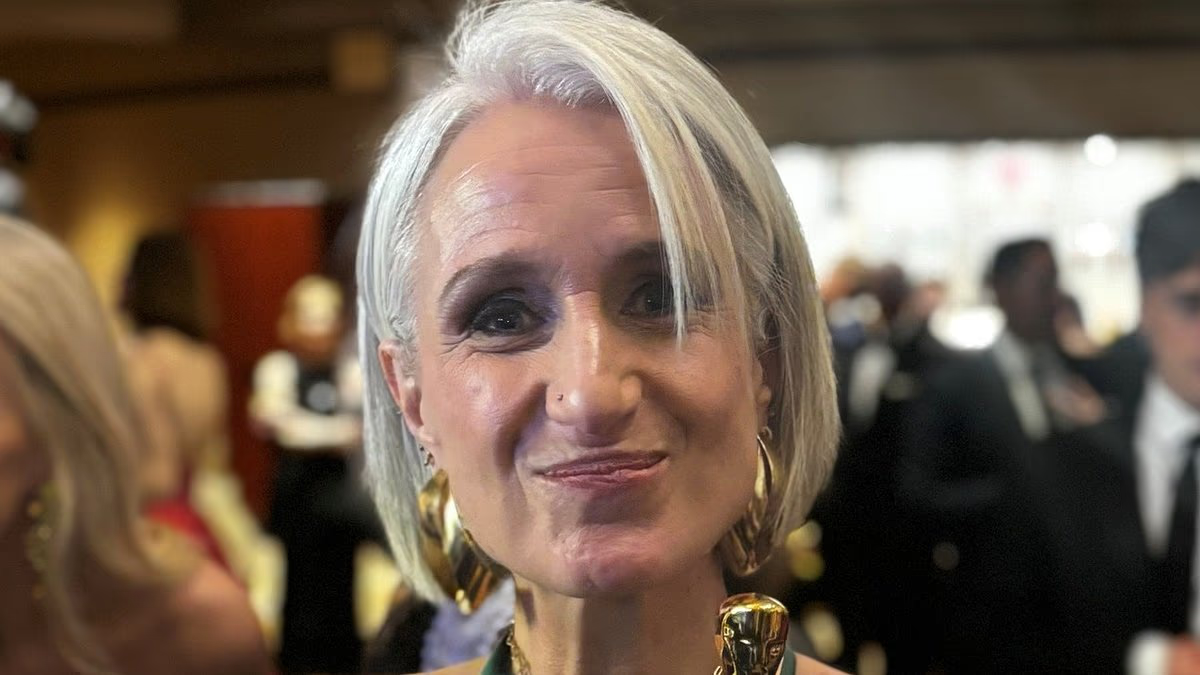

Jewish producer Lucie Kon, who received £400,000 after alleging she experienced anti-Semitism at the BBC, has described how the strain of the dispute triggered a return of her anorexia.
Ms Kon, 57, said BBC colleagues mistreated her after the October 7 Hamas terrorist attacks on Israel, allegedly describing Zionists like her as “evil”.
Ms Kon, who has relatives in Israel, alleges colleagues told her to consider “what drove Hamas to do what they did”. She also claims she was told that, if she called Hamas terrorists, she should “call Israel terrorists, too”.
She further alleged that colleagues said a documentary about the Nova music festival massacre needed to “contextualise” the attack, and described it as “disgusting” that former prime minister Rishi Sunak had visited a Jewish school.
The award-winning journalist, who has received both an Oscar and an Emmy, said she was instructed to remain at home for several months before being dismissed after submitting a formal complaint.
Ms Kon has now detailed the severe effect the dispute had on her mental health, including the return of an eating disorder she had last experienced as a young woman, after learning she was set to lose her highly regarded position at the BBC.
On Saturday evening, Ms Kon shared two photographs on social media, taken three years apart.
The more recent image, taken last weekend, showed her smiling and appearing healthy. In the older photograph, however, she looked gaunt and visibly frail.
That picture was taken at BAFTA, where she was taking part in a panel discussion about Mr Nobody Against Putin, a film she commissioned and executive produced for BBC Storyville before it went on to win an Oscar.

Jewish producer Lucie Kon says the pressure she experienced at the BBC led to a relapse of her anorexia

Ms Kon has described the devastating impact on her mental health after learning she would lose her BBC role, including the return of her anorexia. Source: Lucie Kon
“What the audience could not see was that I had just been told I was being made redundant, weighed almost nothing and was due to be admitted to an eating disorders unit the following morning,” Ms Kon wrote on Substack.
She said losing her job left her feeling deeply “ashamed”.
Ms Kon wrote: “I had complained about what seemed to me a clear-cut case of antisemitism and a breach of the BBC’s own guidelines and code of conduct. I had asked for help. And I had been dismissed.”
She said the experience left her feeling “so silenced, and so alone” that it ultimately made her ill.
Ms Kon said anorexia is more commonly associated with teenage girls than women with three decades of journalism behind them, a perception that intensified her feelings of shame.
She also revealed that, shortly before her final day at the BBC, Mr Nobody Against Putin was rebroadcast after being shortlisted for a BAFTA.
But she said she was horrified to discover that her name had been removed from the closing credits and replaced by that of someone who had played no part in making the film. The decision made her feel as though she had been “wiped from history”.
After leaving the BBC, Ms Kon was hospitalised twice, most recently during the summer. Three years after the photograph that “shocked” her, she said she is now making strong progress towards recovery.
The BBC paid Ms Kon compensation last month, without admitting liability, after she brought unfair dismissal proceedings. The settlement was partly funded by the licence fee.
Ms Kon’s case came a year after Tim Davie resigned as the BBC’s director-general. During his tenure, the corporation faced accusations of institutional bias, including allegations of anti-Semitism.
More than 200 Jewish staff members accused the BBC Board of “ignoring” requests for an investigation into alleged anti-Semitism at the broadcaster.
In July 2024, more than 200 Jewish employees, contractors, suppliers and contributors wrote to BBC chairman Samir Shah seeking an urgent formal Board investigation into “systemic problems of anti-Semitism and bias at the BBC, alongside senior management’s demonstrable failure to properly address the issue”.
The letter included a report titled Being Jewish and working at the BBC, featuring testimony from staff who said the corporation was no longer “a safe space to be Jewish”.
The same group wrote to the BBC Board again last December, alleging that their concerns had been ignored and that they had received “words not action” after waiting more than a year.
Matt Brittin, who succeeded Mr Davie, has since promised to eliminate anti-Semitism within the organisation.

Ms Kon, pictured last weekend, received £400,000 from the BBC in a settlement reached before a tribunal hearing

The BBC has not formally apologised to Ms Kon and has declined to accept that she experienced anti-Semitism during her employment
However, Ms Kon said she had told Mr Brittin that she and other Jewish BBC employees were still being bullied and abused.
She alleged that other Jewish staff had left the broadcaster because of their treatment, adding that friends who remain at the BBC are “still struggling” and “still suffering” because they are Zionists or Jewish.
The BBC has not formally apologised to Ms Kon, who worked on programmes including Panorama and BBC Breakfast. It has also declined to acknowledge that she was the victim of anti-Semitism during her employment.
A BBC spokesman previously said: “While we do not comment on individual staffing matters, anti-Semitism in any form is not tolerated at the BBC.
“If allegations or concerns are raised, they are taken seriously and investigated in accordance with our policies.
“We have robust procedures in place to deal with any behaviour that is contrary to our values.”
Approached by the Daily Mail about Ms Kon’s latest comments, the BBC declined to comment further.