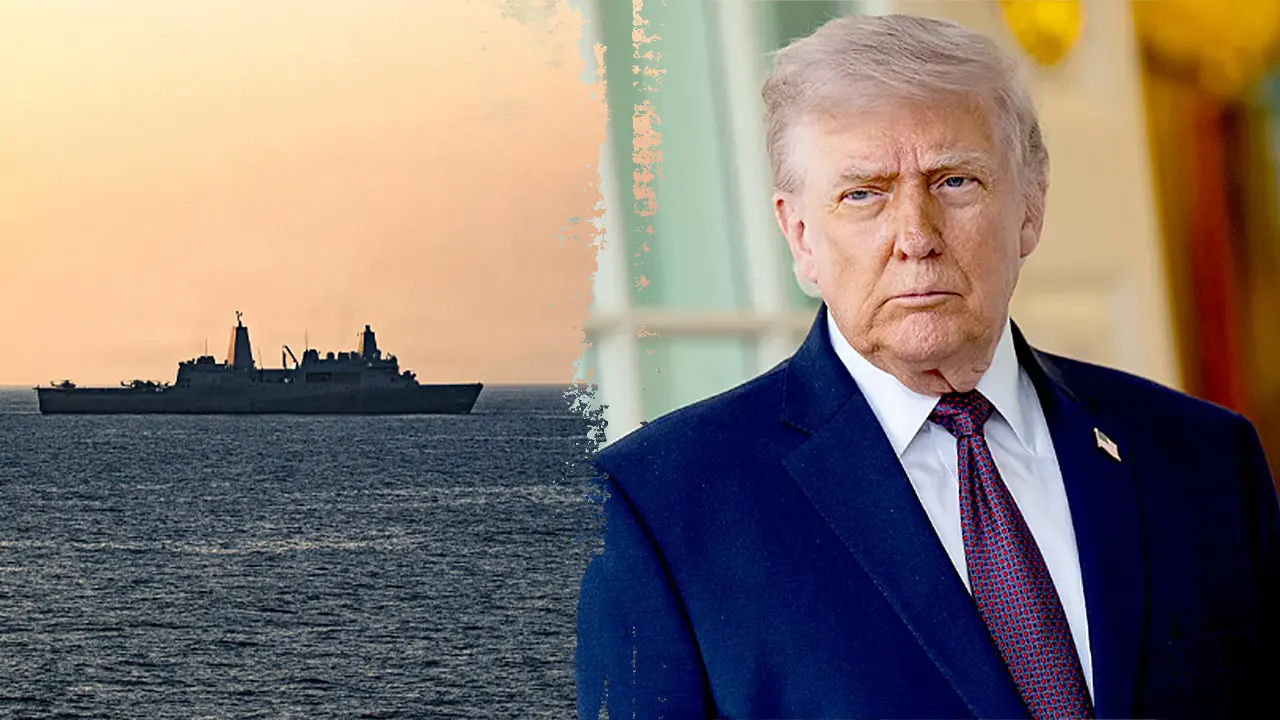

Trump says US Navy has a ‘wall of steel’ blockade around Iran to protect the Strait of Hormuz
President Donald Trump says the U.S. Navy has established a powerful blockade against Iran and maintains that the Strait of Hormuz falls under American control. He credited the operation with damaging Iran’s economy, weakening its naval and air capabilities and striking terrorist leaders, while emphasizing that the United States remains years ahead of rivals such as Russia in submarine development.
Reports that Iran may send more than a dozen tankers through a U.S. blockade of its ports sparked fears of a broader conflict Sunday. A maritime security expert warned that such a move could create a dangerous confrontation, while President Donald Trump challenged Tehran to test the American forces positioned across the Gulf.
“I hope they do, they’ll all be at the bottom of the sea like the rest of the navy,” Trump told Fox News chief foreign correspondent Trey Yingst when asked whether Iran might try to break through the blockade, which was first imposed in April.
The warning followed reports that Iran was organizing a tanker convoy at Kharg Island, a key hub for the country’s oil exports, in an effort to challenge the blockade.
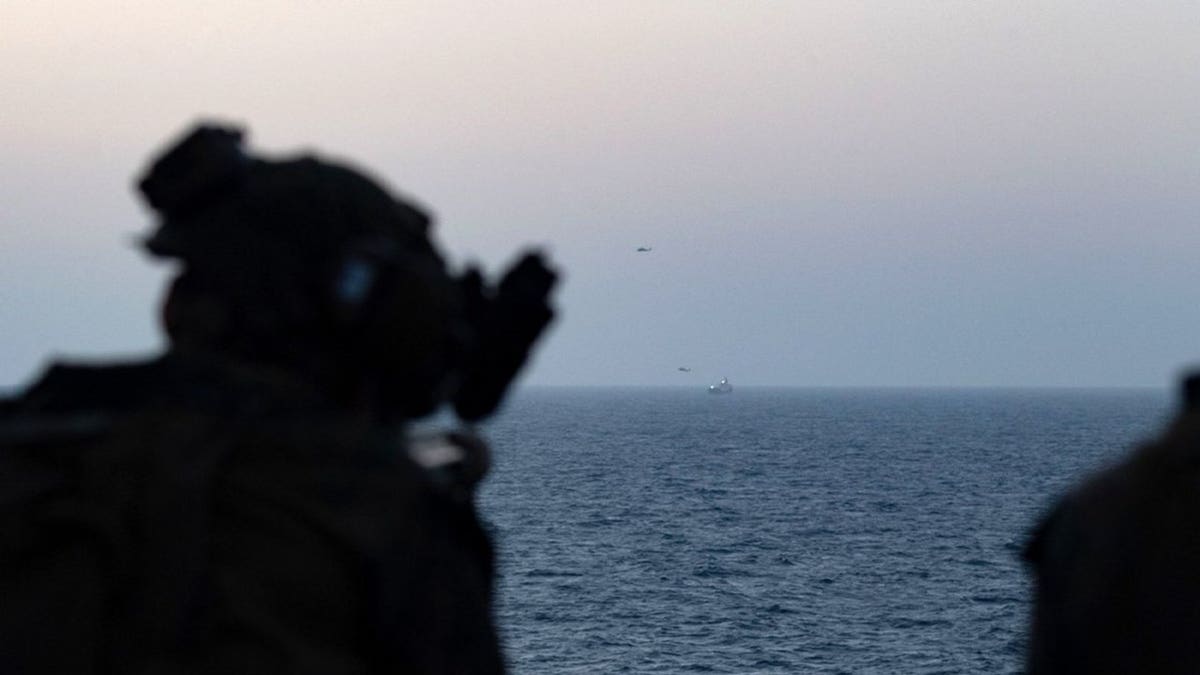
U.S. Marines aboard the USS New Orleans (LPD 18) monitor the Arabian Sea during naval blockade operations involving Iran. (U.S. Central Command)
Maritime security specialists said the tankers could encounter U.S. naval forces across the Indian Ocean. The Institute for the Study of War also cautioned that an attempted breakout could escalate into a broader war.
The reported plan would send tankers from Kharg Island, which handles most of Iran’s crude oil exports, toward the Gulf of Oman. Reports said crews had been assigned and Iranian flags raised in preparation for a possible attempt to breach the blockade.
Charlie Brown, a senior adviser at United Against Nuclear Iran and an expert on maritime sanctions enforcement, called the reported operation “propaganda” and said it was unlikely to succeed if carried out.
“This supposed plan by the Iranians to suddenly deploy 14 vessels to try to breach the blockade in a convoy — it’s farcical,” Brown told News Outlet on Sunday.
“The blockade is not simply a line that can be crossed. The United States Navy has the ability to enforce it across the entire Indian Ocean and beyond.”
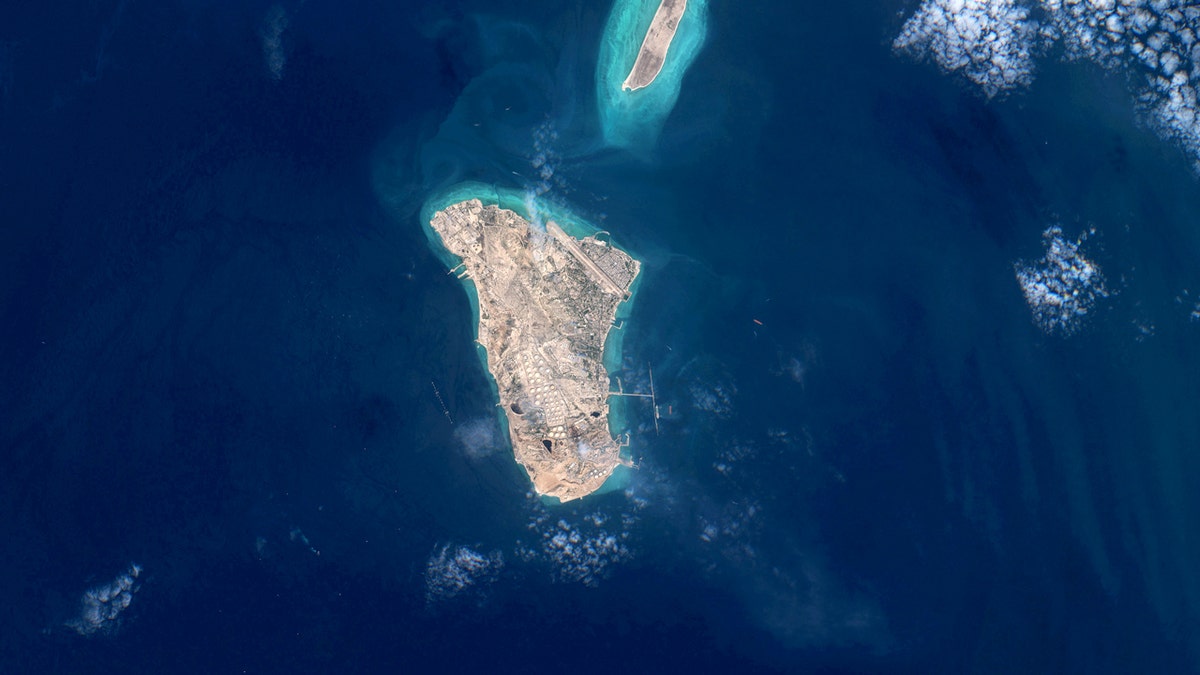
Satellite imagery shows Kharg Island in the Persian Gulf, off Iran’s coast. (Gallo Images/Orbital Horizon/Copernicus Sentinel Data 2024)
“If ships try to leave the area overseen by the U.S. Navy’s 5th Fleet, the 7th Fleet becomes the next command responsible for the Indian Ocean,” he said.
“It has ships and aircraft there now, and those forces could assume the mission.”
The potential standoff comes as maritime tensions continue to rise. The United Kingdom Maritime Trade Operations agency said Sunday that a tanker had been involved in an incident with military forces in the Gulf of Oman, though it did not identify the vessel or link it to the reported Iranian convoy.
“UKMTO has received a report of an incident involving a tanker and military forces in the Gulf of Oman,” the agency said in an advisory.
“Vessels are advised to review the latest maritime security information and remain alert to the changing operational environment.”
The Institute for the Study of War likewise warned that Iran could try to break the blockade within days as intensifying economic pressure leaves Tehran with increasingly limited choices.
“Iran’s deteriorating economic situation is increasingly dire, forcing Iranian officials to confront the necessity of breaking the U.S. blockade,” the institute said in an update.
The assessment came after a Nov. 20 report from Hamshahri, a Tehran municipality-affiliated outlet, which said Iran had positioned 14 tankers at Kharg Island to challenge the blockade.
MUST READ: Macy’s Thanksgiving Day Parade to Honor Beloved Fiona the Hippo
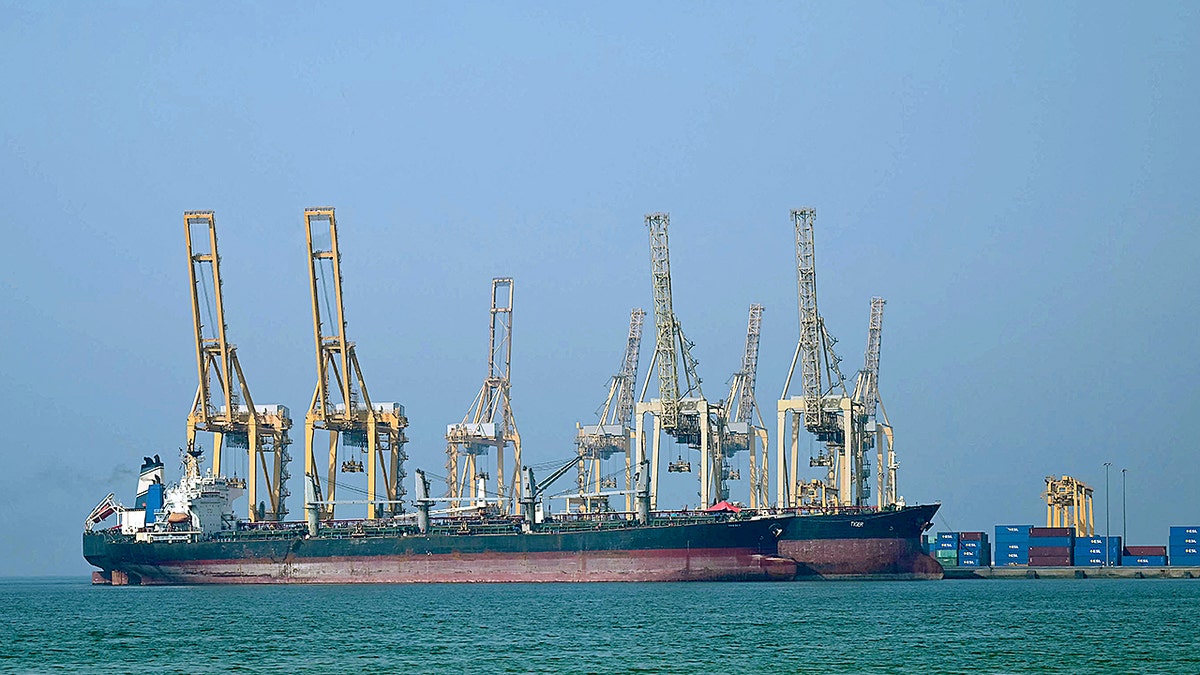
Iran seized two foreign oil tankers in the Persian Gulf on Thursday, alleging they were carrying 1 million liters of smuggled fuel. (GIUSEPPE CACACE/AFP via Getty Images)
“Trying to run the blockade would expose Iran to substantial risks, from the destruction of its tanker fleet at a minimum to the possible resumption of a larger-scale conflict with the United States — or both,” the institute said.
“Iran’s willingness to accept those risks shows how seriously and unsustainably the regime views its current economic position.”
Brown questioned whether Tehran would actually dispatch the tankers, saying the reported operation appeared intended to project defiance rather than represent a workable strategy.
“This reported attempt by several Iranian ships to run the blockade is most likely propaganda — another in a series of similar claims that do not materialize and are quickly debunked,” he said.
He also challenged reports that the tankers were loaded and ready to sail, pointing to satellite monitoring of Kharg Island.
“We have closely monitored loading activity at Kharg Island through satellite imagery, and there is really no sign of any significant loading there for quite some time.”
Brown said assembling a 14-ship convoy would create serious logistical difficulties, including the need for lead and trailing vessels, reliable communications and coordinated procedures for responding to U.S. military orders.
He warned that civilian crews could be placed in considerable danger if they refused instructions to stop.
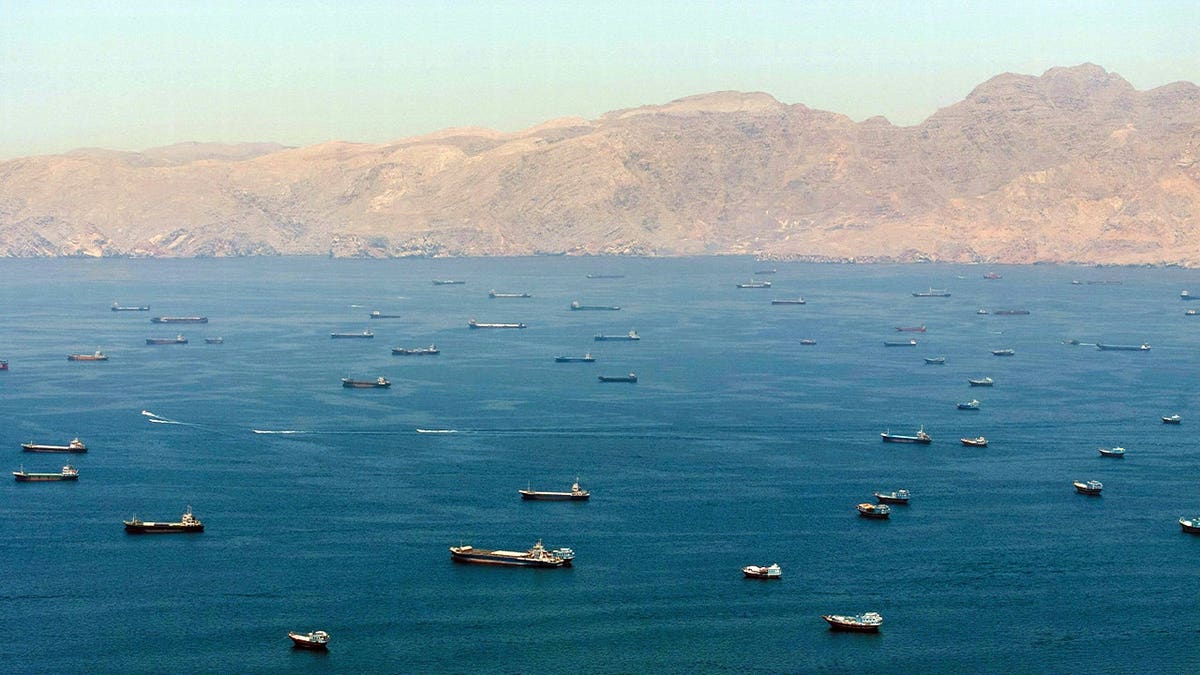
A drone image shows vessels anchored in the Strait of Hormuz from Musandam, Oman, on May 25, 2026. (Stringer TPX IMAGES OF THE DAY via Reuters)
“They would obviously be entering an extremely dangerous area and would have to choose between following orders to stop or facing military action,” Brown said.
In a Nov. 18 advisory, U.S. Central Command warned that ships receiving Iranian cargo through ship-to-ship transfers could be intercepted or seized, according to Reuters. The warning extended the blockade’s reach beyond vessels leaving Iranian ports.
Brown said U.S. forces would probably contact the tankers by radio from naval vessels or aircraft and direct them to stop. A refusal could lead to an escalating military response.
He said the Navy could hand off responsibility between regional commands, making it difficult for Iranian tankers to evade interception simply by moving farther into the Indian Ocean.
“There is an administrative and geographic boundary between the 5th and 7th Fleets, as well as between CENTCOM and INDOPACOM,” Brown said.
“But the U.S. Navy is a global force, and it can transfer responsibility when a target or vessel of interest crosses that boundary.”
Brown said American forces possess the ships, aircraft and procedures needed to intercept several vessels simultaneously. He added that the open waters of the Indian Ocean provide more room to maneuver than the confined Strait of Hormuz.
“This is a United States mission, not merely a CENTCOM mission,” Brown said. “The forces are already in place.”
“If they do try to move out with multiple ships, I am quite confident that all or most — probably all — would be interdicted,” he added.


