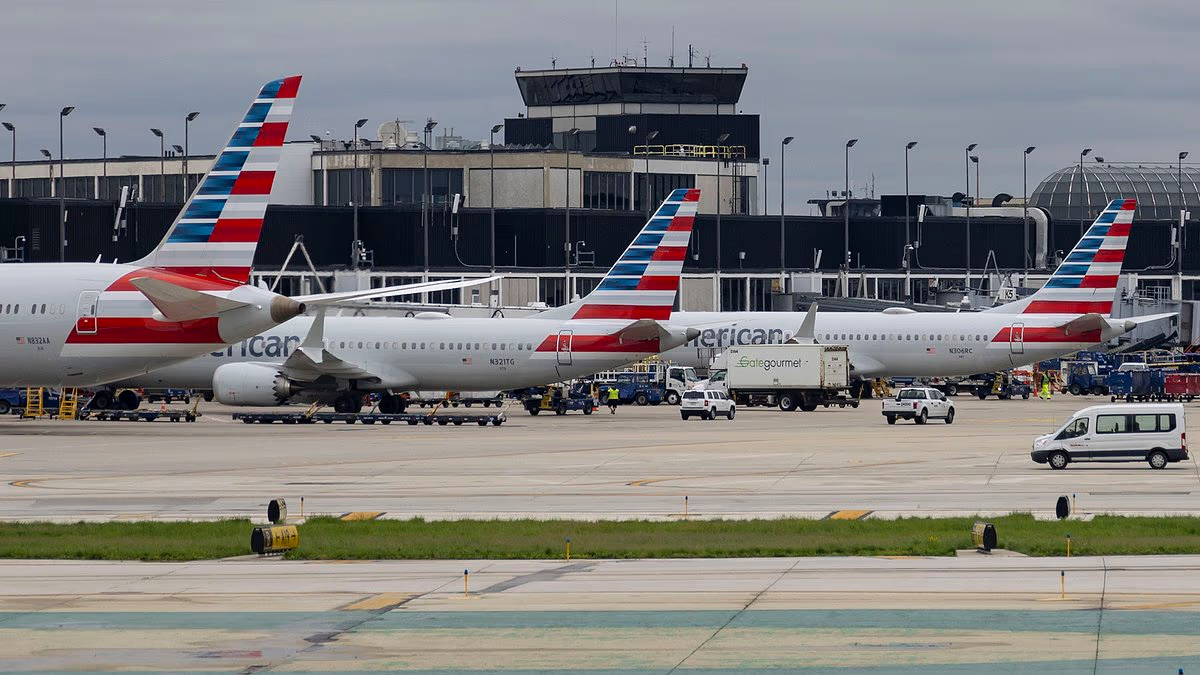
A ground stop at the busiest airport in the United States disrupted the opening of Thanksgiving travel week on Monday after staffing issues affected operations.
The Federal Aviation Administration (FAA) introduced the restriction at Chicago O’Hare International Airport, which handles more takeoffs and landings than any other airport in the country. The order required affected aircraft to remain at their departure airports.
The ground stop was in effect from 11.40am to 1.15pm ET and applied to Chicago-bound flights leaving several US airports. Delays were expected to average 48 minutes, with some reaching as long as 82 minutes.
By its 1.27pm ET update, the FAA said gate-hold and taxi delays for O’Hare departures were 15 minutes or less. Arriving aircraft were also experiencing airborne delays of no more than 15 minutes.
The disruption came as nearly six million Americans were expected to fly during the Thanksgiving period, including more than one million passengers traveling through O’Hare.
United Airlines alone projected that nearly 640,000 passengers would depart from the airport between November 19 and December 1—a five percent increase from last year.
The staffing problems followed a series of airline outages in recent days that stranded travelers at airports across the country.
More than 1,300 flights were delayed or canceled from Friday through the weekend, leaving aircraft and crews out of position.

The Federal Aviation Administration (FAA) ordered a ground stop at Chicago O’Hare, the nation’s busiest airport for takeoffs and landings, keeping affected aircraft at their departure airports (stock)
Major hubs, including Atlanta, Chicago O’Hare and airports serving the New York area, faced significant backlogs after those disruptions, with delays continuing into the week.
FlightAware recorded more than 1,300 delays and over 180 cancellations as of Monday afternoon.
An O’Hare update issued at 1.45pm showed 292 delayed flights and 12 cancellations during the preceding 24 hours.
The delays affected 154 arrivals and 138 departures, while 146 flights were running at least 45 minutes behind schedule. Eight arriving flights and four departures had been canceled.
Average delays for flights scheduled to arrive at or leave O’Hare within the following two hours were below 15 minutes. Nearby Midway Airport also reported average delays of less than 15 minutes and no cancellations.
O’Hare is a major hub for United Airlines and American Airlines, serving passengers traveling to destinations throughout the US and around the world.
Because so many travelers connect through the airport, disruptions there can affect onward journeys far beyond Chicago.
EXPLORE MORE: Toyota and Honda Recall Cars Over Potentially Deadly Airbag Defect
The airport recorded 860,015 takeoffs and landings in 2025, equal to an average of one aircraft movement every 37 seconds, according to the Chicago Department of Aviation. That total was 10.8 percent higher than the previous year.

The disruption came as nearly six million Americans were expected to fly for Thanksgiving, including more than one million passengers traveling through O’Hare (stock)
O’Hare also handled 84.8 million passengers last year, ranking sixth worldwide for passenger traffic while remaining first for aircraft movements.
Although O’Hare is the busiest airport for takeoffs and landings, Hartsfield-Jackson Atlanta International Airport (ATL) remains the busiest in the US and globally by passenger volume. It handled 106.3 million passengers in 2025.
Monday’s ground stop followed another disruption on Sunday, when a technical issue involving Delta’s aircraft weight-and-balance system delayed more than 1,300 flights nationwide.
Delta relied on manual procedures while the system was being restored, and its Atlanta hub experienced the greatest impact. The FAA said the delays were not connected to its air traffic control systems.

Travelers could face another obstacle as a developing nor’easter threatens major airports along the East Coast
Earlier this month, a telecommunications failure prompted a nationwide FAA ground stop on November 13, suspending departures for more than four hours.
Airlines then had to reposition aircraft and crews, leaving some passengers facing additional delays and cancellations after flights resumed.
Travelers may now encounter another challenge as a developing nor’easter threatens major airports along the East Coast.
AccuWeather said the storm was expected to develop Tuesday, move across the Southeast on Wednesday and reach the Northeast and Midwest from Wednesday night into Thanksgiving Day.
The extent of the disruption will depend on how strongly the system intensifies.
Heavy rain, strengthening winds and low clouds could disrupt flights around Atlanta and Charlotte on Wednesday before affecting Washington DC, Philadelphia, New York City and Boston on Thanksgiving Day. Connecting passengers could experience delays even when conditions at their departure airports remain favorable.
Pressure on airlines is expected to continue after the holiday. Airlines for America, an industry group, predicted that Sunday, November 29, and Monday, November 30, would be the busiest travel days of its Thanksgiving period.
Passengers should check their flight status directly with their airline, since the FAA’s airport-wide updates may not reflect delays affecting an individual departure.


