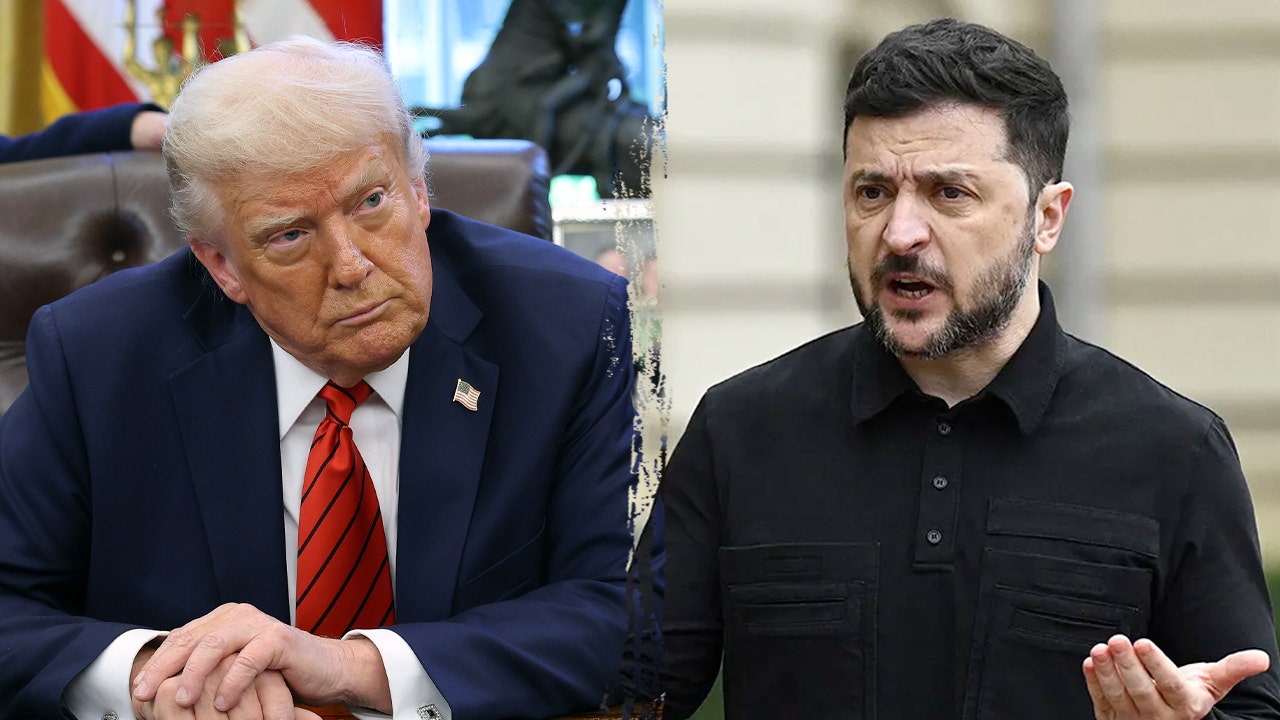

Ukrainian drone attack sinks Russian warship
Ukrainian drones reportedly struck and sank a Russian warship, while President Volodymyr Zelenskyy confirmed the operation in a Telegram post. Foreign correspondent Jeff Paul examines the widening conflict as continued Russian bombardment triggers emergency rescue operations in Kyiv.
A Ukrainian sea-drone attack that capsized and sank a Russian warship in Libya on Sunday could represent a “serious escalation” in the nearly five-year conflict, according to a former U.S. national security adviser. The former official characterized the operation as a “giant tantrum” by Ukrainian President Volodymyr Zelenskyy.
Morgan Murphy, a former press secretary to the secretary of defense, told News Outlet that the overnight strike on the Russian corvette Mercury at the Libyan port of Benghazi could place additional pressure on ties between Zelenskyy and President Donald Trump. Murphy said the incident also reflected tensions that had surfaced during former President Joe Biden’s administration.
“The attack on the Russian corvette Mercury in North Africa — specifically in Libya — marks a serious escalation of the war in Ukraine,” Murphy said.
Murphy said describing the Benghazi operation as a “giant tantrum” was one possible interpretation, adding that such conduct was “not unusual” for Zelenskyy.

The Benghazi port following an explosion aboard a Russian vessel docked at the naval base. (Vantor/Handout via REUTERS)
Murphy also contended that Zelenskyy’s willingness to pursue military actions that complicate U.S. diplomatic priorities has irritated successive administrations in Washington.
“That is why I believe both the Biden and Trump administrations have been frustrated with Zelenskyy,” Murphy said. “He is operating as an independent actor rather than as an ally.”
Reports said Biden became angry during a June 2022 phone call after Zelenskyy sought more military assistance soon after the White House announced a $1 billion aid package for Ukraine.
In a memoir published recently, Biden likewise described private frustrations with Zelenskyy, portraying the Ukrainian president as moody, stubborn and less appreciative than expected.

U.S. President Biden and Ukrainian President Volodymyr Zelenskyy, left, meet in the Oval Office at the White House in Washington, D.C., on Wednesday, Sept. 1, 2021. Photographer: Doug Mills/The New York Times/Bloomberg via Getty Images (Doug Mills/The New York Times/Bloomberg via Getty Images)
Murphy said the Benghazi strike could further complicate Trump’s efforts to negotiate an end to the war, especially after the president held a historic summit with Russian President Vladimir Putin and Chinese President Xi Jinping without Zelenskyy.
“The president had a successful meeting with Vladimir Putin and Xi Jinping, and he met with them without Zelenskyy, as is his prerogative as president of the United States,” Murphy said.
“Zelenskyy was clearly unhappy about that, and this attack may have been his way of reminding the president that Ukraine remains highly relevant.”
The operation was reportedly carried out by Ukraine’s SBU intelligence service and armed forces against the Russian vessel while it was in port. The attack has raised questions about the drones’ launch point and whether the conflict could extend even farther beyond Ukraine’s borders.
Zelenskyy praised the operation in a post on X Monday, calling it “an exemplary Ukrainian operation in response to Russia’s war.”
Murphy said Zelenskyy is under growing pressure to show that Kyiv can still achieve major battlefield successes as Trump seeks a diplomatic path toward ending the conflict.
“I believe he is seeking a victory because Ukraine has attracted more international aid and sympathy when it has been winning,” Murphy said.
Ukraine received broad international backing after resisting Russia’s full-scale invasion in 2022, surprising those who expected Moscow to overrun Kyiv quickly.
CHECK THIS OUT: Prince Harry and Meghan Visit Winter Wonderland with Archie and Lilibet
“Ukraine performed far better than expected against an enemy five times its size, and people naturally rally around an underdog.”
Murphy said the Russian invasion’s early failures produced “a tremendous wave of sympathy — and, more importantly, support — for Ukraine.”
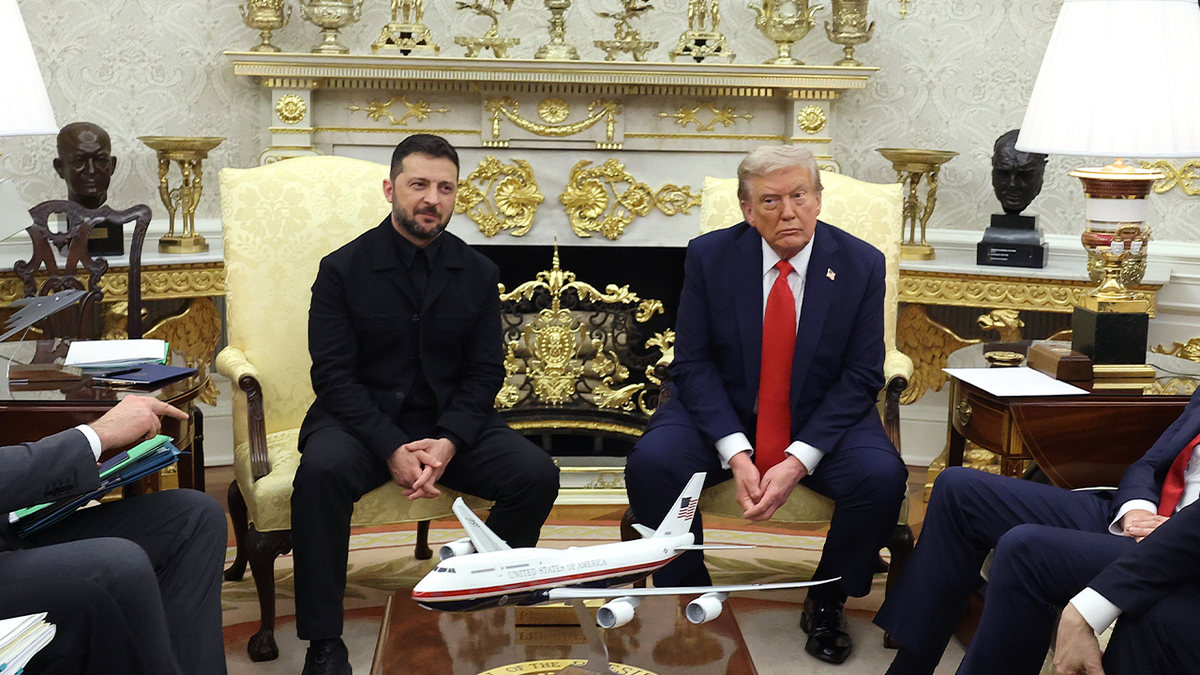
President Donald Trump met with Ukrainian President Volodymyr Zelenskyy at the White House on Aug. 18, 2025, where Trump said a ceasefire agreement was not necessary. (Getty Images)
However, Murphy said Ukraine has found it harder to maintain that early momentum as the war has continued, evolving into what he called a “stalemate and a war of attrition.”
“Zelenskyy is facing greater difficulty building support,” Murphy said.
“After watching the president meet with Russia and Xi Jinping in China, he needed a victory — and he needed a dramatic one. That made an asymmetric attack an attractive option.”
The Benghazi operation also highlights Ukraine’s growing ability to strike Russian military targets thousands of miles away, although the precise method remains unclear.
“Ukraine has claimed responsibility, but officials have been deliberately vague about where the attack originated,” Murphy said.
“Some believe it was launched from inside Libya. Others argue it came from a mothership, which is entirely plausible — perhaps an ordinary-looking cargo vessel used to deploy the drones.”
Murphy said the strike illustrates a larger transformation in modern warfare, as military leaders work to understand the impact of increasingly advanced drone operations.
“We are witnessing a fundamental and unprecedented change in warfare as it happens,” he said.

A Russian corvette is shown before and after the Benghazi explosion. Libya’s eastern-based government said the blast was caused by a suspected drone attack. (VANTOR/ Reuters)
“It will take time for military planners and nations to determine how best to respond to this type of aggression.”
Beyond the battlefield consequences, Murphy warned that the strike could damage Washington’s diplomatic efforts to negotiate an end to the war.
“A determined group of diplomats and policy thinkers in Washington wants to see a diplomatic resolution to this conflict sooner rather than later,” Murphy said.
“They believe that outcome would serve the interests of the United States and the world, but above all, the interests of the Ukrainian people.”
Murphy said advocates of a negotiated settlement would probably regard the reported Libyan strike as a blow to Trump’s peace initiative.
“Many influential voices in Washington want the war to end, and they will view this escalation in Libya as working against the president’s efforts.”